
Last updated November 2, 2026
 Whole-home duct cleaning
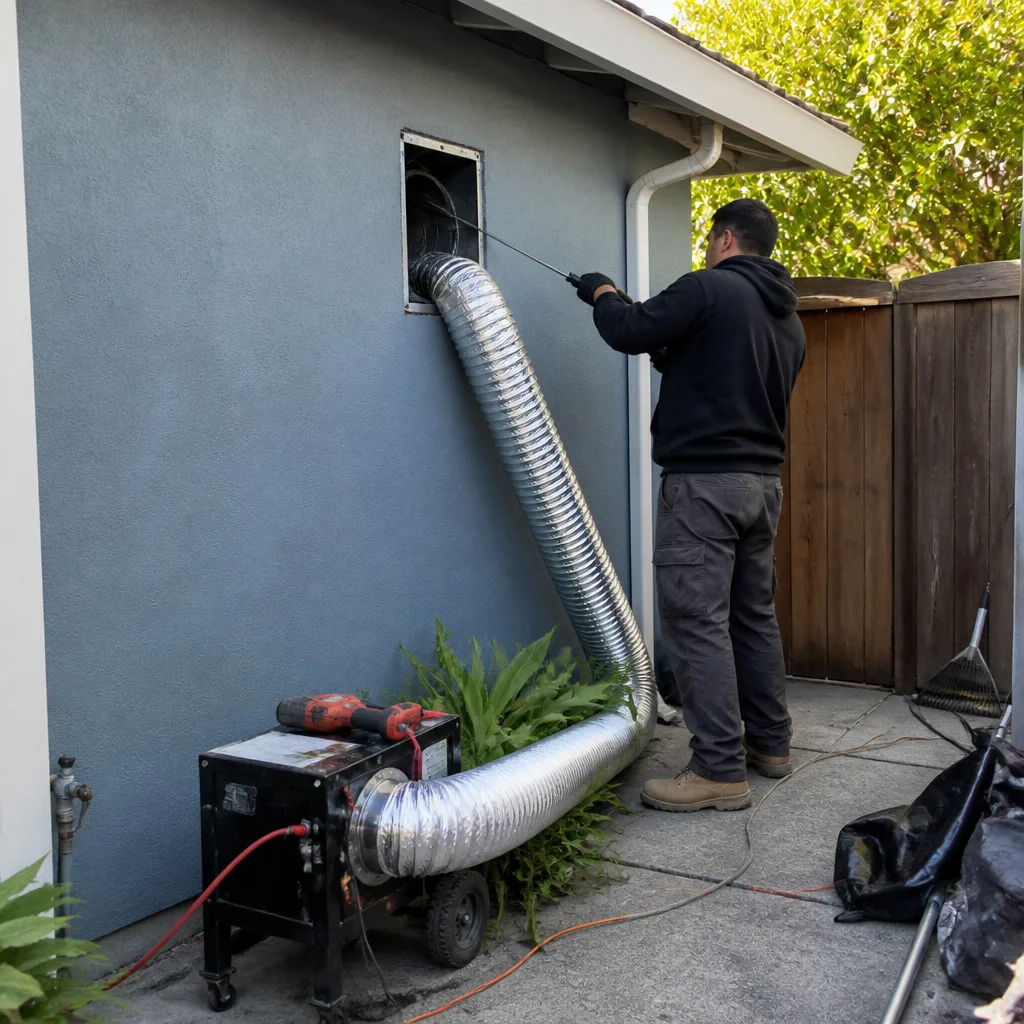
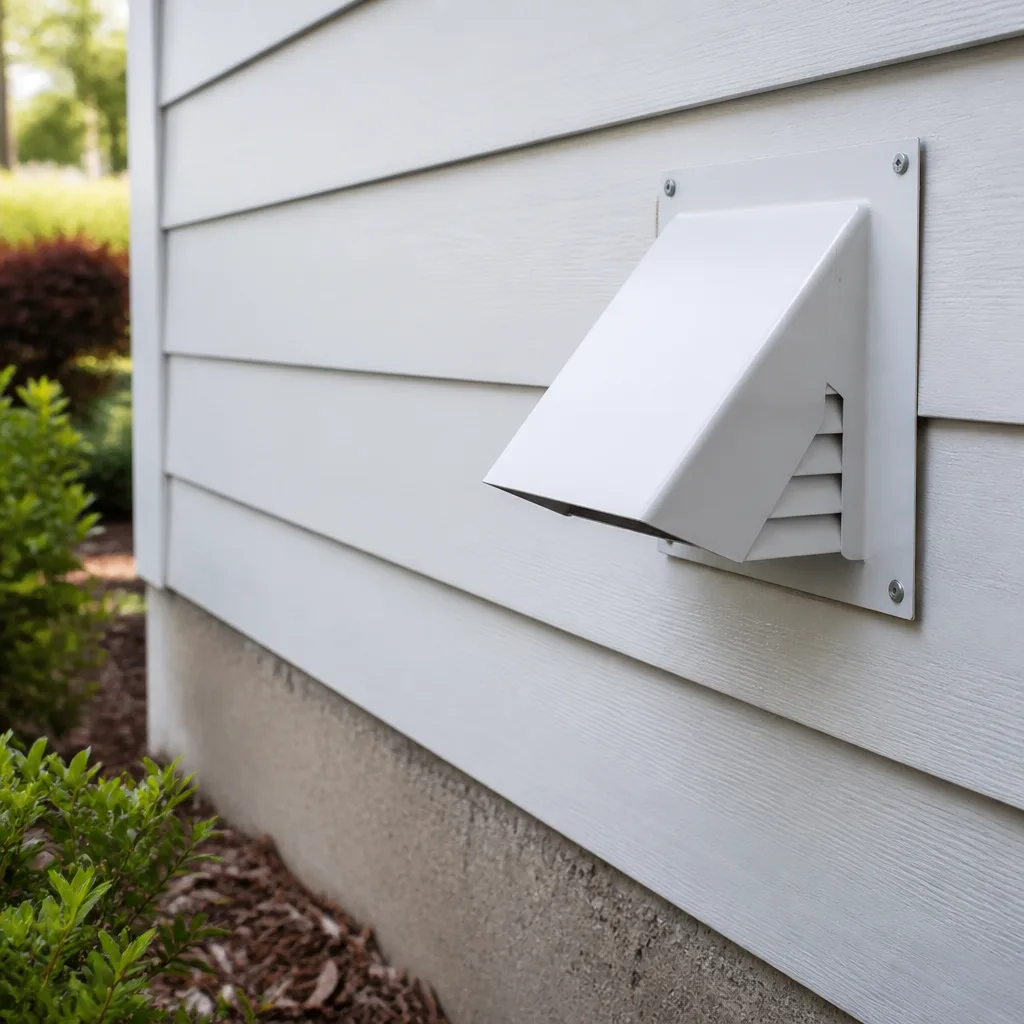 Dryer vent cleaning
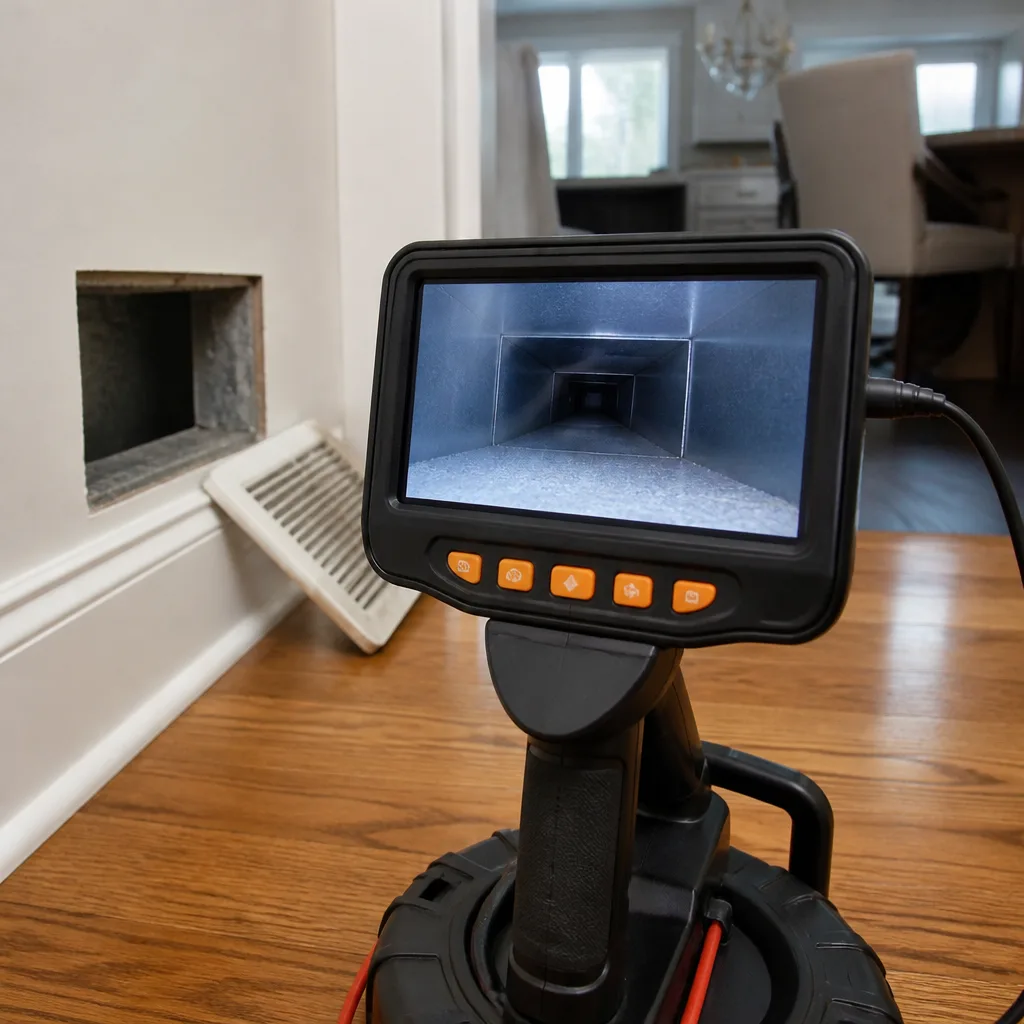 Camera inspection
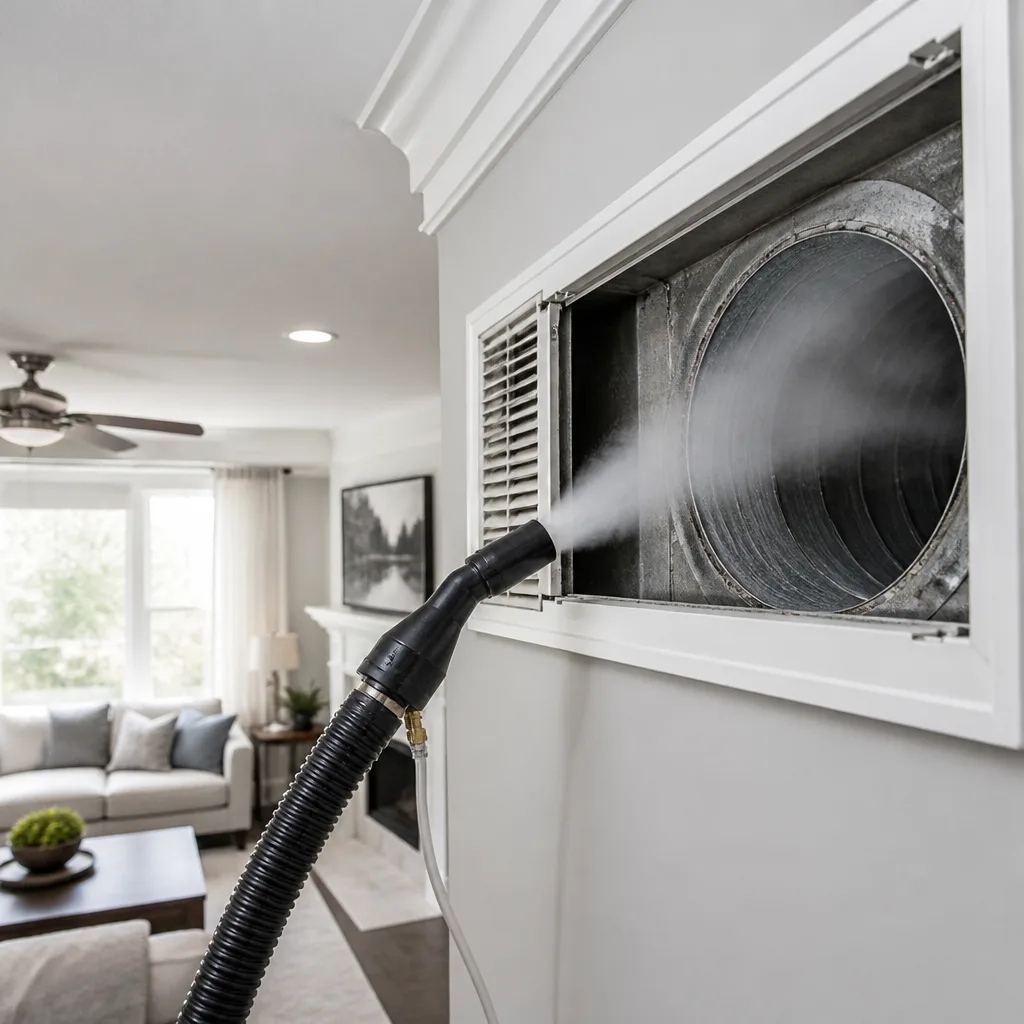 Sanitizing & deodorizing
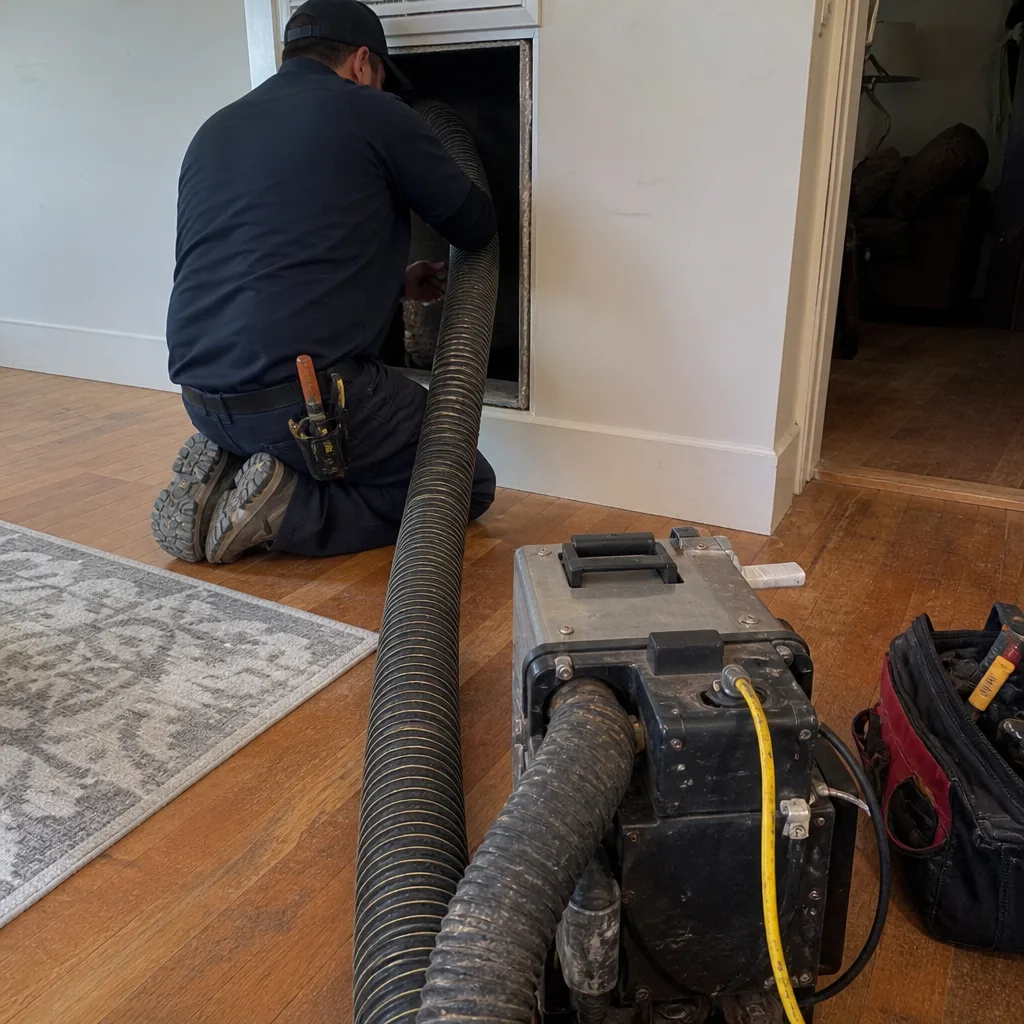
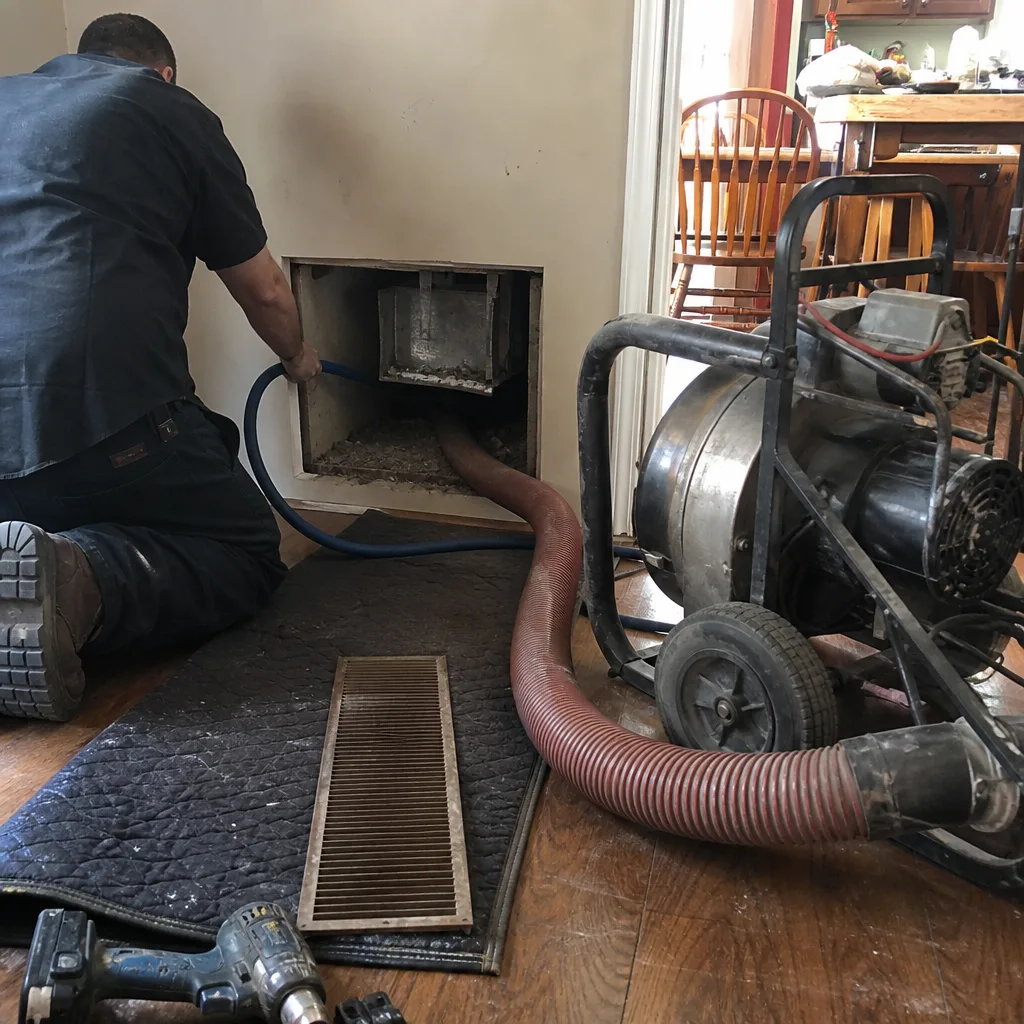
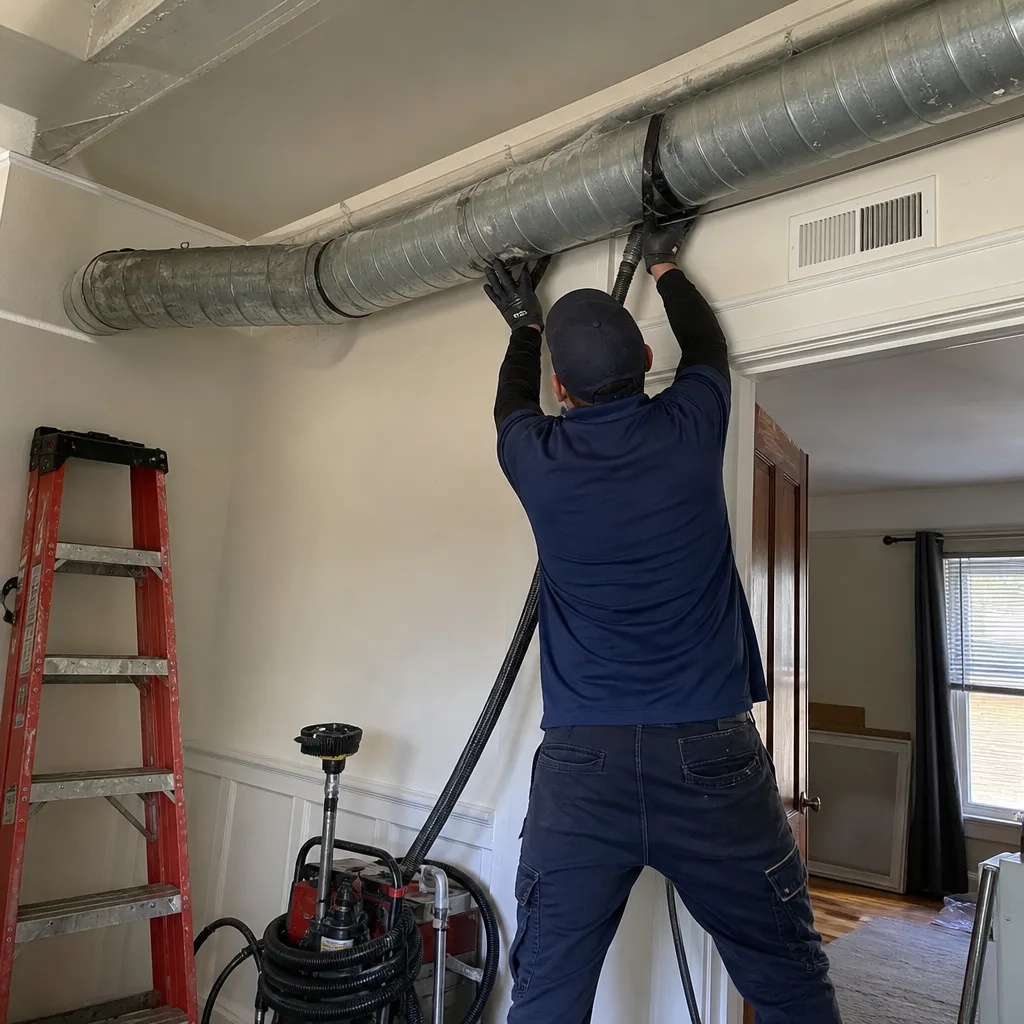
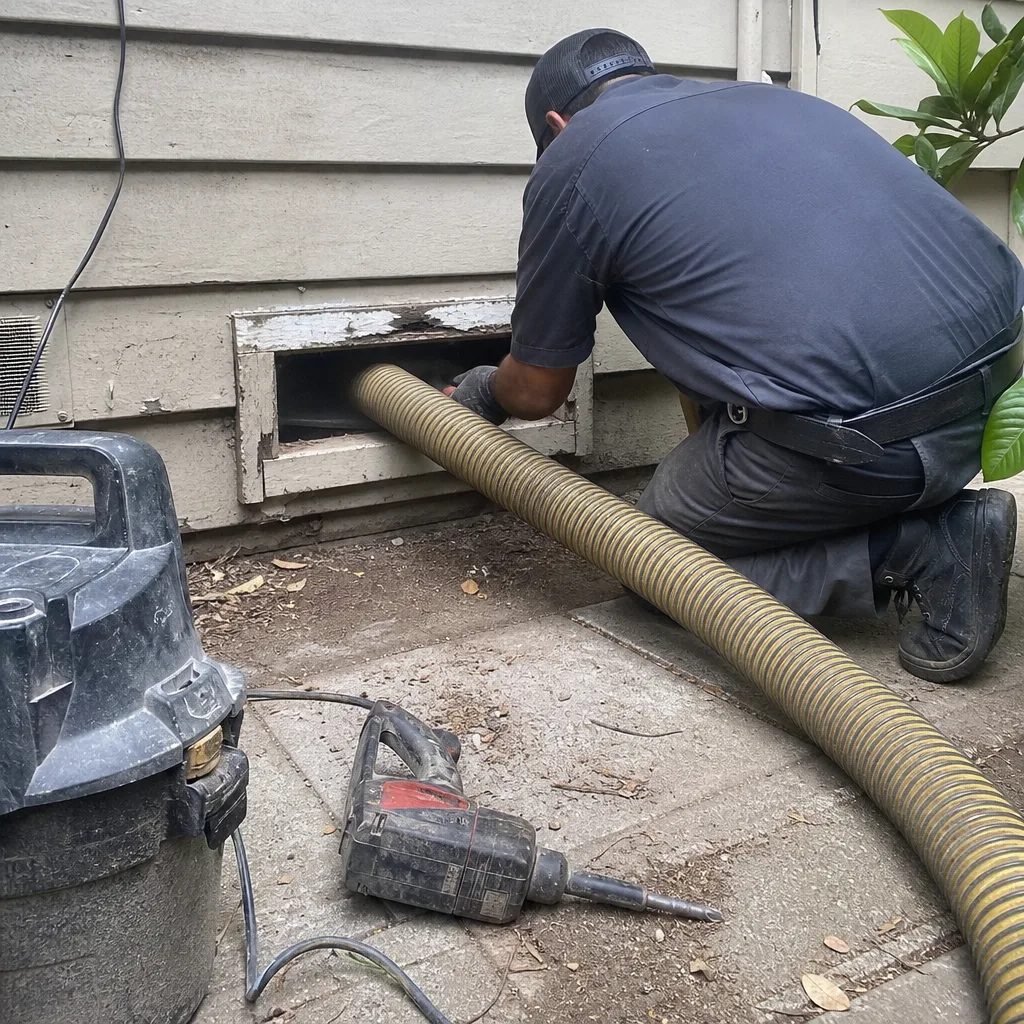
Whole-system duct and dryer vent check with before-and-after photos - you see exactly what came out of your vents
That "$99 whole-house special" is a bait ad - the real number appears once they are in your hallway, or the "clean" is a shop-vac at the register. We photograph the inside of your ducts before and after instead.
Air Duct Cleaning Maintenance Checklist for Oakland Homeowners
Most homeowners change their air filter and assume the duct system is fine. But the filter only captures what’s already circulating – not what’s already settled inside branch lines and plenums. Over time, Oakland’s unique climate patterns push wildfire smoke residue, marine-layer moisture, and fine particulate into ductwork where it stays until someone looks for it. This guide gives you a structured inspection protocol, not a generic list of reminders. By the end, you’ll know exactly what to check, when to check it, and which findings are worth photographing and sharing with a professional.
Quick Answer
An air duct cleaning maintenance checklist for Oakland homeowners starts with quarterly visual inspections of supply registers and return grilles, seasonal checks tied to wildfire season and winter rains, and a filter replacement schedule matched to Oakland’s air quality patterns rather than the generic 90-day rule. Document everything with photos and notes so you build a maintenance record that makes professional service calls faster and protects resale value.
Styles & brands we work with
- Whole-home duct cleaning
- Dryer vent cleaning
- Camera inspection
- Sanitizing & deodorizing
Table of Contents
- Room-by-Room Vent Inspection Checklist
- Seasonal Checkpoints for Oakland’s Climate
- Filter Types and Replacement Frequency for Oakland Air
- Flex Duct and Plenum Warning Signs
- What to Log and Keep on File
- Smoke Damage and Wildfire Residue Protocol
- Moisture and Mold Inspection After Rainy Season
- Common Mistakes to Avoid
- When to Call a Professional
- Frequently Asked Questions
Room-by-Room Vent Inspection Checklist
Every vent in your Oakland home tells a story if you know how to read it. Run through this inspection twice a year – once after wildfire season ends and once after the winter rains stop. Use your phone camera to document anything unusual. Photos give a contractor useful baseline information before they even arrive, and they help you track whether a problem is getting worse over time.
Here’s the step-by-step protocol we recommend:
- Remove each supply register – the metal or plastic grille where conditioned air enters the room. Most unscrew or pop off with a flathead screwdriver.
- Photograph the register itself from both sides. Look for rust, peeling paint, and a sticky gray film that doesn’t wipe off easily – that film is often smoke residue or cooking grease.
- Look inside the duct opening with a flashlight. You’re checking for three things: visible dust accumulation thicker than a pencil line, any dark discoloration that could indicate moisture, and debris that shouldn’t be there (insulation fragments, pest droppings, drywall dust from a renovation).
- Check the register’s attachment points. Fins that are bent or warped don’t direct air properly and can whistle. Screws should sit flush, not protrude into the airflow.
- Run your hand along the wall or ceiling around the register to feel for temperature differences or dampness. Cold spots in summer or warm spots in winter can indicate a leaky connection behind the grille.
- Note airflow strength when the system is running. Compare rooms. A weak-flowing register in one room while others feel normal often points to a disconnected or collapsed flex duct branch.
Repeat this for every register in the house, including the return grille – that’s the larger vent where air gets pulled back into the system. Returns often show more accumulated dust than supplies because they handle unfiltered air from the living space.
In our experience serving Oakland homes, we regularly find the worst accumulation in the same places: vaulted-ceiling registers, floor registers near entry doors, and any vent in a room with direct afternoon sun exposure. Those locations trap more particulate because of temperature differentials and foot traffic patterns.
Seasonal Checkpoints for Oakland’s Climate
Oakland’s Mediterranean climate creates three distinct stress points for ductwork each year: the fall wildfire season, the winter rainy season, and the summer dry stretch when the HVAC system runs hardest. Tying your maintenance checklist to these seasonal events catches problems early instead of waiting for symptoms to appear.
Post-Wildfire Season (typically early November through December). Even if you never smelled smoke inside your home, fine particulate from distant fires travels on wind currents and gets drawn into your HVAC system through the outdoor air intake and the normal act of opening doors. Run this check after the first significant rain of the season, which tends to settle airborne ash:
- Remove a few registers and look for a fine gray or brown powder. This is wildfire particulate, and it’s finer and stickier than regular household dust.
- Check the return grille filter. If it’s dark gray or brown rather than the normal household gray, the system has been pulling smoke-laden air.
- Swab a white cloth inside the duct with the system off. A gray-brown smear that smells faintly of campfire means smoke residue is present in the duct walls, not just the filter.
If you find smoke residue, professional cleaning is the right move. Smoke particulate is acidic and can corrode metal duct components if left in place. Our Air Duct Cleaning in Oakland service uses equipment designed to dislodge and contain exactly this kind of fine particulate – Abatement Technologies negative-air systems keep what we dislodge from recirculating through your home during the cleaning.
Post-Rainy Season (typically February through April). Oakland’s winter rains saturate soils and raise ambient humidity for weeks at a time. Duct systems in crawlspaces and unconditioned attics absorb some of that moisture, and flex duct insulation is particularly vulnerable. After the rains end:
- Check crawlspace-adjacent registers for damp-smelling air when the system first starts.
- Look for condensation around register faces in cooler months – that signals humid air reaching cold surfaces inside the duct.
- Inspect visible duct runs in attics or crawlspaces for sagging insulation, which is a tell-tale sign that moisture has been absorbed.
Summer HVAC Startup (typically May). Before the system goes to work for Oakland’s warmest stretch, do a full-system visual pass. The off-season lets visible dust settle exactly where it will sit until disturbed. And the first few dry, hot weeks of summer are when you’ll notice airflow problems, because the system is finally running consistently enough to reveal weak spots.
Filter Types and Replacement Frequency for Oakland Air
The “change your filter every 90 days” rule is worse than useless in Oakland – it actually gives you a false sense of security. Real-world replacement frequency depends on the filter’s MERV rating, how many people and pets live in your home, how close you are to freeway traffic, and whether wildfire season is active.
Here’s a practical guide for Oakland’s conditions:
| Filter Type (MERV Rating) | Typical Replacement Window in Oakland | Notes |
|---|---|---|
| Basic fiberglass (MERV 1-4) | Every 30-45 days | Barely captures fine particulate. During wildfire season, replace weekly. |
| Pleated (MERV 8) | Every 60-90 days in normal conditions | During wildfire season, check after 30 days. |
| High-efficiency pleated (MERV 11-13) | Every 90 days in normal conditions | Wildfire season: check after 45 days. These load faster in smoky air. |
| High-efficiency pleated (MERV 11-13) with indoor pets | Every 45-60 days | Pet dander and hair reduce airflow and fill filter media quickly. |
If you live within a mile of I-880, I-580, or Highway 24, add a compounding factor: traffic-related particulate pushes filter loading faster than elsewhere in the East Bay. Homes in West Oakland, near the Port, or adjacent to major corridors typically see filters load in half the expected time during summer inversion layers.
Here’s the practical approach that works with Oakland’s air quality reality: set your own schedule based on visual inspection, not the calendar. Pull the filter after 30 days the first time you try a new MERV rating and see what it looks like. Set the next replacement based on that observation, not on the manufacturer’s generic recommendation. Use your phone to photograph the filter at each change so you can compare loading patterns across seasons.
And one note on high-MERV filters: they create more resistance in your system. Some older Oakland homes with original duct sizing can’t handle a MERV 13 filter without reducing airflow. If you notice weaker air at the registers immediately after upsizing to a MERV 13, the ductwork may be undersized for that level of filtration – a sign the system needs an assessment, not just a lighter filter.
Flex Duct and Plenum Warning Signs
Flexible duct – the insulated, wire-reinforced tubing that carries air from the main trunk lines to individual register boots – is a common weak point in Oakland homes. It’s the part of the system that gets damaged during renovations, crushed by stored boxes in attics, or degraded by heat and moisture over time. When flex duct fails, the result isn’t always a visible leak. Sometimes the inner liner separates from the insulation, creating a pathway for unfiltered attic air to mix with your conditioned air.
Here’s what to look for, and what each finding means:
- Sagging or drooping sections between support straps. This usually means the insulation sleeve has absorbed moisture or the internal structure has been compromised. Any sag longer than a few inches restricts airflow and can trap moisture.
- Kinked or crushed sections. A flex duct that’s been bent sharply at a connection point chokes airflow to that room. You can’t see the kink without attic or crawlspace access – but you can infer it from weak flow at one register while others are fine.
- Loose connections at the register boot or plenum. The metal or plastic collar where flex duct attaches to a rigid component is a classic leak point. Duct tape dries out, falls away, and leaves gaps. Gaps let conditioned air escape into the attic or crawlspace, and let dust and insulation fragments enter the airstream.
- Dark staining on the exterior insulation sleeve. Moisture has penetrated the vapor barrier and the insulation itself is now damp in places. Damp insulation loses its R-value and becomes a breeding ground for biological growth.
- A noticeable temperature difference at the register compared to other rooms. If one bedroom consistently blows air that feels warmer in summer or cooler in winter, the flex duct branch serving that room may be disconnected, crushed, or improperly insulated.
The connection between duct leaks and duct cleaning is direct: if the system has invisible leaks that pull dusty attic air into the airstream after the blower but before your registers, then no amount of cleaning will keep the air clean. The ducts get recontaminated immediately. When leaks are present, the fix is Air Duct Repair in Oakland – sealing the connections, repairing the flex run, and replacing damaged sections so the system operates as designed. We do this work in-house, which is unusual in the duct cleaning niche; most cleaning-only companies have to refer structural repairs out to another contractor.
What to Log and Keep on File
A maintenance log isn’t busywork. It’s the document that makes future service calls faster, protects your resale value, and gives a technician context they’d otherwise spend an hour trying to discover. Log everything related to the air handling side of your home: filter changes, service dates, observations from your quarterly inspections, and any repair work done by HVAC contractors.
Here’s the minimum we recommend documenting:
- Date of each filter change, with a note on what the old filter looked like – dust color, whether it was dry or sticky, any obvious particulate (sawdust from a project, pet hair, gray smoke residue).
- Date and results of each seasonal inspection – a few notes on what you found in each room. Even “no changes from last check” is useful information.
- Any professional service visit – who came, what they did, what equipment they used. Keep invoices and work summaries in the same file.
- Any duct repair work – what was replaced or sealed, where, and why. Details matter: “sealed two supply connections in crawlspace, replaced 8-foot flex run to master bedroom” is much more useful than “duct repair.”
- Photos from each inspection – even if they look clean. A photo record shows change over time and gives a future service technician a baseline.
The resale angle matters in Oakland’s real estate market. When you sell a home with a documented maintenance history on the HVAC system including cleaning and repairs, it gives the buyer’s inspection less to flag and gives you a document trail that says “this system was maintained, not neglected.” It takes ten minutes after each check, and it’s worth real money at the closing table.
Smoke Damage and Wildfire Residue Protocol
Oakland homeowners deal with a variable that most of the country never thinks about: seasonal wildfire smoke that can hang over the East Bay for weeks. The visible smoke disappears from the sky, but the fine particulate it leaves behind doesn’t disappear from your ducts – it settles, coats, and waits for the next time your blower cycles on.
After a significant smoke event, here’s the short version of what to do:
- Change your filter immediately. Whatever MERV rating you run, it just collected a season’s worth of smoke particulate in a few weeks. Replace it even if it looks okay – smoke loading isn’t always visually obvious.
- Run the blower fan for an hour with windows closed. This circulates remaining airborne particulate through the fresh filter. Then change the filter again a month later, even if the second one looks lighter than the first.
- Check return grilles and supply registers for gray or brown residue. If you find a thin, tacky film, smoke particulate has reached the ductwork itself, not just the filter.
- Do not run duct cleaning in the middle of an active smoke event. The cleaning process disturbs settled particulate and releases it – and if outdoor air quality is still poor, the negative pressure from professional equipment will pull smoky air into the system during service. Wait until the air clears.
One detail most homeowners miss: the blower compartment and evaporator coil sit downstream of the filter, but they’re upstream of the ducts. Smoke particulate that gets past the filter lands on the coil first. When the system runs in cooling mode, condensation on the coil wets that particulate and creates a sticky film that reduces efficiency and can become a surface for microbial growth. If you find significant smoke residue at the registers, have the coil and blower cabinet inspected too.
Moisture and Mold Inspection After Rainy Season
Oakland’s rainy season – typically November through March – pushes moisture into every building envelope, including the duct system. The city’s microclimates compound the issue: hillside homes in Montclair and Piedmont Pines face fog drip and saturated soils, while flatland neighborhoods near the Bay deal with high ambient humidity even between rain events. Ducts in crawlspaces and unconditioned attics absorb that moisture in ways that aren’t obvious until the damage is done.
Here’s what a post-rainy-season inspection should cover:
- Musty odor at specific registers. Walk the house on the first warm day after a rainy week and stand at each register while the system starts. A damp, earthy smell localized to one vent suggests moisture in that branch line.
- Visible dust accumulation with dark coloration. Standard household dust is gray. Dust with a brown or black tint, especially in a pattern that follows airflow, often indicates moisture-activated biological material.
- Peeling register paint or oxidation. Registers in humid environments develop rust or pitting. If you see it, the register has been wet repeatedly – and the duct behind it probably has too.
- Flex duct insulation that feels dense or heavy. Moisture-saturated insulation loses its loft and R-value. If you can access attic or crawlspace duct runs, a gentle squeeze test tells you whether the insulation is dry or waterlogged.
Moisture inside duct systems doesn’t resolve on its own, even after Oakland’s dry summer months. It requires locating the source – a leaky boot, a crawlspace ventilation problem, a failed duct seal – and addressing it before cleaning or replacing affected sections. Clean, dry ducts can be serviced and protected. Continuously damp ducts are a repeat problem until the moisture source is removed.
Hallmark Air Duct Cleaning home serves Oakland, Berkeley, Alameda, and the broader East Bay with specialized duct and dryer vent service.
Common Mistakes to Avoid
Every piece of generic advice about HVAC maintenance has a way of going wrong in Oakland’s specific conditions. These are the mistakes we see most often when we inspect systems that homeowners have been maintaining on their own:
- Treating the 90-day filter rule as gospel. During wildfire season or in a home with pets near a major road, a 90-day-old filter is often completely loaded and restricting airflow. Go by inspection, not the calendar.
- Using a higher MERV filter without checking airflow compatibility. Older Oakland homes with undersized ducts can’t always handle MERV 13 resistance. If registers suddenly blow weaker after a filter upgrade, the filter is causing a restriction.
- Cleaning ducts before repairing leaks. This is the biggest one. If you clean the system while flex duct connections are leaking, the ducts re-contaminate within weeks. Repair first, then clean – or do both in the same visit.
- Ignoring one weak register. A single room with poor airflow is a diagnostic clue. Homeowners often dismiss it as “that room has always been warm” and accept it. That weak register is pointing at a structural problem in the branch line.
- Waiting for visible mold or black dust before acting. Duct problems don’t announce themselves dramatically. The early warning signs – tacky film, slightly damp register areas, musty odor on startup – are subtle and easy to ignore until they become expensive.
- Never opening the return grille. Homeowners who check supply registers diligently often never look at the return side, which pulls air from the living space and concentrates contaminants there first. The return tells you more about system health than any supply register.
- Storing boxes or furniture against or on top of duct runs in attics and crawlspaces. Crushed flex duct is one of the most common repair calls we make, and most of it traces back to storage practices after a move or renovation.
When to Call a Professional
Some maintenance tasks are yours; some need equipment and access you don’t keep in the garage. Call a professional when you find smoke residue extending past the filter into the ducts, visible moisture or biological staining at registers, crushed or disconnected flex duct in accessible spaces, or a musty odor that persists after filter changes. And call sooner rather than later – most duct problems compound quietly, and the repair bill grows in proportion to how long a structural issue has been allowed to continue. Hallmark Air Duct Cleaning offers free estimates in Oakland – call (833) 467-6681. We’ll inspect the system with the same eyes we use on every job, and we’ll tell you honestly whether service is warranted or whether the system is fine as-is.
Frequently Asked Questions
You need cleaning if you find visible dust accumulation inside the duct openings (thicker than a thin pencil line), gray or brown residue from wildfire smoke, musty odors when the system runs, or visible mold growth on register surfaces or inside the duct. A home with normal household dust levels, no pets, no recent renovation, and a clean return grille may genuinely not need service. When in doubt, a professional inspection is worth more than guessing.
Most Oakland homes need professional duct cleaning every three to five years, with the interval shortened by specific conditions: living near wildfire-prone areas with annual smoke exposure, owning pets that shed heavily, completing renovations that generate drywall or wood dust, or living near major freeways. Homes with well-sealed ducts, high-quality filtration, and no unusual pollutant sources can often go longer.
Uneven airflow usually points to a structural issue in the branch line serving that room: a crushed or kinked flex duct, a loose connection at the register boot, or a damper that’s partially closed. It’s not normal for one bedroom to blow noticeably weaker than its neighbors, and it’s a findable, fixable problem. Call a professional who does Air Duct Repair in Oakland to have the branch inspected.
Duct cleaning addresses the HVAC system that heats and cools your home. Dryer Vent Cleaning in Oakland addresses the separate exhaust duct that carries hot, lint-laden air from your clothes dryer to the outside. Dryer vents need their own maintenance because the accumulated lint is flammable and restricts airflow, which increases drying time and creates a fire risk. The two services are unrelated, but both matter.
A shop vac and a long hose can’t meaningfully clean an HVAC system. Residential duct runs extend dozens of feet beyond what any consumer vacuum can reach, and the system’s negative pressure design means you’re more likely to recirculate dislodged dust than capture it. Professional equipment, including the Rotobrush and Nikro extraction systems we use, is built specifically for the geometry and airflow of residential ductwork.
Air duct cleaning in Oakland typically costs $350 to $700 for a complete single-family home system, with the price varying by system size, number of registers, and contamination level. Homes with significant smoke residue, mold, or pest intrusion can run higher because the cleaning takes longer and may require additional sanitation. Call (833) 467-6681 for a specific quote on your system – estimates are free, and we give you the price before work starts.
The Bottom Line
Homeowners who take their ductwork seriously don’t wait for bad smells or weak airflow to act. They run seasonal inspections, log what they find, and call a professional when the findings warrant it. They know that wildflowers and marine fog and wildfire smoke all leave their mark on a home’s air system, and that maintenance is about catching those marks early. They know that changing a filter is the beginning of duct care, not the end of it. They know that Air Duct Cleaning in Oakland is a scheduled service, not an emergency response. And they know the value of one number: (833) 467-6681, where a real specialist answers and gives an honest assessment.
Written by the team at Hallmark Air Duct Cleaning, serving Oakland since 2011.
See the difference
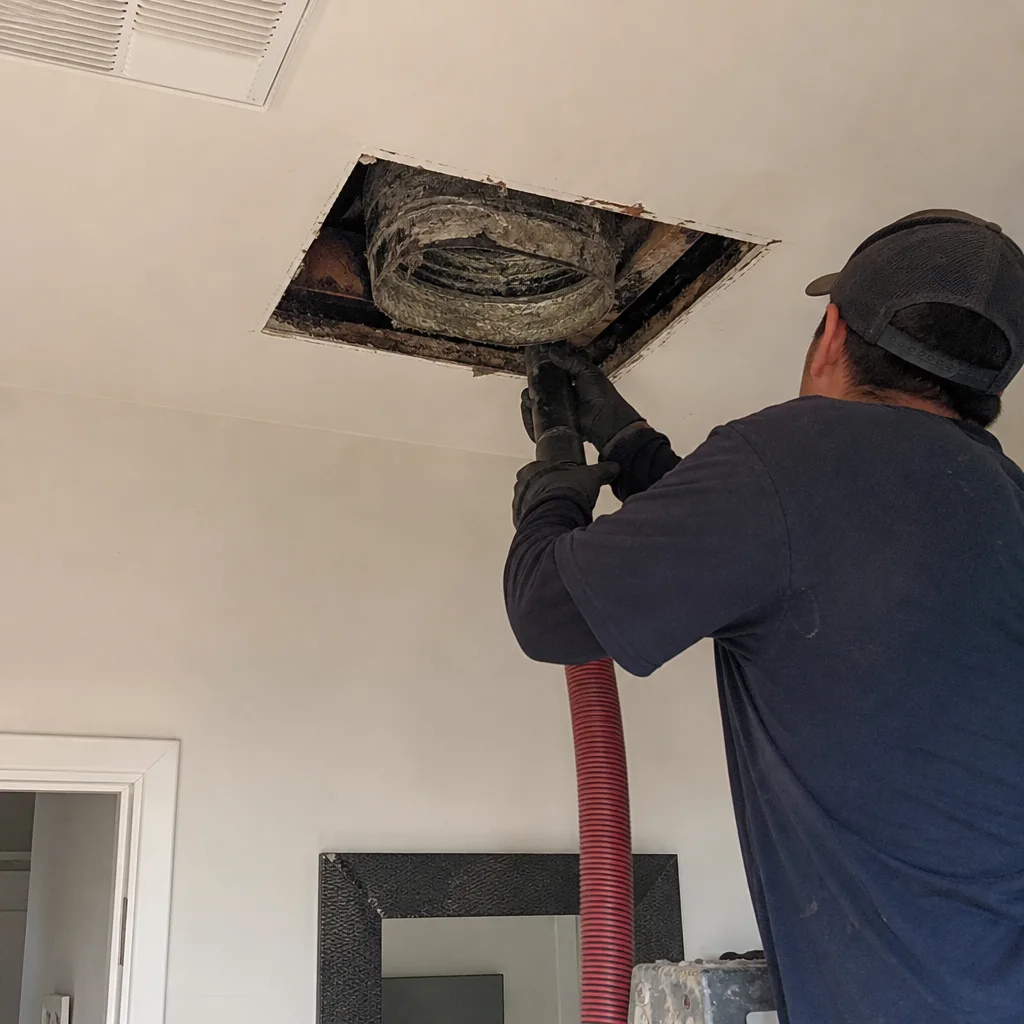 Before
 After
 Before
 After
 Before
 After