
Last updated November 2, 2026
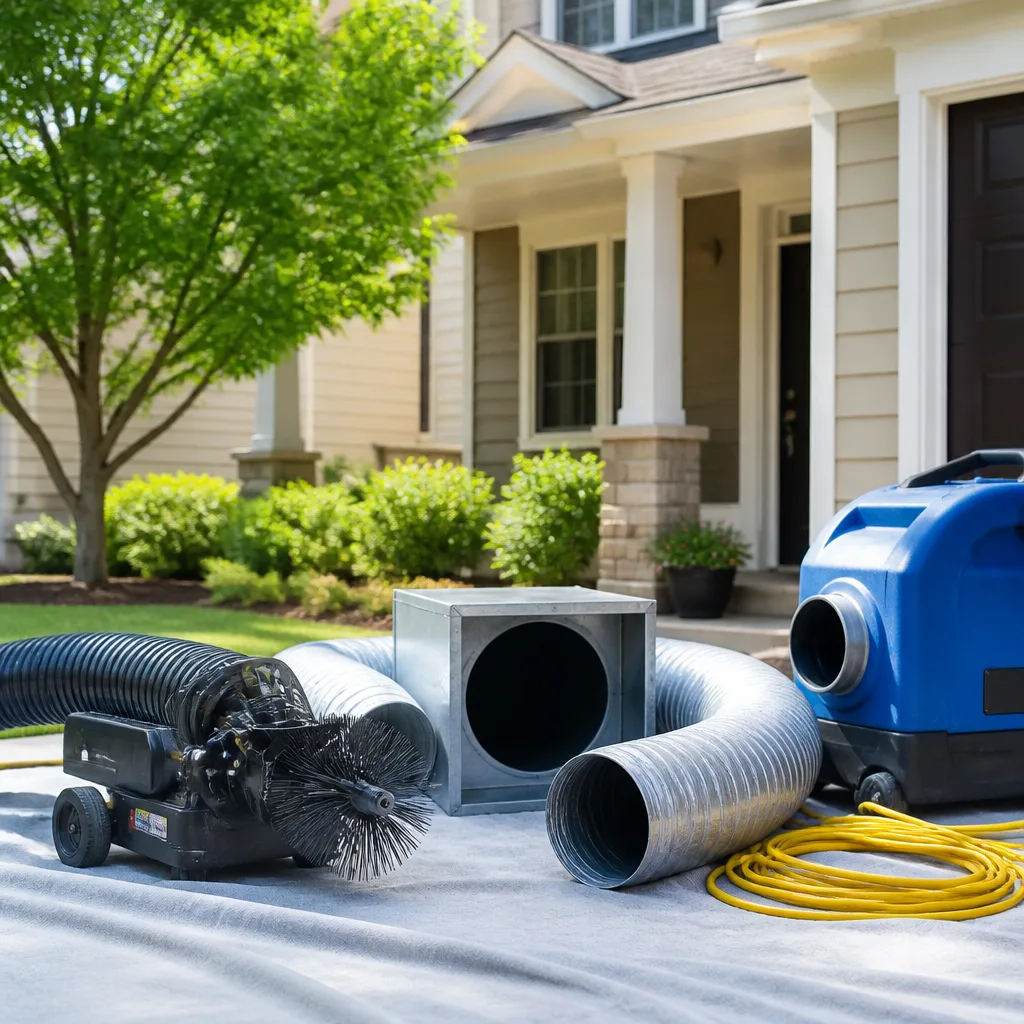 Whole-home duct cleaning
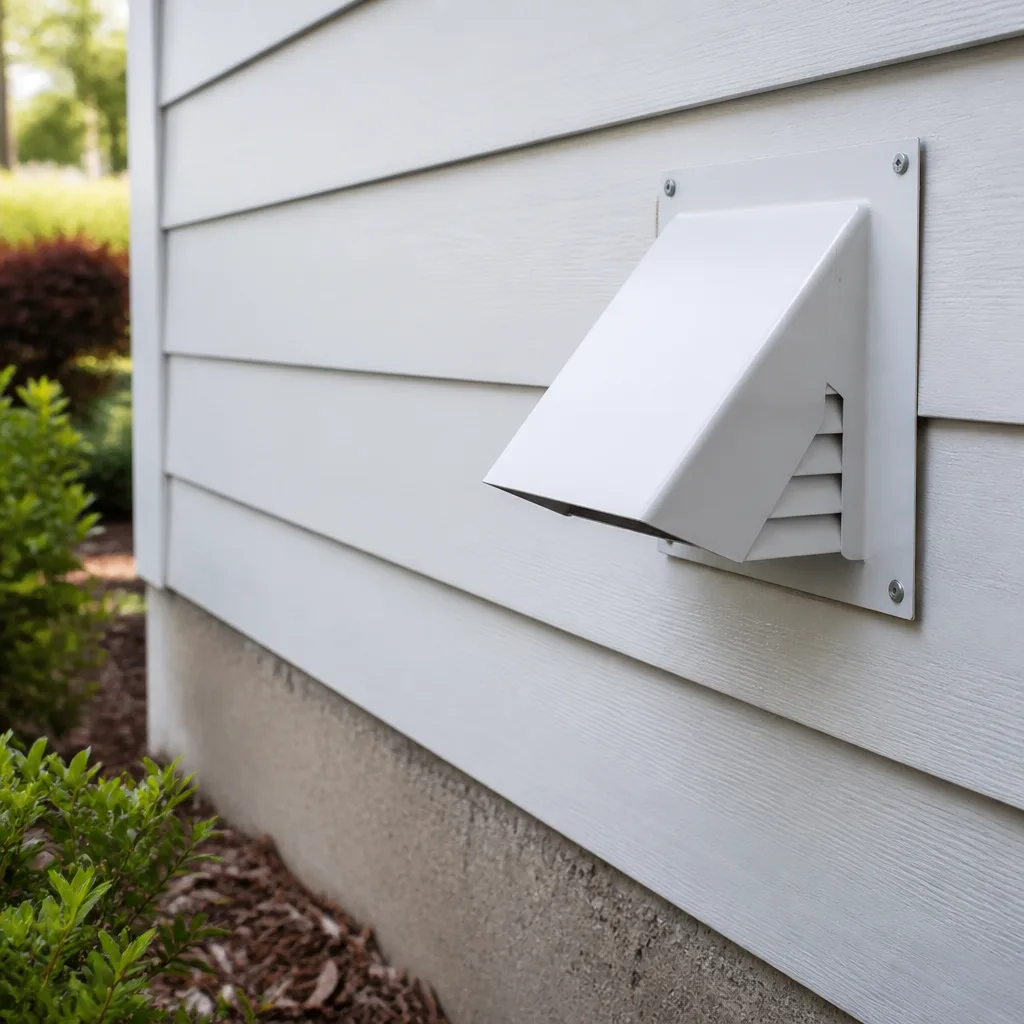 Dryer vent cleaning
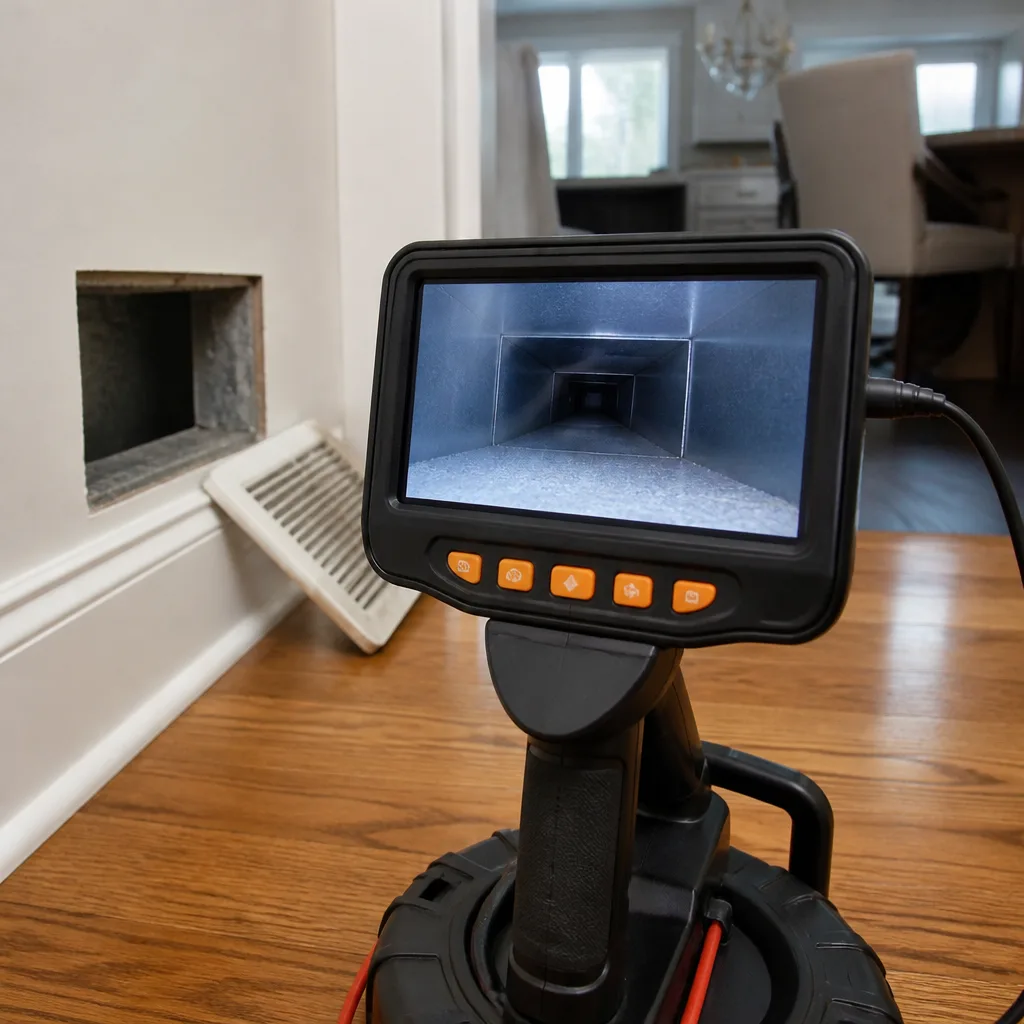 Camera inspection
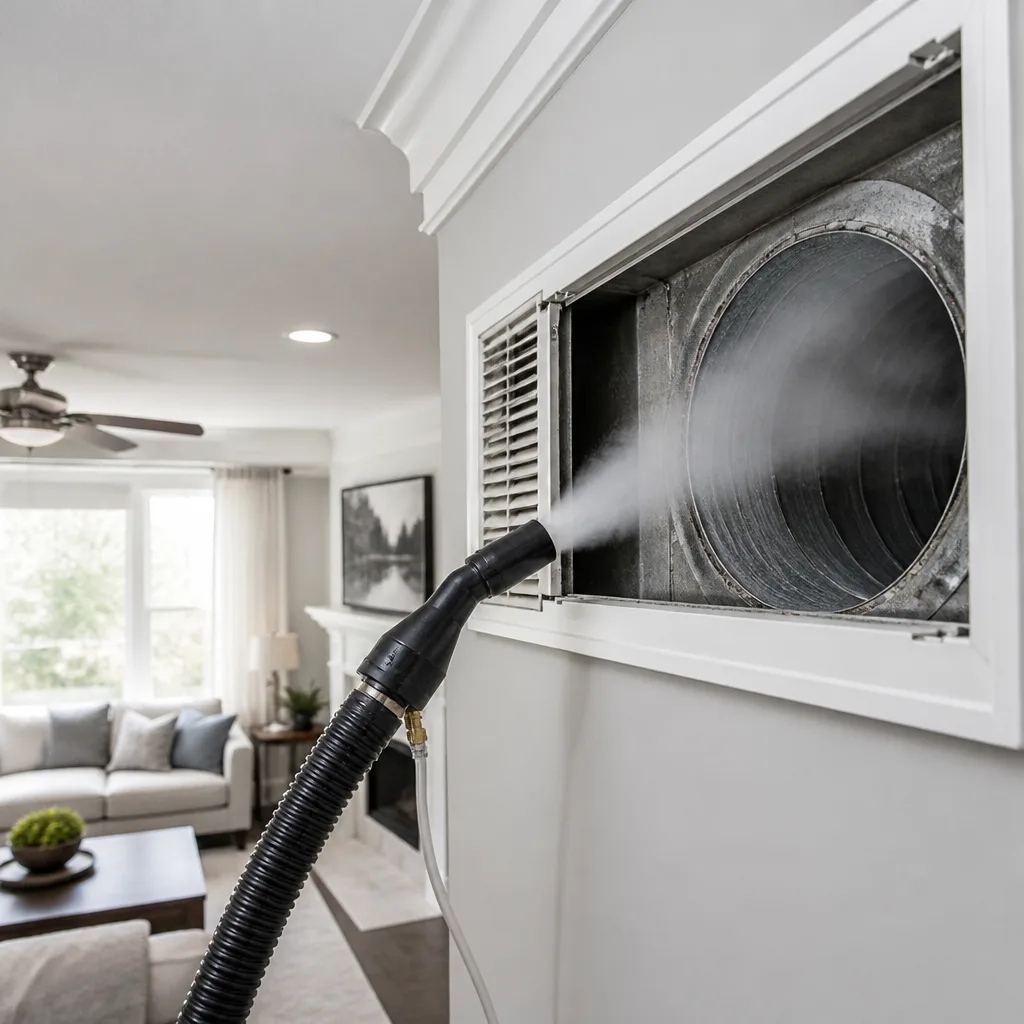 Sanitizing & deodorizing
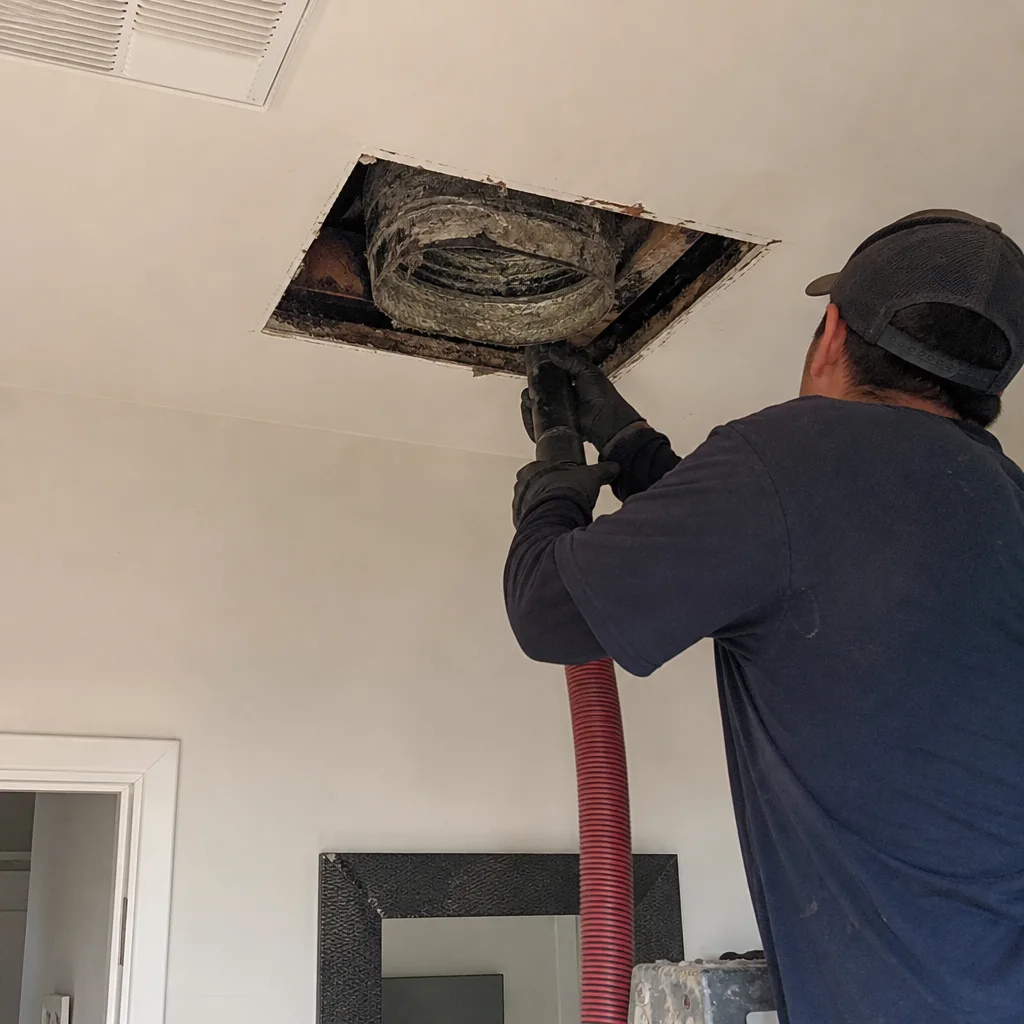
Whole-system duct and dryer vent check with before-and-after photos - you see exactly what came out of your vents
That "$99 whole-house special" is a bait ad - the real number appears once they are in your hallway, or the "clean" is a shop-vac at the register. We photograph the inside of your ducts before and after instead.
Air Duct Cleaning Cost Breakdown: The Oakland Homeowner’s Reference for 2026
Here’s the thing about duct cleaning quotes in Oakland: two homeowners on the same street can get estimates of $150 and $600 for what looks like the identical service. They’re not the same service. The $150 version typically runs 45 minutes on a system that can’t reach inside branch lines, while the $600 version involves multiple access points, containment equipment, and a tech who’s actually in your crawlspace. Oakland’s housing stock makes this split worse than most metro areas, because our older homes have duct layouts that punish the quick-and-cheap approach more than newer builds do. This guide – along with our Air Duct Cleaning Maintenance Checklist for Oakland Homeowners – breaks down exactly what drives that range, what should appear on a legitimate quote, and how to evaluate contractors without getting taken for a ride.
Styles & brands we work with
- Whole-home duct cleaning
- Dryer vent cleaning
- Camera inspection
- Sanitizing & deodorizing
Quick Answer
Air Duct Cleaning in Oakland typically costs between $350 and $700 for a standard single-family home in 2026, with larger homes or complex older systems running $700 to $1,200 or more. The final price depends on home size, number of vents, duct accessibility, and whether the contractor is running proper containment equipment. A legitimate whole-system cleaning from a specialist using professional extraction tools averages around $450 to $650 for a 3-bedroom Oakland home.
Table of Contents
- What Air Duct Cleaning Actually Costs in Oakland in 2026
- What Drives the Price: The Variables Contractors Don’t Always Explain
- What a Legitimate Quote Should Include, Line by Line
- Why Oakland’s Older Housing Stock Pushes Prices Higher
- The $150 Cleaning vs. The $600 Cleaning: What’s Actually Different
- Add-Ons Worth Considering vs. Upsells to Skip
- How to Evaluate a Contractor from Their Quote Alone
- Common Mistakes to Avoid
What Air Duct Cleaning Actually Costs in Oakland in 2026
Let’s start with real numbers for the Oakland market. Based on what we see daily in homes across the East Bay, here’s where pricing lands in 2026:
- Small home or condo (under 1,000 sq ft, 6-8 vents): $300 to $450
- Average single-family home (1,200-2,000 sq ft, 8-14 vents): $400 to $650
- Larger home (2,000-3,500 sq ft, 14-20 vents): $600 to $900
- Large or complex home (3,500+ sq ft, multiple systems, 20+ vents): $900 to $1,500
- Add-on: dryer vent cleaning (recommended companion service): $75 to $150
- Add-on: air duct repair (sealing leaks, reconnecting separated sections): $200 to $800 depending on scope
These ranges assume a full-system cleaning using mechanical agitation plus negative-air extraction, not the “stick a vacuum in one register” approach. If you own a two-story Victorian in Adams Point with original ductwork running through a dirt crawlspace and an attic you can only access through a 22-inch hatch, expect to land on the higher end. Newer condos near Jack London Square with accessible utility closets and short duct runs will land lower.
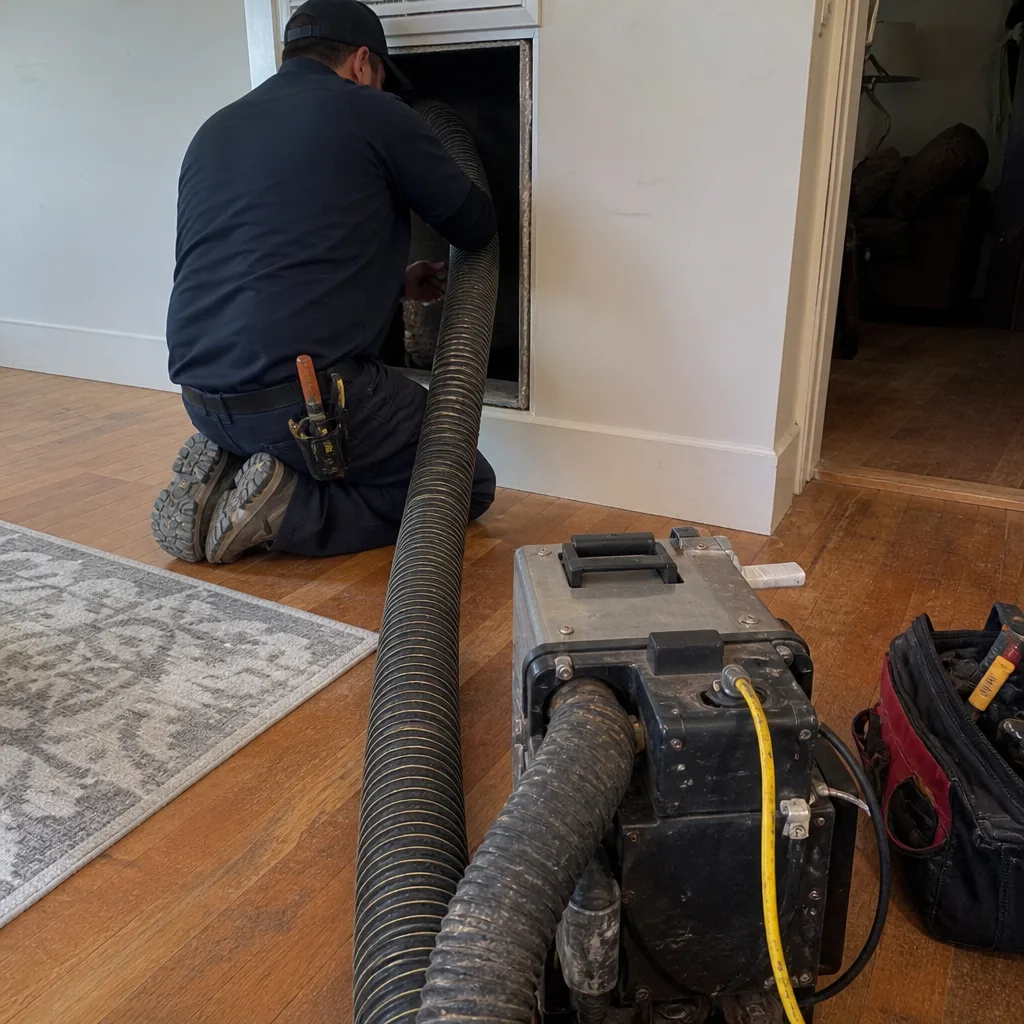
One thing to understand about the Oakland market specifically: the cheapest advertised rates are almost always bait pricing. A $79 “special” is designed to get a van in your driveway, after which the scope conveniently expands. The number you should anchor to is $450 to $650 for a standard home, because that’s what a properly equipped contractor needs to charge to run a Rotobrush or Nikro extraction system, set up containment, access every branch line, and spend the two to four hours the job actually takes.
What Drives the Price: The Variables Contractors Don’t Always Explain
When a contractor tells you “most homes run $400,” they’re oversimplifying. A real scoping evaluation looks at several specific factors, and each one moves the price needle in a way you should understand.
Number of vents and returns
The single biggest pricing lever is how many supply and return vents your system has. A 3-bedroom, 2-bath home might have 10 supplies and 2 returns. A 5-bedroom home with a finished basement could have 22 supplies and 4 returns. Each one requires a section of branch-line ductwork to be accessed, agitated, and extracted. More vents means more labor time, and labor is the majority of any duct cleaning invoice.
Linear footage of ductwork
Oakland homes vary wildly here. A 1,400-sq-ft bungalow built in the 1930s might have 150 linear feet of rigid duct. A 3,200-sq-ft Hillside contemporary could have 400+ linear feet, particularly if the furnace is in the basement pushing air up through multiple floors. Longer runs take more time, and the equipment has to work harder through extended main trunks.
Accessibility: attic, crawlspace, or slab
This is where Oakland’s geography and housing age create real differences. If your ducts are in an open attic, a tech can move around and access everything relatively quickly. If they’re under the house in a 24-inch crawlspace with piers and a steep grade (common in Montclair and the Oakland Hills), every section of duct requires crawling, repositioning, and elevated access work. Slab foundations, common in newer East Oakland construction, often hide ducts in chases that require cutting drywall access panels. Accessibility alone can double the labor time between two homes of identical square footage.
System condition and service history
A duct system that was cleaned three years ago and has a functioning filter cabinet will clean faster than a system that hasn’t been touched in 25 years and has been pulling unfiltered air since the Carter administration. Severely contaminated systems sometimes require multiple passes through each section, which extends the job. This is also why “how long will it take” questions are hard to answer over the phone without seeing the system.
Equipment being used
This is the honest variable most contractors won’t spell out. A Rotobrush rotary-brush system with variable-speed agitation extracts differently than a generic portable vacuum dropped in the return. Negative-air containment using HEPA-filtered equipment from Abatement Technologies prevents cross-contamination during the job. The right equipment costs more to own and operate, and that shows up in the quote. A contractor running a $400 portable vacuum system can undercut a contractor running industrial extraction equipment, but the result isn’t the same process.
What a Legitimate Quote Should Include, Line by Line
Here’s what a scoped, professional duct cleaning quote should look like when it arrives. If any of these line items are missing, ask why.
A legitimate quote includes:
- Scope of work description: Which systems (supply side, return side, main trunk, branch lines), how many vents, and what access points will be used.
- Equipment and method specified: Rotary brush, compressed-air agitation, negative-air containment. If the quote doesn’t say what tools are used, assume it’s a truck-mounted vacuum and not much else.
- Labor time estimate: A real quote often includes an estimated time range. 45 minutes is a skip. 2 to 4 hours is a real cleaning.
- Containment plan: Will the contractor seal off registers and returns while working? Will they run a negative-air machine? This matters because without it, dislodged dust gets redistributed through your home.
- Access notes: Which access panels or register removals are included, and whether cutting any new access is required (and at what additional cost).
- Pre- and post-inspection: A photo or video inspection before and after. If a contractor doesn’t inspect after cleaning, you’re trusting their word instead of verifying the work.
- Total price. One number, all-in, not “starting at.” The quote should match the scope.
Red flags in a quote:
- Pricing “per vent” as the headline number. This is the classic upsell mechanism. “We charge $29 per vent” sounds reasonable until you discover you have 24 vents plus a main trunk “fee” plus a return “fee” plus a filter “fee.” Legitimate whole-system pricing exists for a reason.
- No mention of containment. If the quote doesn’t say how contaminants are captured, the contractor is planning to blow dust around your house.
- No pre- or post-inspection. How do you know the work was done? You don’t.
- Vague “system cleaning” language with zero specifics. A real quote names the equipment and the method. Vague language means vague scope.
- Time-limited “must sign today” pricing. If they can discount 40% for 24 hours, the real price is the discounted one, and the “regular” price is fictional pressure.
Why Oakland’s Older Housing Stock Pushes Prices Higher
Oakland isn’t a cheap market for duct cleaning, and our housing stock is the reason. The median Oakland home was built around 1953, but that number hides a huge spread. We have Victorians from the 1890s in West Oakland, Craftsman bungalows from the 1920s in Maxwell Park, mid-century ranchers with radiant-to-forced-air conversions in Redwood Heights, and 21st-century townhomes near the Coliseum. Each era of construction brings its own duct access challenges.
Older Oakland homes, particularly those built before 1950, often have ductwork that was retrofitted. Original gravity heating systems were converted to forced air. Ducts were run wherever they could fit, not where they made sense. You’ll see sharp bends, undersized returns, junction boxes in inaccessible spots, and asbestos-wrapped sections that require special handling. A 40-year-old tract home in Fremont or a 15-year-old home in Dublin has straightforward, code-compliant duct runs by comparison.
The practical upshot: a tech cleaning ducts in Oakland’s flatlands or hills needs to be prepared for systems that fight back. More access cuts. More time in tight spaces. More troubleshooting when a section of duct turns out to be collapsed or disconnected. This isn’t a markup because it’s Oakland; it’s time on the job, and time is the largest input cost in any duct cleaning.
There’s also the particulate reality of Oakland’s microclimates. Homes near the 880 corridor collect brake dust and freeway particulate. Homes in the hills deal with redwood duff and wildfire-season ash that gets pulled through exterior wall vents. Homes in Fruitvale and East Oakland contend with a finer, heavier particulate load from industrial adjacency. All of this deposits in ductwork, and heavier deposits mean longer extraction passes. A quick visual of your return registers tells you a lot about how much particulate your system has been collecting.
The $150 Cleaning vs. The $600 Cleaning: What’s Actually Different
This is the section to read if you’re comparing quotes right now. Let’s walk through what actually happens on a $150 cleaning versus a $600 cleaning, because the gap isn’t profit margin. It’s process.
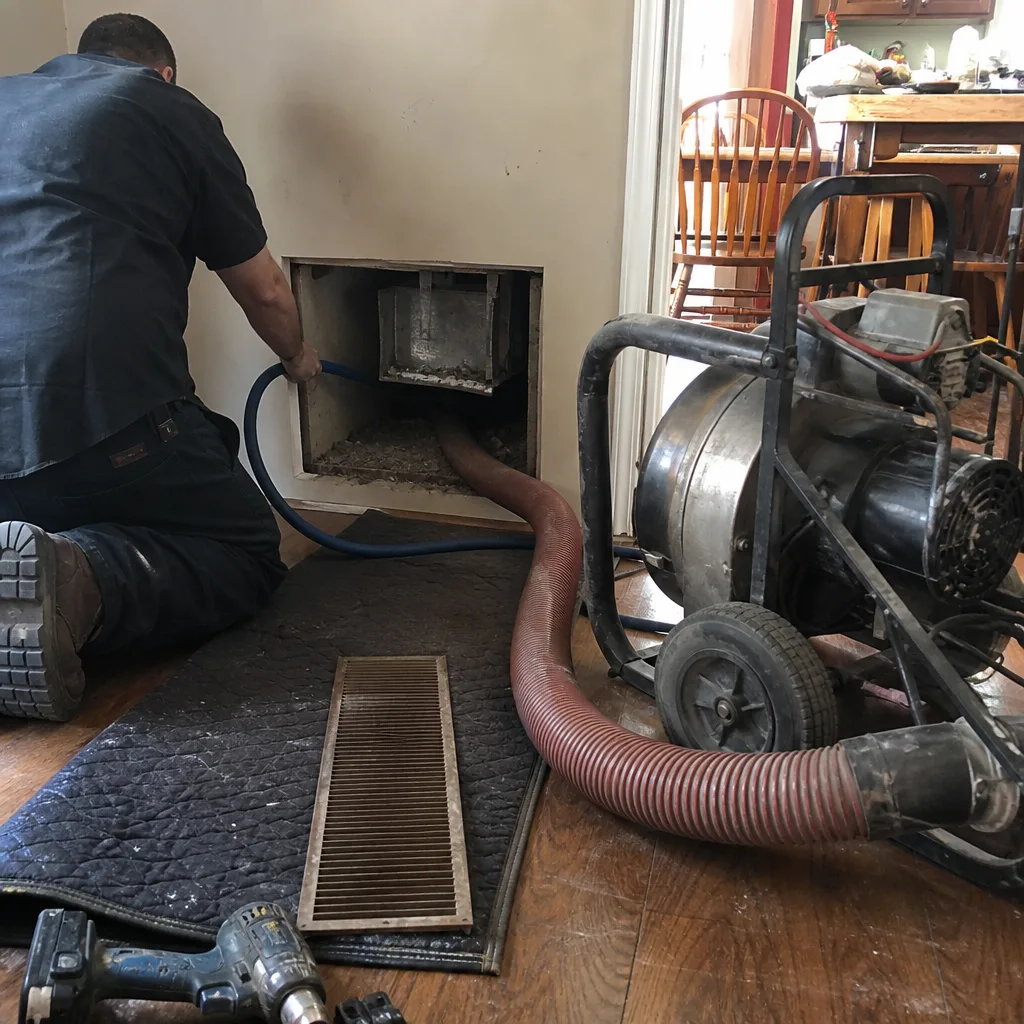
The $150 job works like this: a tech arrives with a portable vacuum, removes two or three return grilles, vacuums what the hose can reach from those access points, perhaps inserts a spinning brush attached to a drill into the first few feet of the main trunk, then tells you the system is clean. Total time on site: 45 to 90 minutes. The branch lines that serve your bedrooms, hallways, and living space never get touched, because the vacuum hose can’t navigate the 90-degree bends at the end of each run. The tool never reaches the ducts that matter most. You’ve paid $150 for a main trunk vacuum and a false sense of completion.
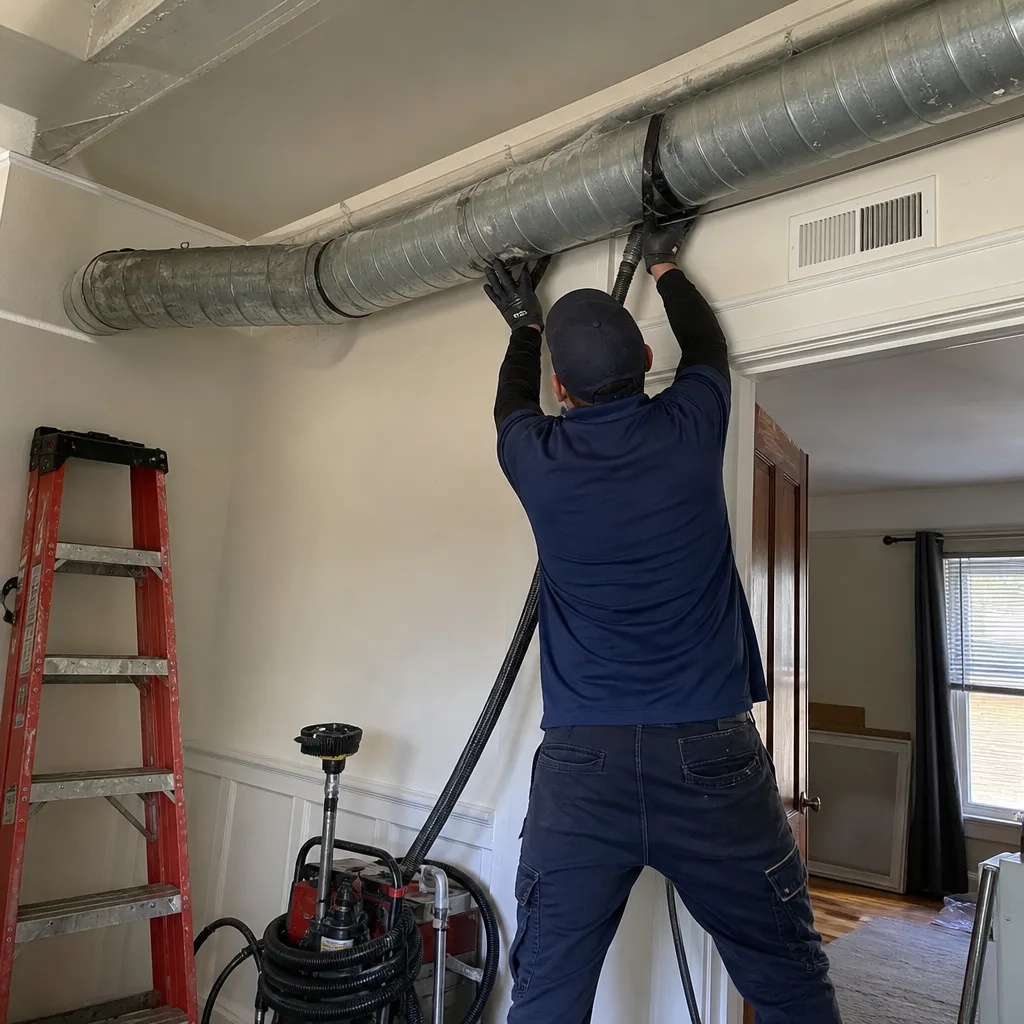
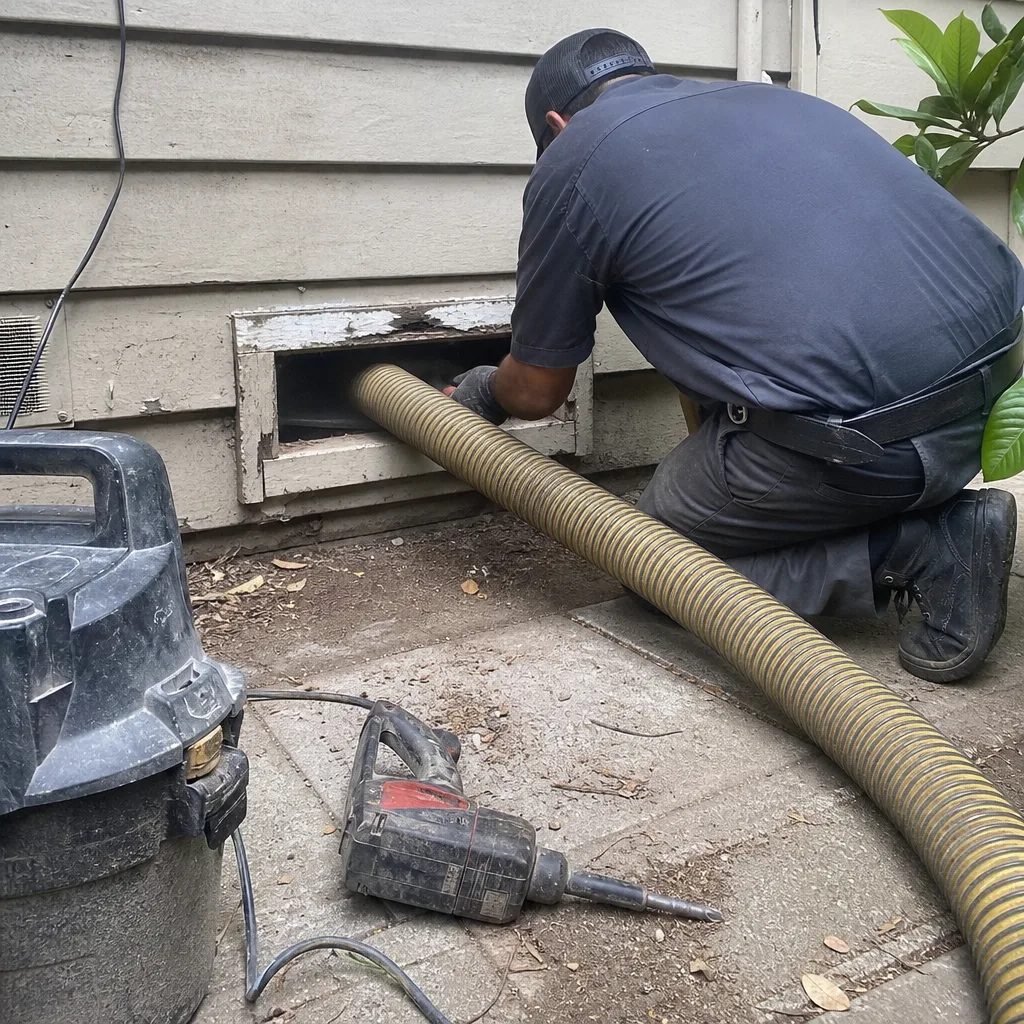
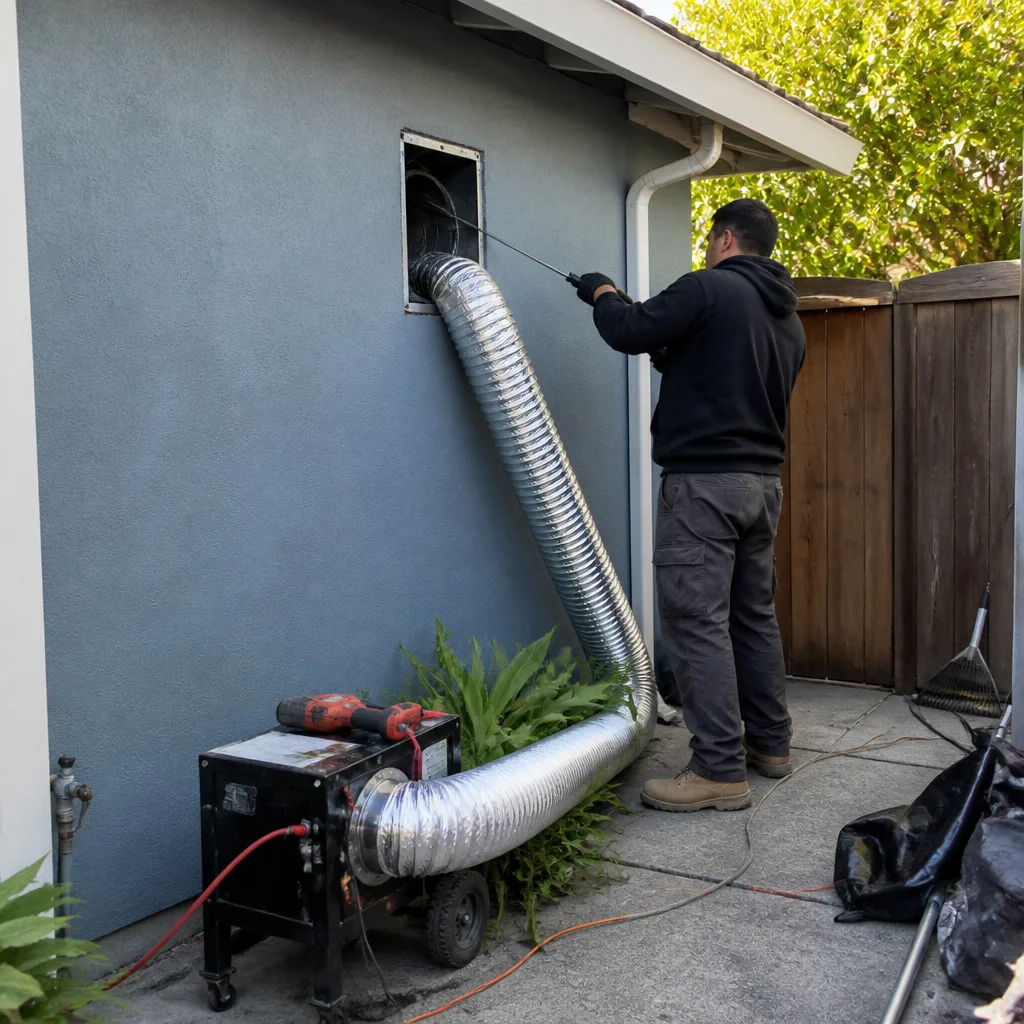
The $600 job works like this: a tech arrives with a truck- or trailer-mounted extraction unit, pressure-seals the supply and return sides, cuts or opens access points near the plenum and at each branch takeoff, runs a rotary brush or compressed-air agitation tool through every supply run and every return run, completes the full main trunk length, then runs the extraction system to capture everything that was dislodged. Total time on site: 2.5 to 5 hours. Then, before packing up, the tech runs a camera through representative sections so you can see the before and after. That’s a full-system cleaning.
There’s also a middle tier: contractors who run a decent portable extraction system and do access each vent from the register side, but skip containment. The brushing happens, the dust gets partially extracted, and some portion of what’s dislodged circulates back into your living space through open registers. These jobs run $300 to $450. The economics force a choice: without containment equipment, the job is faster and cheaper, but the dust that gets kicked up has nowhere to go except back through the air you’re breathing.
One more consideration: if a contractor shows up with a Rotobrush or Nikro system, they’ve invested in commercial-grade extraction. Companies don’t invest tens of thousands of dollars in that equipment to run 45-minute jobs. The equipment choice is a signal about how the company views the scope of the work.
Add-Ons Worth Considering vs. Upsells to Skip
Not every add-on is an upsell. Some things legitimately belong in a comprehensive air system service, and others are margin-padding with no measurable benefit. Here’s how to separate them.
Worth considering:
- Dryer vent cleaning. This isn’t a revenue add-on, it’s a fire-risk reduction service. Lint accumulation in dryer vents causes thousands of structure fires annually, and a dryer vent that’s never been cleaned in a 10-year-old Oakland home is a genuine hazard. Treat this as a safety service. If it’s offered at a reasonable bundled rate with your duct cleaning, it’s worth doing.
- Air duct repair. If the tech identifies separated sections, crushed runs, or leaking joints while inside the system, you want them fixed. Leaky ducts pull unconditioned air (attic heat, crawlspace dust, whatever’s in the wall cavity) into the air you’re paying to heat and cool. Repairing duct leaks is often the single highest-ROI HVAC improvement in older Oakland homes, and a cleaning contractor that also does repair means you don’t have to schedule a second visit from a different company.
- Filter upgrade consultation. If you’re using cheap 1-inch fiberglass filters, switching to a higher-MERV pleated filter (within what your system’s static pressure can handle) is a legitimate improvement. Some homes benefit from a Honeywell or Aprilaire media cabinet installation, and a contractor familiar with those product lines can make a real recommendation.
- Sanitizing or antimicrobial treatment. In limited cases, yes. If there’s visible microbial growth or a persistent odor issue that cleaning alone doesn’t resolve, a professional sanitizing treatment is legitimate. But this should follow cleaning, not replace it, and you should ask what product is being used and why.
Usually skip:
- “Premium” filter packages marked up 400%. You can buy quality filters yourself. If the markup is extreme, politely decline.
- “UV light” installation tacked onto cleaning. UV systems have legitimate applications in specific situations, but they’re frequently sold as a generic air quality panacea to whoever’s willing to pay. If a tech tries to bundle a UV install into a duct cleaning quote before seeing your system, that’s a red flag.
- “Whole-house deodorizing” or “freshening” services. These are almost always a spray-and-leave product with no lasting effect. If there’s an odor problem, the source needs to be found and addressed.
- Anything priced as a percentage add-on without a clear deliverable. “Platinum package” pricing tiers should break down into specific services. If you can’t tell what you’re getting, don’t pay for it.
How to Evaluate a Contractor from Their Quote Alone
You can learn more about a duct cleaning company from the quote document than from their website or their reviews. Here’s the evaluation process that tells you who scoped your job and who’s guessing.
Step 1: Check for scoping language
Did the quote reference your home’s specifics, or is it a stock number? A contractor who asks about the number of vents, whether your ducts are in an attic or crawlspace, the age of the home, and whether you’ve had recent renovations has started to scope your job. A contractor who quotes “$399 whole house” without asking anything hasn’t. That’s the first filter.
Step 2: Look for line-item transparency
Can the contractor explain, line by line, what each portion of the price represents? We’re not saying every quote needs an hourly breakdown, but if you ask “what drives this number?” and the answer is a shrug or a repetition of “it’s our standard package,” walk away. Someone who actually scoped the job can tell you why your job costs what it costs.
Step 3: Confirm equipment and method
Ask what extraction equipment they run and how they contain dislodged particulate. If they say they use a “powerful truck-mounted vacuum” but can’t name the brand or describe the containment process, they’re running a shop vac with marketing. Contractors who invest in equipment like Rotobrush rotary-brush systems or Nikro industrial extraction units are proud of it, and they’ll tell you exactly what they run.
Step 4: Ask about inspection
Will they show you the before and after? This is table stakes. Without camera inspection, there’s no way to verify that cleaning actually occurred. If the contractor says inspection isn’t included or “isn’t necessary,” that’s a disqualifier.
Step 5: Check the warranty language
A satisfaction guarantee in writing tells you the contractor is confident they’ll do the job correctly. Vague promises made over the phone don’t mean much. If there’s no written commitment that the scope will be completed as quoted, you’re taking on more risk than you need to.
Common Mistakes to Avoid
- Choosing on price alone. The $150 cleaning and the $600 cleaning are different services. Buying the cheap one doesn’t save money if you need the cleaning done again a year later because the branch lines were never touched.
- Not asking about containment. A contractor who doesn’t contain what they dislodge is redistributing contaminants through your home. Ask directly how they prevent that, and if the answer is vague, find someone else.
- Skipping the pre-inspection walkthrough. Before work starts, the tech should be able to show you what they’re seeing. If they can’t or won’t, you’re buying without looking.
- Assuming duct cleaning will solve allergies or asthma. It may help, it may not. Duct cleaning removes accumulated debris; it doesn’t cure respiratory conditions, and it’s not a substitute for source control and proper filtration. Any contractor who promises health outcomes is overselling.
- Not scheduling dryer vent cleaning at the same time. It’s the single most common missed safety item in Oakland homes, and bundling it with duct cleaning is cheaper than scheduling it separately later. A dryer vent isn’t a minor chore, it’s a fire-risk checklist item.
- Ignoring repair findings. If the tech finds separated or crushed ducts and you ignore the repair, you’ve cleaned a system that will just pull in dusty attic or crawlspace air from the leak point. Clean ducts, sealed ducts, safer home. The cleaning and the repair work together.
- Falling for “regular price” anchoring. “Regularly $850, today only $399” is a pricing strategy, not a limited offer. The $399 is the price. Evaluate whether it’s fair for the scope, not whether you’re “saving” $451.
When to Call a Professional
If you’re seeing visible dust accumulation around your supply registers, if your home has been through a renovation, if you recently bought an older Oakland home with unknown duct service history, or if you have a dryer vent that hasn’t been cleaned in more than two years, it’s time to get a professional assessment. Similarly, if you can feel airflow differences between rooms or hear whistling from your ducts, there may be leaks or blockages worth investigating. A professional evaluation doesn’t commit you to anything, but it gives you a baseline. Air Duct Cleaning in Oakland is a scheduled service with real scope requirements, and the right contractor will walk you through what they’re seeing before they quote, not after. Hallmark Air Duct Cleaning offers free estimates in Oakland, call (833) 467-6681.
Frequently Asked Questions
In 2026, a standard single-family home in Oakland should expect to pay $400 to $650 for a full-system cleaning, with larger or more complex older homes running $700 to $1,200. The range reflects home size, number of vents, duct accessibility, and the equipment the contractor uses. Get a specific quote based on your home’s layout before comparing numbers, and call (833) 467-6681 for a free estimate from our team.
Cheaper quotes usually mean less process: no containment, no branch-line access, no camera inspection, and less time on site. The $150 job vacuums the main trunk; the $600 job cleans every supply and return run with mechanical agitation and proper extraction. If a quote seems dramatically below market, ask what equipment is used, how contamination is contained, and whether the branch lines are included in the scope.
You should be able to see before-and-after photos or video from a camera inspection of the same sections of ductwork. A contractor who can’t provide photographic verification either didn’t do the work thoroughly or doesn’t have the inspection capability. Ask for this before you book, not after the invoice arrives.
Every 3 to 5 years for most Oakland homes, but that depends on several factors: pet load, renovation history, proximity to freeways (the 880 corridor deposits heavier particulate), and filter habits. For help planning ahead, see our Air Duct Cleaning Emergency Preparedness Guide for Oakland Homes. Homes in the Oakland Hills may need more frequent attention during and after wildfire seasons due to ash infiltration. If you can see dust buildup on registers or smell mustiness when the system runs, it’s time for an inspection regardless of the calendar.
Newer construction often has construction debris (drywall dust, sawdust, stray fasteners) inside the ductwork from the build process, and a cleaning within the first few years can remove material that would otherwise circulate. After that, the 3-to-5-year cadence applies. The value isn’t just cleanliness; it’s also the inspection opportunity, because the camera run can catch early problems like separated duct runs before they become efficiency losses or contamination sources.
Yes. It’s the single most practical bundling opportunity in home maintenance because the same company can do both in one visit, and the dryer vent is a fire-safety item that’s frequently forgotten. If your dryer takes longer than 40 minutes to dry a normal load, or you can’t remember the last time the vent was cleaned, schedule it. Dryer Vent Cleaning in Oakland is a dedicated fire-risk reduction service, not a rushed add-on.
Older Oakland homes frequently have separated duct sections, crushed runs, or leaking joints that only become visible during a cleaning. If your contractor finds these issues, Air Duct Repair in Oakland should be part of the same service visit when possible. Cleaning a system with leaks means the ducts will just pull dirty air back in from the attic or crawlspace. Fixing the leaks is what gives the cleaning lasting value.
The Bottom Line
Duct cleaning in Oakland is a service where the price gap reflects process differences more than profit differences. The $150 special is a different service than the $600 full-system cleaning, and understanding that distinction protects you from paying for work that doesn’t reach the ducts that matter. Expect to spend $400 to $650 for a standard home, more for older or larger properties with complex access. Judge contractors on scoping conversations, equipment transparency, containment methods, and inspection documentation. When you find someone who can explain pricing line by line and show you the work was done, you’ve found a contractor worth keeping. For Oakland homeowners, the goal isn’t the cheapest number, it’s clean ducts, sealed ducts, and a safer home. Hallmark Air Duct Cleaning is ready when you are, call (833) 467-6681 to schedule your free estimate.
Written by the team at Hallmark Air Duct Cleaning, serving Oakland since 2011. Explore more guides & resources on our blog.
See the difference
 Before
 After
 Before
 After
 Before
 After