
Last updated November 2, 2026
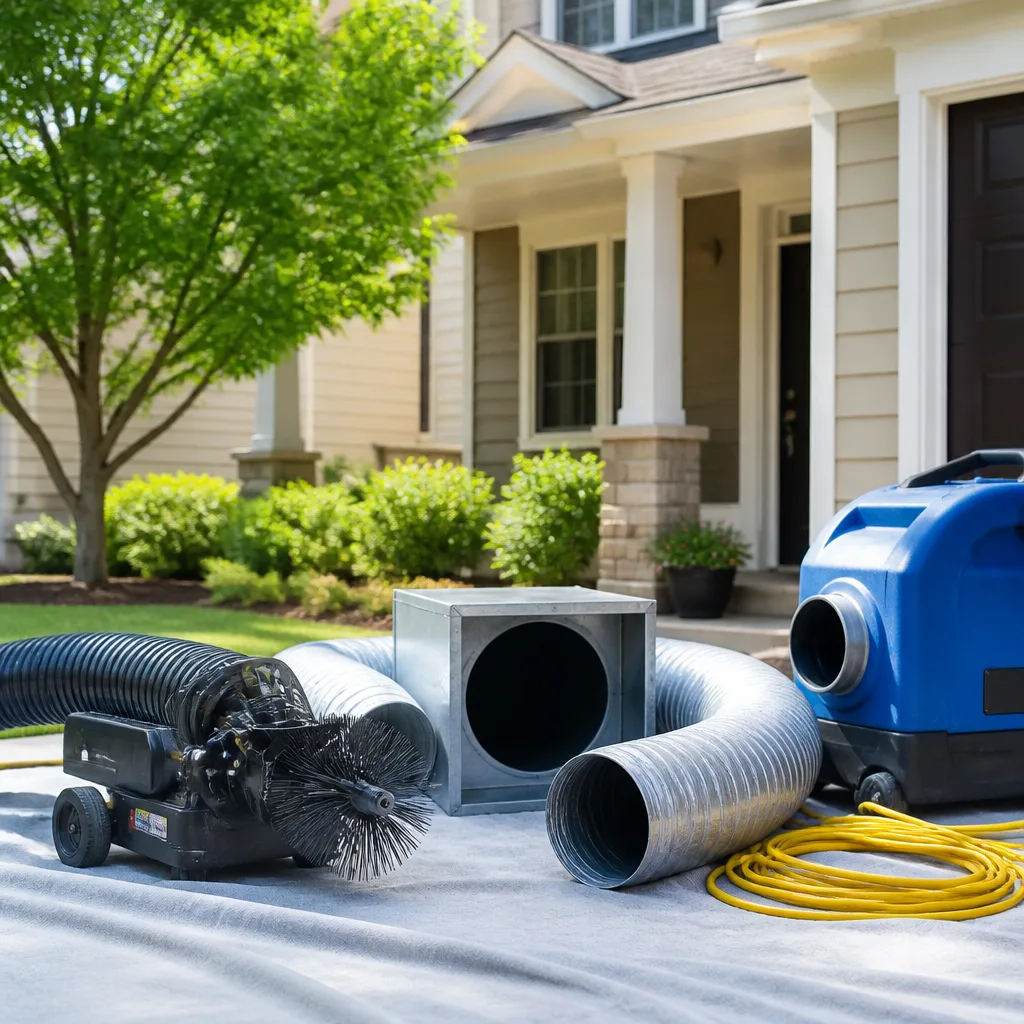 Whole-home duct cleaning
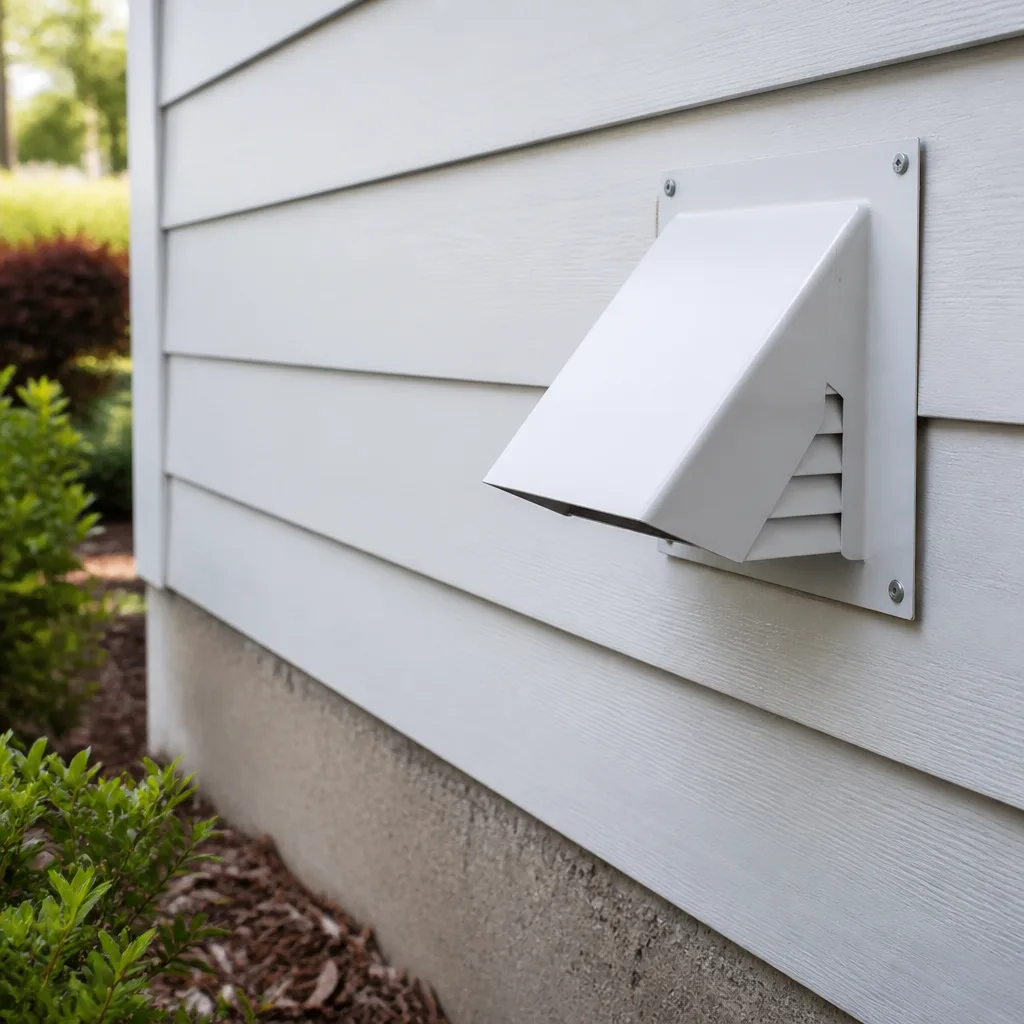 Dryer vent cleaning
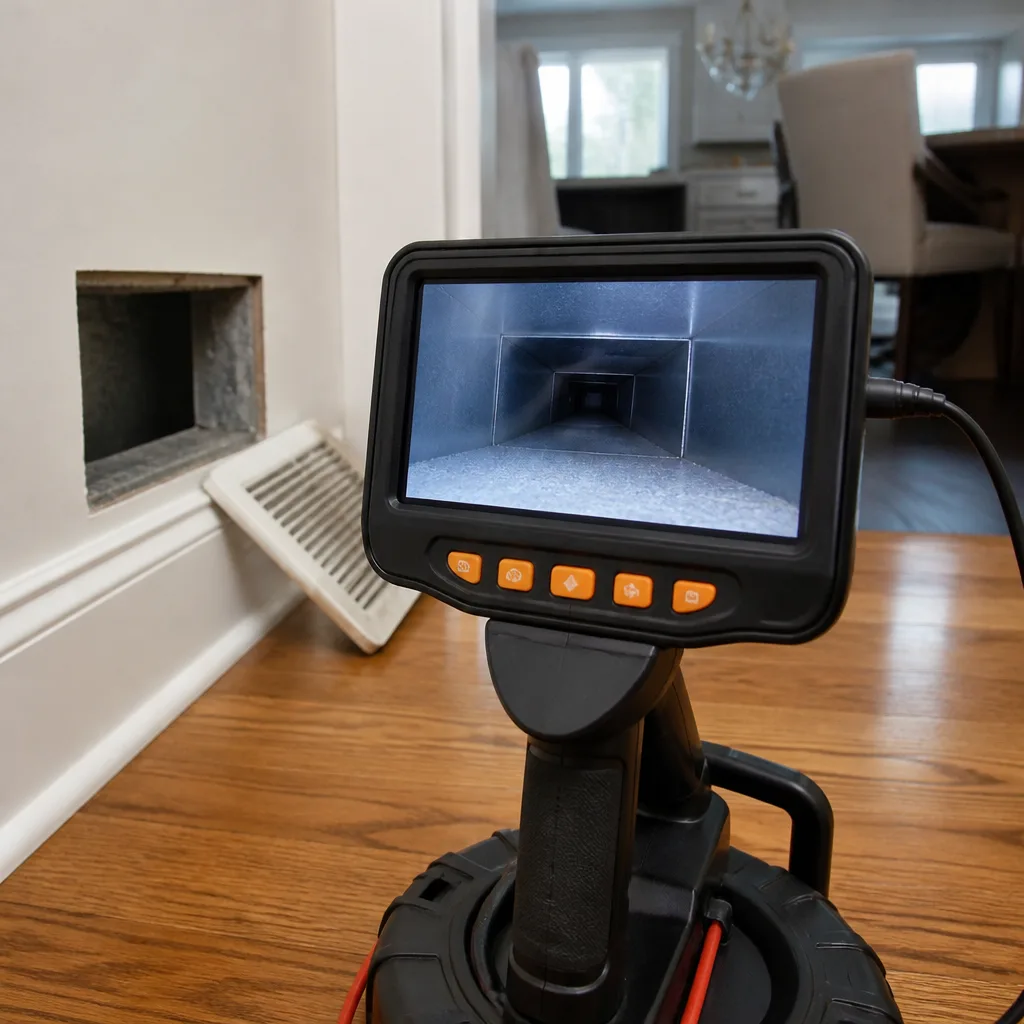 Camera inspection
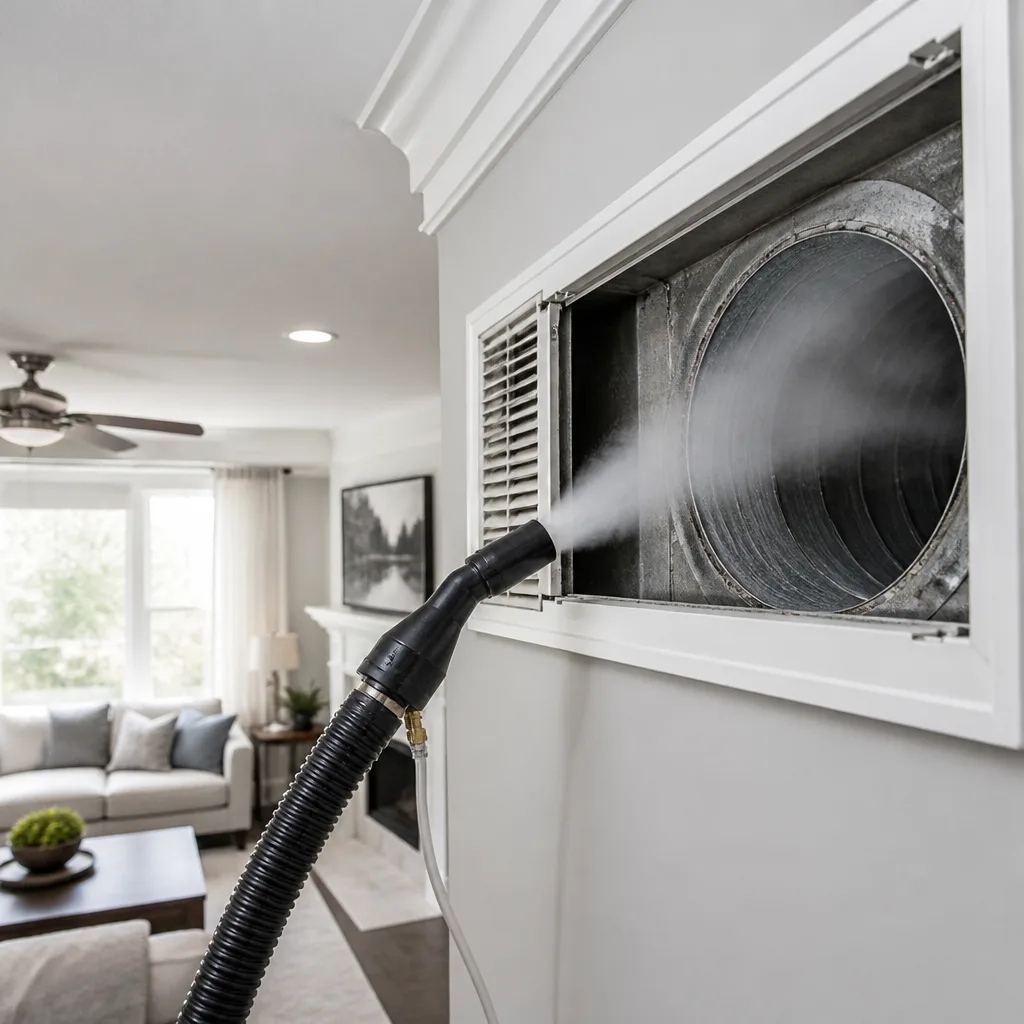 Sanitizing & deodorizing
Whole-system duct and dryer vent check with before-and-after photos - you see exactly what came out of your vents
That "$99 whole-house special" is a bait ad - the real number appears once they are in your hallway, or the "clean" is a shop-vac at the register. We photograph the inside of your ducts before and after instead.
Choosing the Right Air Duct Cleaning Brand: A Buyer’s Guide for Oakland
Most homeowners in Oakland hire a duct cleaner without knowing what equipment will be in the truck. That’s the single biggest mistake in this industry. The difference between a contact-cleaning rotary system and a portable shop vac unit is the difference between a cleaned duct and a stirred-up one, and it’s a difference you can’t see in a quote or a coupon. This guide – along with The Complete Air Duct Cleaning Guide for Oakland Homeowners – explains exactly what the equipment brands mean, what each system actually does, and how to ask the right questions before you book. By the time you finish reading, you’ll know more about duct cleaning equipment than most contractors in Oakland expect their customers to know.
Quick Answer
The best company offering our Air Duct Cleaning services in Oakland is one that deploys multiple professional-grade systems: a rotary brush system for contact cleaning, a negative air machine for containment, and true HEPA filtration to capture what gets dislodged. Look for contractors who can name their equipment brands, explain why they chose them, and match the tool to your specific duct type and contamination level. Avoid anyone who arrives with a single portable vacuum unit and a per-vent price.
Styles & brands we work with
- Whole-home duct cleaning
- Dryer vent cleaning
- Camera inspection
- Sanitizing & deodorizing
Table of Contents
- What Rotobrush, Nikro, and Abatement Technologies Actually Do
- Why Equipment Investment Signals Contractor Commitment
- The Combination Advantage: Multiple Systems, One Job
- Questions to Ask Before You Book: Separating Experts from Rehearsed Scripts
- Equipment Limitations to Watch For in Oakland Homes
- Oakland-Specific Considerations: Climate, Housing Stock, and Duct Conditions
- Common Mistakes to Avoid
- When to Call a Professional
- Frequently Asked Questions
- The Bottom Line
What Rotobrush, Nikro, and Abatement Technologies Actually Do
Equipment brands in the duct cleaning world aren’t just labels on a truck. Each one represents a distinct cleaning method with specific capabilities and limitations. Understanding these differences is the fastest way to evaluate a contractor’s seriousness before they ever step foot in your Oakland home.
Rotobrush is a rotary brush system. It uses a spinning brush head attached to a flexible shaft that gets fed through the ductwork. As the brush rotates, it physically scrubs the interior walls of the duct, dislodging dust, debris, pet hair, and the kind of particulate buildup that accumulates over years of forced-air heating and cooling. The brush is paired with a vacuum that captures debris as it’s loosened. Rotobrush equipment is particularly effective on the sheet metal ducts common in many Oakland homes built in the 1940s through 1970s. It’s a contact-cleaning method, meaning the brush touches the duct surface, which is what makes it fundamentally different from a vacuum-only approach.
Nikro represents the industrial-grade side of the industry. Nikro manufactures some of the most powerful negative air machines and HEPA-filtered vacuums available to professional duct cleaners. A negative air machine creates a vacuum environment inside the duct system while cleaning takes place. It pulls air from the home, through the ducts, and through a HEPA filter before exhausting it outside. This is critical: without negative air pressure, any dislodged contaminant can simply puff out of a vent and land on your couch instead of leaving your home. Nikro equipment is built for continuous commercial use, which is why you don’t see it in the back of a pickup truck driven by someone who does duct cleaning on weekends.
Abatement Technologies is a name you’ll hear more often from specialists in air quality and containment. Their equipment focuses on HEPA filtration and negative air containment for renovation, remediation, and deep-cleaning projects. In a duct cleaning context, Abatement Technologies equipment provides the containment layer: it captures the contaminants that the rotary brush dislodges and ensures they don’t recirculate through the living space. This is the equipment that lets a contractor honestly say they don’t redistribute dust; they remove it.
For Oakland homeowners, the practical takeaway is this: a contractor who names Rotobrush, Nikro, or Abatement Technologies isn’t just using marketing language. They’re describing a specific toolset. The question is whether they own it, maintain it, and know when to use which piece.
Why Equipment Investment Signals Contractor Commitment
A professional-grade rotary brush system costs a contractor real money. A Nikro negative air machine costs real money. An Abatement Technologies HEPA filtration unit costs real money. We’re talking thousands of dollars before the first job is booked. That financial commitment does something important: it screens out the low-volume, low-care operators who give this industry its reputation for bait-and-switch pricing and rushed, incomplete work.
Think about it from the contractor’s perspective. If you’ve invested $15,000 to $30,000 in equipment, you need to book jobs consistently to pay for it. You need repeat customers and referrals. You need a reputation. That means you’re incentivized to do the job correctly the first time, because a callback or a bad review is a direct threat to the equipment loan.
Now consider the alternative: a contractor with a $400 portable vacuum unit from a hardware store. What’s their investment? What happens if they do a mediocre job and the customer complains? They can disappear and rebrand next week. There’s no sunk cost holding them accountable.
Equipment investment also signals training. Rotobrush, Nikro, and Abatement Technologies equipment requires operator training to use effectively and safely. You don’t just plug in a negative air machine and hope for the best. You need to understand airflow dynamics, duct configurations, access point placement, and containment protocols. The companies that make this equipment offer training programs and certifications. A contractor who carries these systems has almost certainly completed that training, because the equipment is useless without it.
In Oakland’s competitive home services market, equipment investment is the variable least likely to be faked. A contractor can buy a logo wrap for a van and post on Nextdoor. They can’t fake owning a Nikro negative air machine when you ask to see it.
The Combination Advantage: Multiple Systems, One Job
No single piece of duct cleaning equipment is right for every duct condition. A rotary brush excels at scrubbing the interior walls of accessible sheet metal ducts. A negative air machine excels at containing what the brush dislodges. A HEPA-filtered vacuum excels at fine particulate capture. The problem with single-tool contractors is that they apply their one tool to every job, whether or not it’s the right tool for the specific contamination type present in your Oakland home.
Here’s what a multi-system approach looks like in practice:
- Assessment first. The contractor inspects the duct type, access points, visible contamination levels, and any evidence of mold, pests, or excessive buildup. Different duct materials and contamination types require different cleaning approaches.
- Rotary contact cleaning. A Rotobrush system physically scrubs the duct walls to dislodge adhered debris. This is the work that a vacuum-only approach simply cannot do.
- Negative air containment. A Nikro negative air machine creates lower pressure inside the duct system, so that dislodged particles are pulled toward the collection point rather than pushed into the home’s living spaces.
- HEPA filtration at the collection point. Abatement Technologies filtration captures the finest particles, including the sub-micron dust that causes the most respiratory irritation, before the air leaves the system.
- Post-cleaning inspection. A contractor with access to these systems can perform a visual before-and-after inspection, showing you what came out and confirming the interior walls are actually clean.
This combination approach matters more in Oakland than it does in a new-build suburb. Oakland’s housing stock spans 100 years across wildly different construction eras. A 1925 Craftsman in Rockridge has different duct conditions than a 1990s home in the Oakland Hills. A contractor with one tool has one answer. A contractor with multiple systems can match the tool to the actual ductwork.
Questions to Ask Before You Book: Separating Experts from Rehearsed Scripts
The best time to evaluate a duct cleaning contractor is before they arrive. A phone call or estimate visit is an opportunity to ask pointed questions about equipment. Here are the questions that get past rehearsed responses and reveal whether you’re talking to a specialist or a salesperson.
1. “What equipment will you use on my system?”
Listen for specific brand names and a description of what each piece does. An expert will say something like, “We use a Rotobrush rotary system for contact cleaning paired with a negative air machine for containment.” A less experienced operator will say, “We have professional equipment” or “We use a truck-mounted vacuum.” Push for specifics.
2. “Do you use a negative air machine during cleaning?”
If the answer is no, or if they don’t understand the question, you’ve identified a vacuum-only operator. Negative air containment is not a luxury add-on; it’s the difference between removing dust and redistributing it.
3. “What type of filtration does your system use?”
The correct answer includes the phrase “HEPA” and ideally a micron rating. True HEPA filtration captures 99.97% of particles at 0.3 microns. If they can’t specify the filtration level, they don’t have real filtration.
4. “Do you match your equipment to the duct type, or do you use the same approach on every job?”
An expert will describe the variables: flexible duct vs. rigid sheet metal, the presence of fiberglass liner, access point availability, crawlspace vs. attic duct runs. A generalist will say, “The process is the same regardless.” That answer tells you what you need to know.
5. “Can I see the equipment when you arrive?”
A contractor confident in their toolset will happily show you the machinery. Someone deploying a shop vac will deflect. The equipment should be commercial-grade and worn-in, not fresh from a big-box store.
We’ve found that these questions take about three minutes to ask and save Oakland homeowners thousands of dollars in wasted spend on ineffective cleanings; for more guides & resources on protecting your home, see our blog. The contractors who answer well are the ones who know their craft. The ones who stumble are usually the ones with the lowest price and the weakest results.
Equipment Limitations to Watch For in Oakland Homes
Even professional-grade equipment has limitations, and honest contractors will explain them. Dishonest ones will hope you don’t ask. Oakland’s housing stock presents specific challenges that reveal equipment limitations quickly.
Truck-mounted systems and crawlspace runs. Many Oakland homes, particularly in neighborhoods like Temescal and Diamond District, have duct runs that pass through crawlspaces with limited clearance. Truck-mounted vacuum systems, which connect to the ducts through a long hose from the street, can lose suction power over distance and may not reach far-flung crawlspace duct runs effectively. Portable professional systems, when properly powered, can be positioned closer to the access point and maintain consistent suction where truck-mounted units can’t. This is why the truck-mounted vs. portable debate isn’t about one being universally better; it’s about which tool fits the specific duct configuration.
Portable units without true HEPA. Some contractors use portable equipment that looks professional but lacks certified HEPA filtration. They may use a standard filter and call it “HEPA-like” or “high efficiency.” No. True HEPA is a specific standard with a specific particle capture rating. Ask for the rating. If they can’t give you the 0.3 micron number, the filter is not HEPA.
Rotary brushes and fragile ductwork. Older ductwork, particularly in pre-1950 Oakland homes, may include fragile components or deteriorating joints. A rotary brush system operated by an inexperienced technician can cause damage. This isn’t a reason to avoid rotary cleaning; it’s a reason to ensure your contractor has experience with older systems and knows when to adjust technique or tool choice.
Access limitations. Some Oakland homes have duct systems with minimal access points, which means cleaning requires cutting additional access holes. A professional contractor will explain this before the job starts and will properly seal access points after. A less experienced operator may skip unreachable sections entirely, leaving them uncleaned and collecting dust for another decade.
Oakland-Specific Considerations: Climate, Housing Stock, and Duct Conditions
Oakland’s climate and housing stock create duct conditions that differ from neighboring Bay Area cities. Understanding these local factors helps you evaluate equipment choices with fresh eyes.
Oakland’s marine layer brings consistent humidity, particularly in neighborhoods closer to the Bay like Jack London Square and the Fruitvale District. That humidity means dust in ducts can become heavier and more adhered than in dryer inland climates. Dry particulate can often be removed with vacuum alone. Humid, packed particulate sticks to duct walls and requires contact cleaning, which is precisely what a rotary brush system provides.
The housing stock in Oakland spans from Victorian-era homes with retrofitted HVAC systems to mid-century ranches to newer construction in less dense pockets. Each era has characteristic duct configurations. Older homes often have ducts that were added during a retrofit, meaning irregular sizing, unusual access points, and junction boxes that accumulate debris. Newer construction, particularly in ZIP codes with 2000s-era development, may have flex duct that requires a gentler approach. The right equipment matches the duct era.
Wildfire smoke has become a recurring fact of life for Oakland residents. The catastrophic fire seasons of recent years have left a residue in ductwork across the East Bay. Smoke particles are extremely fine, under 1 micron, and they can persist in ducts long after outdoor air quality improves. Fine particulate capture requires true HEPA filtration at the collection point. A system without HEPA will simply recirculate smoke residue through the home, which is exactly what you don’t want.
This climate and housing stock context is why an Oakland duct cleaning should never be treated as a generic service. The contractor needs to understand what they’re likely to find in an Oakland duct system before they open the first access panel. And that’s why Air Duct Cleaning in Oakland is a different service than it is in a dry, new-build suburb.
See the difference
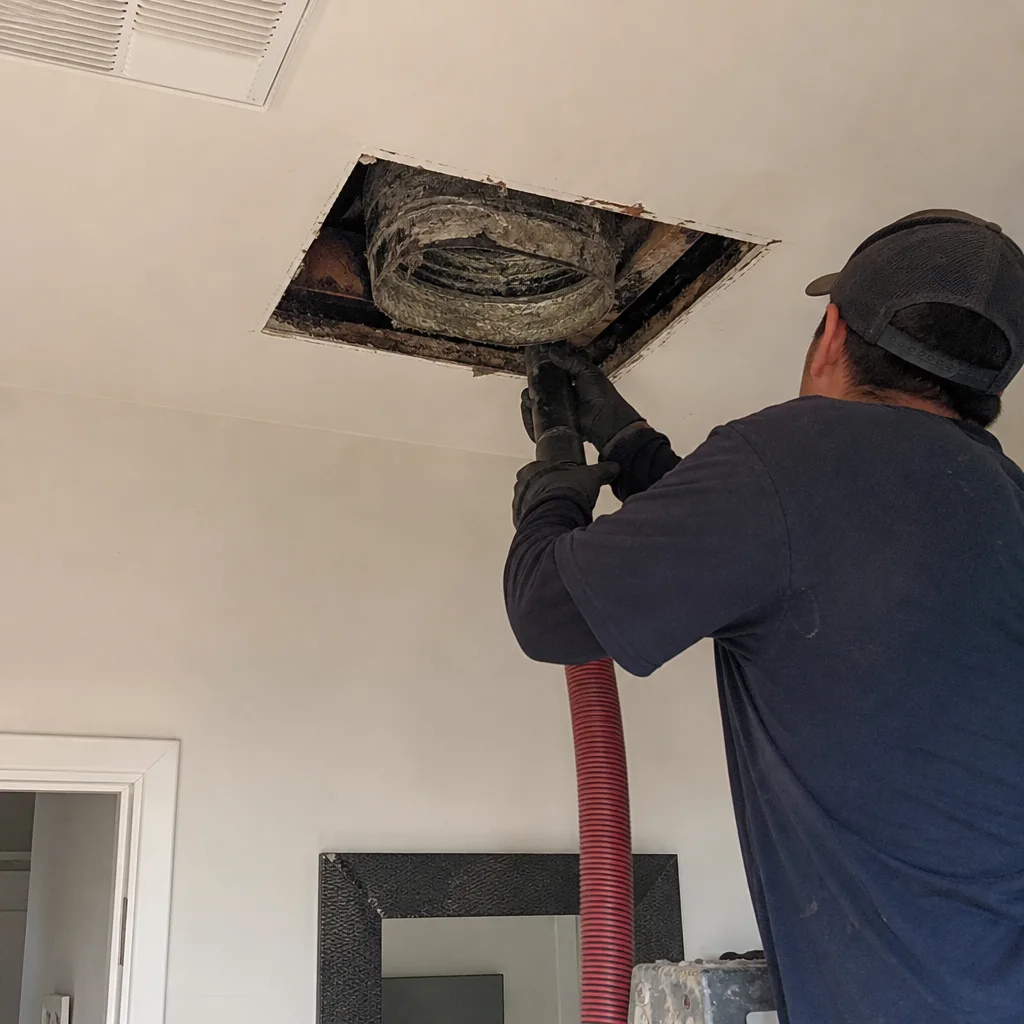 Before
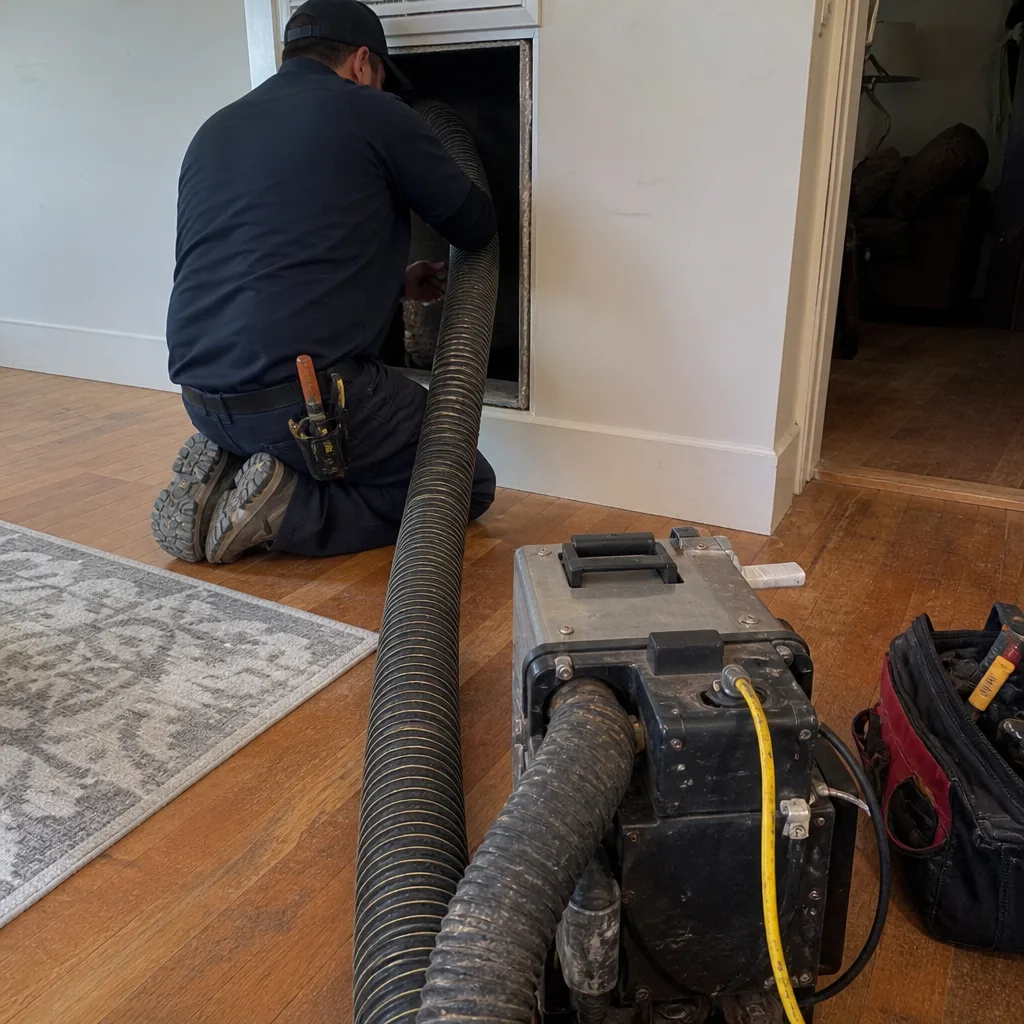 After
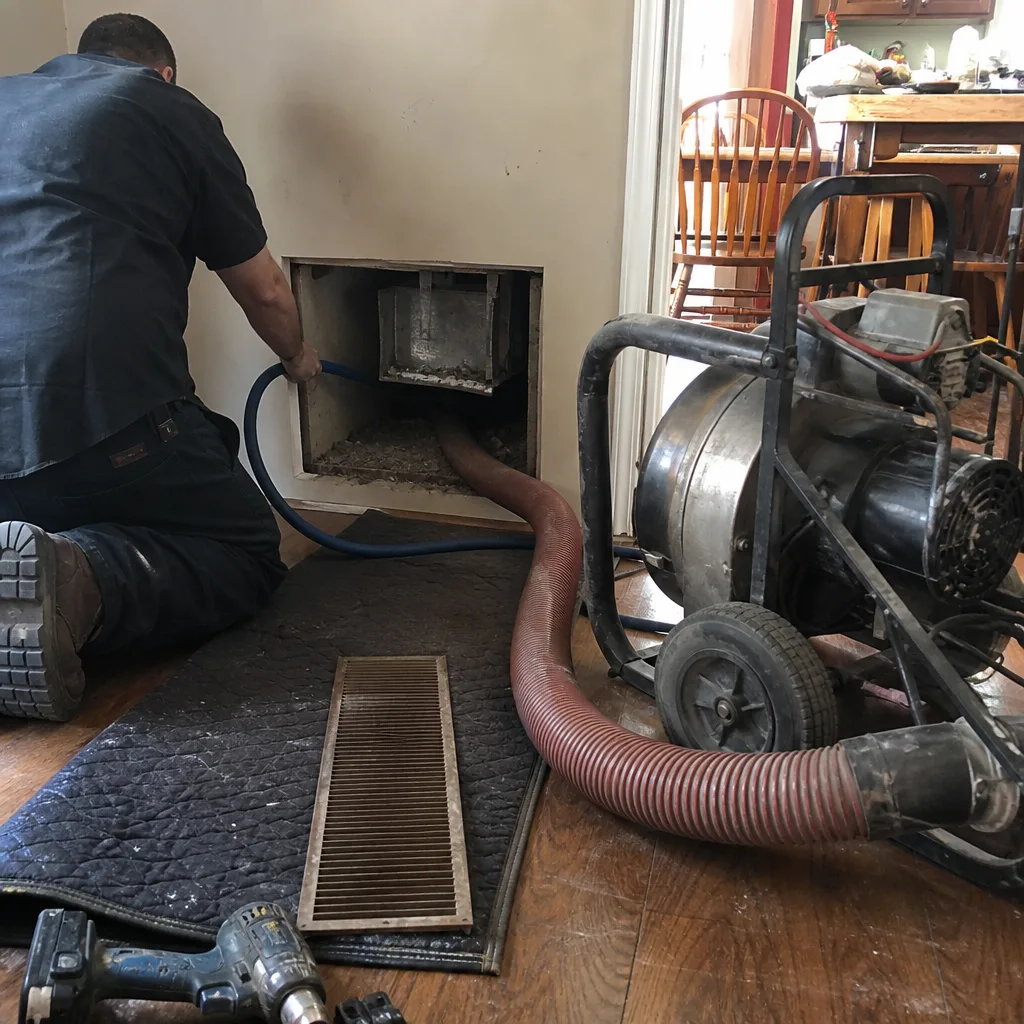 Before
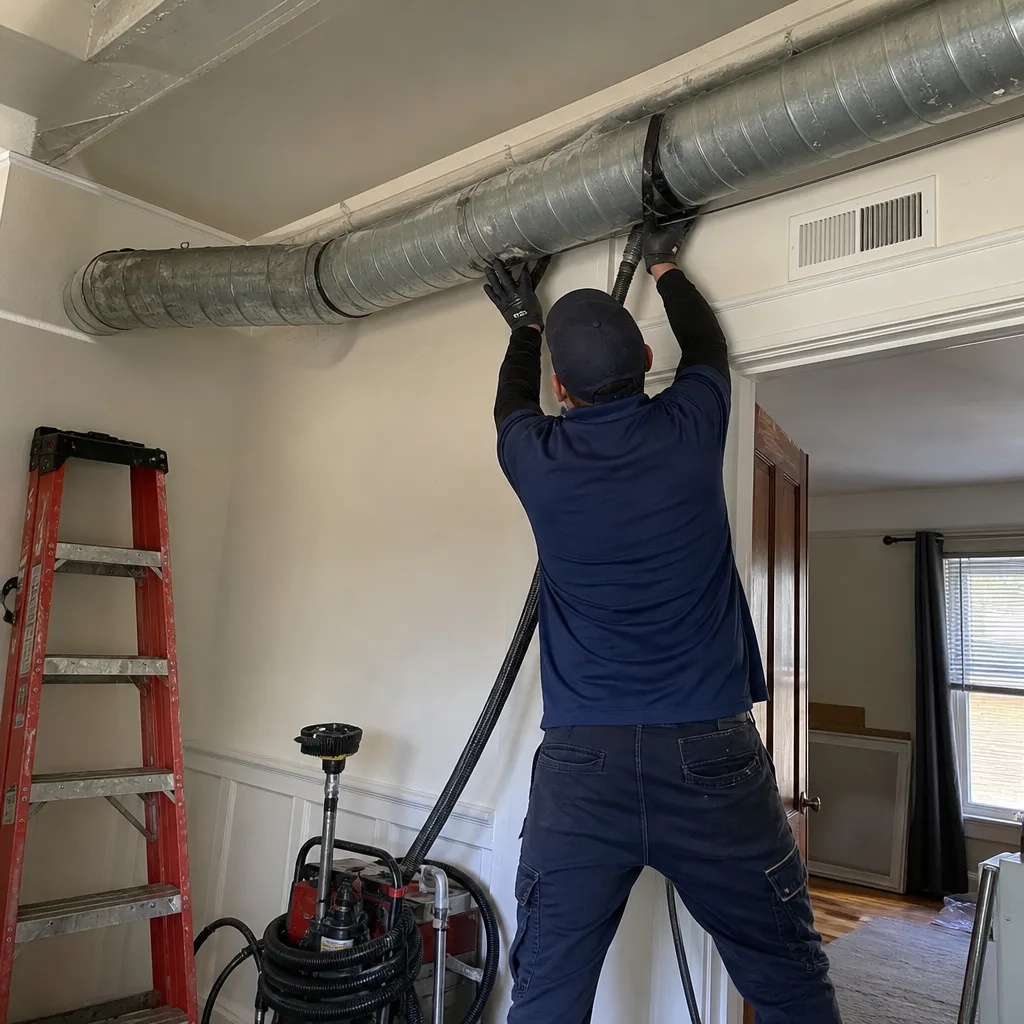 After
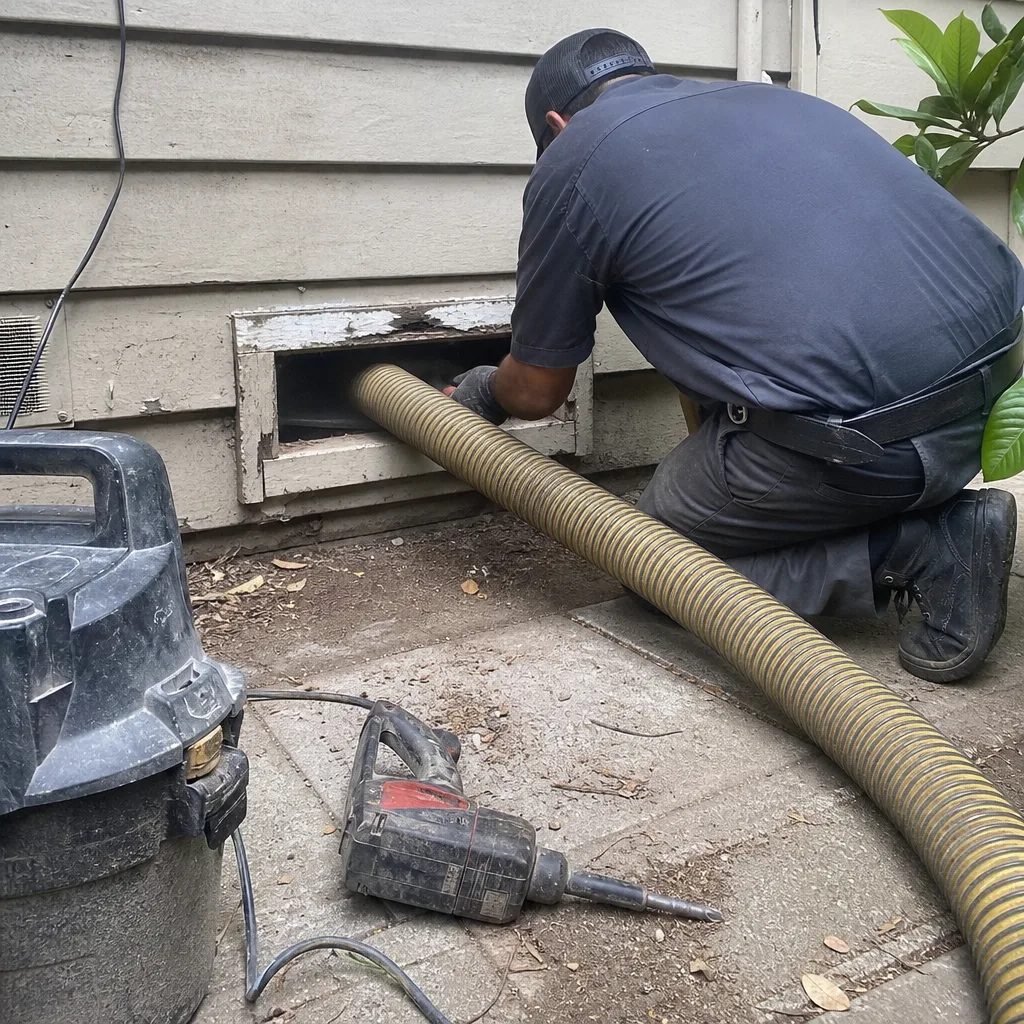 Before
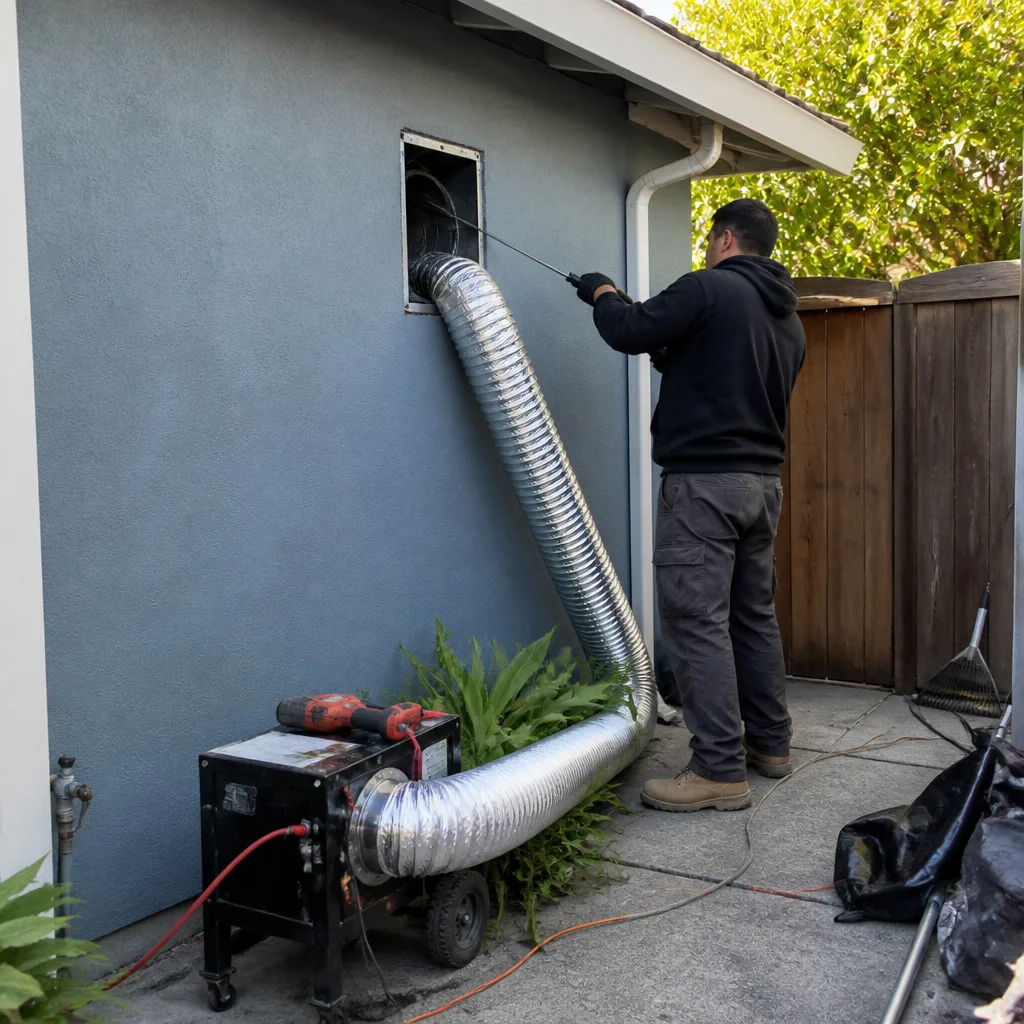 After
Key Takeaways
- Equipment brands like Rotobrush, Nikro, and Abatement Technologies represent specific capabilities: contact cleaning, negative air containment, and HEPA filtration.
- Professional-grade equipment investment screens out low-volume operators who can’t sustain a specialty business.
- A multi-system approach handles a wider range of duct conditions than any single tool.
- Ask about negative air machines, HEPA ratings, and tool matching before booking; the answers reveal expertise or lack of it.
- Oakland’s humidity, housing stock, and wildfire history create duct conditions that demand proper equipment, not a generic vacuum pass.
- Truck-mounted systems can struggle with crawlspace duct runs common in older Oakland homes.
Common Mistakes to Avoid
- Choosing by price alone. A per-vent price or a $99 whole-home coupon is almost always a teaser rate that becomes a much larger invoice once the van is parked outside. Bait-and-switch pricing is this industry’s oldest trick, and Oakland’s competitive market is full of it.
- Not asking about equipment. Most homeowners spend more time researching a phone case than the machinery that will enter their home. Three minutes of questions saves thousands in wasted spend.
- Confusing vent cleaning with duct cleaning. Many “duct cleaning” services only clean the vent covers, not the ductwork itself. The vents are the visible grates; the ducts are the hidden channels. Ask explicitly: “Do you clean the full duct runs, not just the registers?”
- Ignoring the vacuum’s filtration level. A powerful vacuum without HEPA filtration pulls dust out of the ducts and sprays the finest particles into the breathing air. You’d be better off not cleaning at all. Verify HEPA before you book.
- Accepting a quote without a scope description. A professional quote specifies what will be cleaned, the access points used, and the expected duration. A single number with no scope is a warning sign.
- Assuming all contractors are the same. The gap between a vacuum-only operator and a multi-system specialist is the widest gap in home services. They are not doing the same job, and the price should reflect that.
- Skipping the equipment question because it feels rude. It’s not rude. It’s your home. Any legitimate contractor in Oakland has answered these questions many times and will answer them again without hesitation.
How Equipment Influences What You’ll Pay in Oakland
Duct cleaning prices are not standardized in Oakland. You’ll get quotes from $200 to $1,200 for “the same job,” and the difference often comes down to equipment and process. A contractor who brings a rotary brush system, a negative air machine, and true HEPA filtration is running a more expensive operation. The equipment costs more to own, the training costs more to maintain, and the job takes longer to do correctly. That cost is reflected in the price.
A whole-system cleaning in Oakland typically falls somewhere between $450 and $900 for a standard single-family home, depending on the number of systems, the level of contamination, and the access complexity. Homes with multiple HVAC systems or significant contamination may exceed that range. The key is not to choose the lowest number you hear; it’s to understand what that number buys you.
That said, an expensive quote with vague equipment descriptions is not automatically better than a cheap one. The highest price is not the goal; honest alignment between price, equipment, and scope is the goal. If a contractor charges $800 but can’t tell you what type of filtration their system uses, they’re not the specialist they claim to be. If a contractor charges $400 and deploys a Rotobrush plus a negative air machine, they may simply be operating efficiently. The equipment conversation after the price quote resolves this question faster than any review site.
When to Call a Professional
Call a professional when you see visible dust accumulation around vent registers, when you smell a musty odor from the air system that persists after filter changes, or when you’ve recently completed renovation work that generated dust throughout the home. If someone in the household has persistent allergies or respiratory sensitivity that worsens indoors, duct contamination is worth investigating. Recently purchased an Oakland home? Unless the previous owner provided documentation that ducts were cleaned recently, assume they weren’t and schedule an assessment. Hallmark Air Duct Cleaning offers free estimates in Oakland: call (833) 467-6681 to schedule one. We also recommend reviewing our Air Duct Repair in Oakland page if you suspect leaks or separated joints are contributing to efficiency loss.
Frequently Asked Questions
Visible dust on vents, a musty smell when the system runs, dust accumulating unusually quickly on furniture, or ducts that haven’t been cleaned in over five years all indicate a professional inspection is warranted. A visual inspection with a camera through an access point confirms the reality without guesswork.
Almost never. A deeply discounted introductory price for whole-home duct cleaning is the classic bait-and-switch model in this industry. The low price gets the van to your driveway; the upsell conversation starts once the access panel is open. Honest Oakland contractors quote honest whole-system prices over the phone.
A household vacuum cannot reach beyond the first few inches of a duct run, and it lacks the filtration to safely capture what it dislodges. You would be cleaning the visible portion and doing nothing for the hidden runs where most contamination accumulates.
When performed correctly with true HEPA filtration and negative air containment, duct cleaning removes accumulated allergens including pollen, pet dander, dust mite debris, and wildfire smoke residue from the HVAC system. It is not a cure for allergies, but it does reduce the volume of airborne irritants the system recirculates through your Oakland home.
A single-system home with standard contamination and reasonable access typically takes three to six hours with proper rotary-brush cleaning, negative air containment, and post-clean inspection. A vacuum-only pass might take forty-five minutes. That difference in time is the difference in outcomes.
Yes. Our Dryer Vent Cleaning in Oakland service is treated as a fire-safety function, not a filler add-on. Lint accumulation is the leading cause of dryer-related house fires, and Oakland’s older housing stock with long vertical vent runs makes professional lint removal a safety necessity, not a convenience.
A professional cleaning includes visual verification through camera access before and after the job. You should see the before condition you approved at the start, and the after condition confirming the duct walls are visibly clean. If the contractor offers before-and-after photos of your own ducts, not stock images, that’s a strong signal they operate transparently. You can learn more about our full process at the Hallmark Air Duct Cleaning home page.
The Bottom Line
A duct cleaning brand is a promise about the equipment that will roll up to your Oakland home. Rotobrush means contact cleaning. Nikro means industrial vacuum power. Abatement Technologies means containment and HEPA-level filtration. Contractors who invest in multiple complementary systems can match the tool to the specific duct conditions in Oakland homes, from humid marine-layer packing to wildfire smoke residue. The right questions, asked before you book, separate the specialists from the side-service operators. Equipment doesn’t lie. Ask what’s in the truck.
Written by the team at Hallmark Air Duct Cleaning, serving Oakland since 2011.