
Last updated November 2, 2026
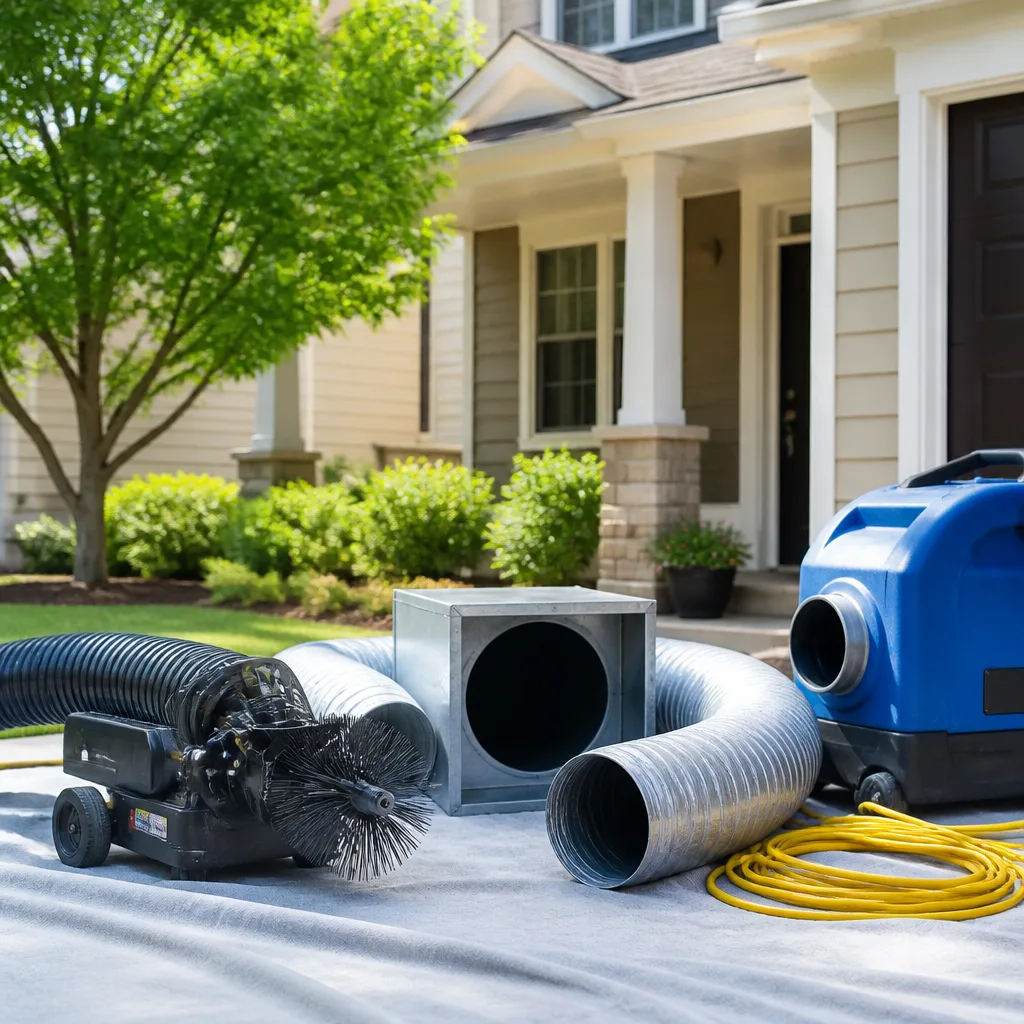 Whole-home duct cleaning
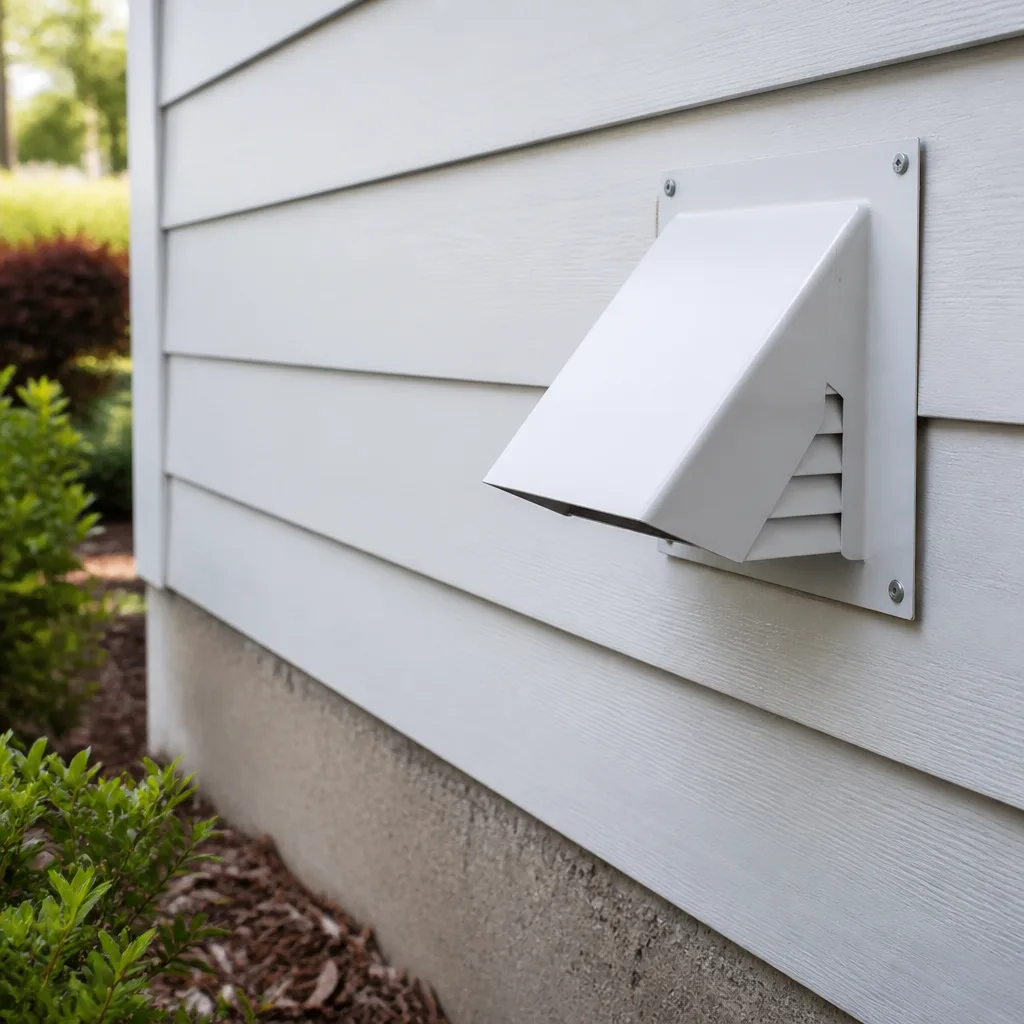 Dryer vent cleaning
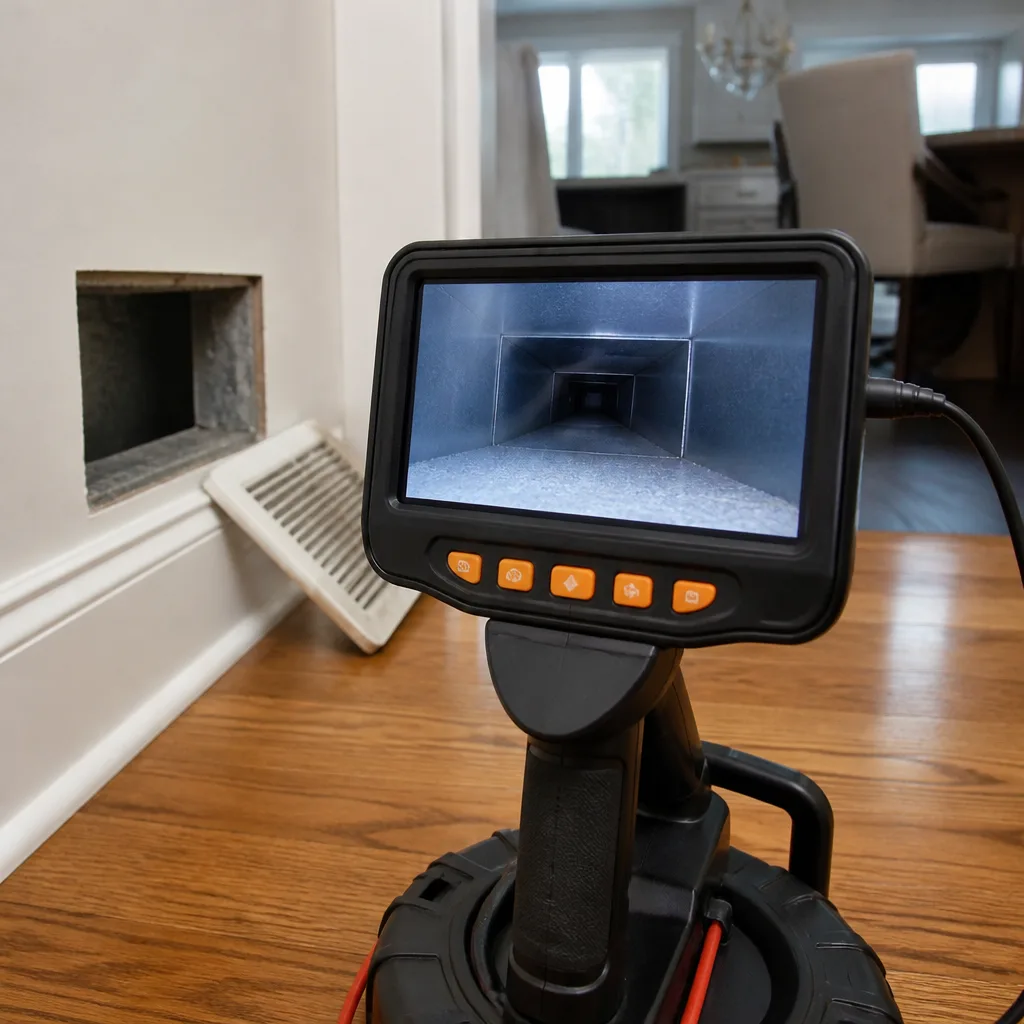 Camera inspection
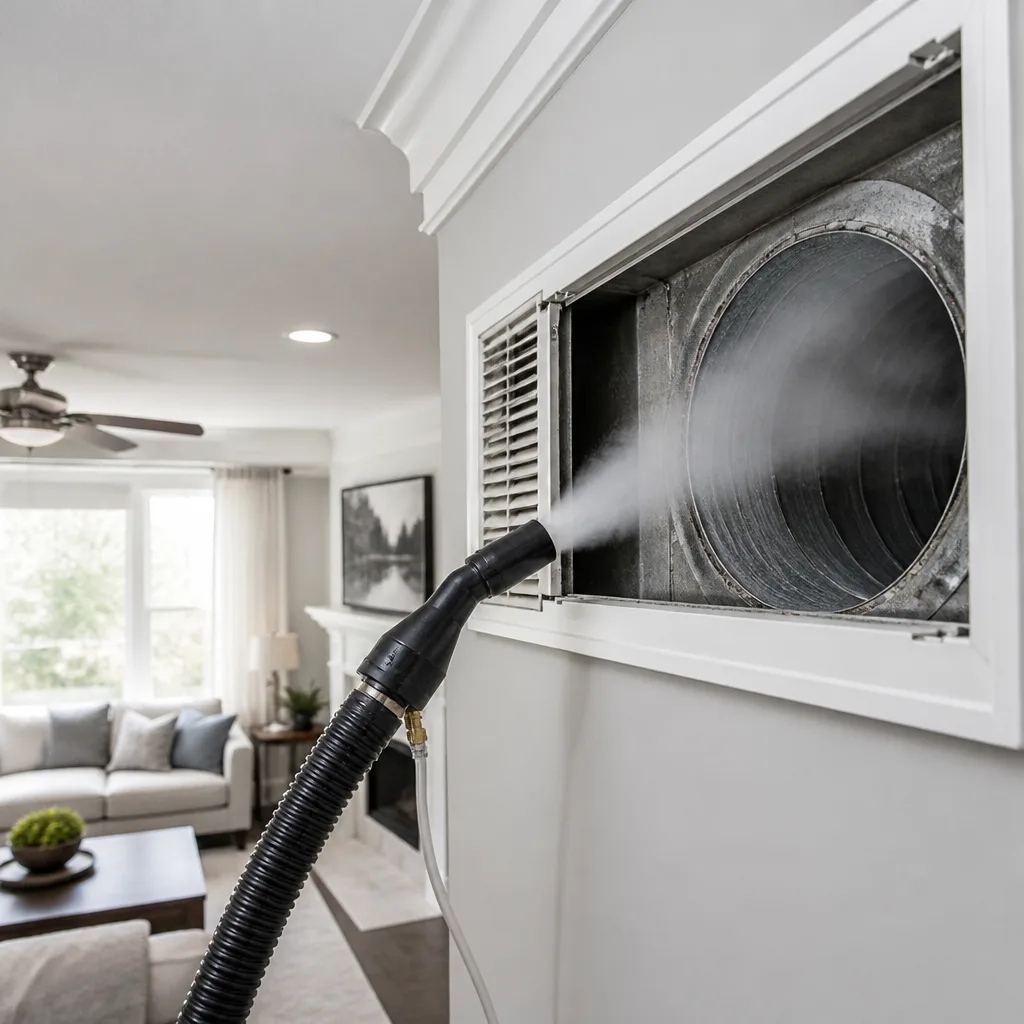 Sanitizing & deodorizing
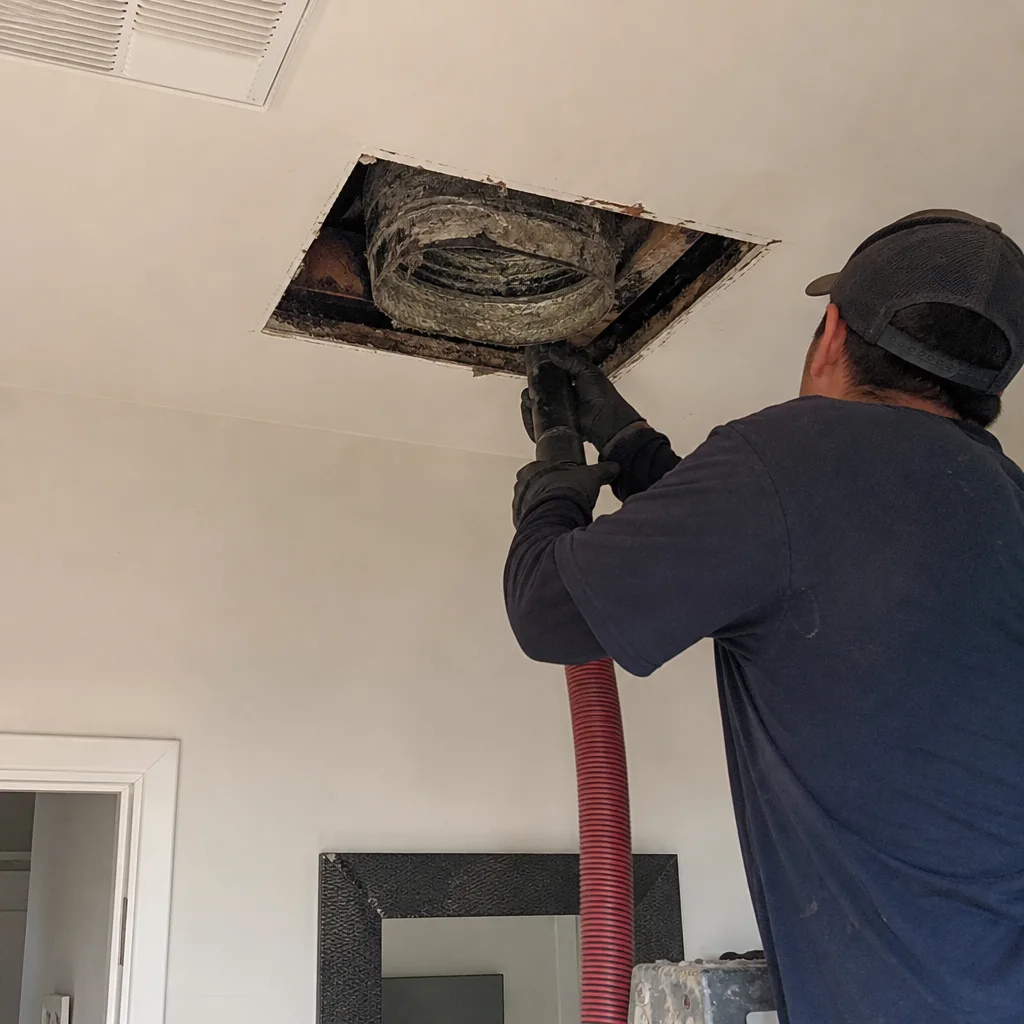
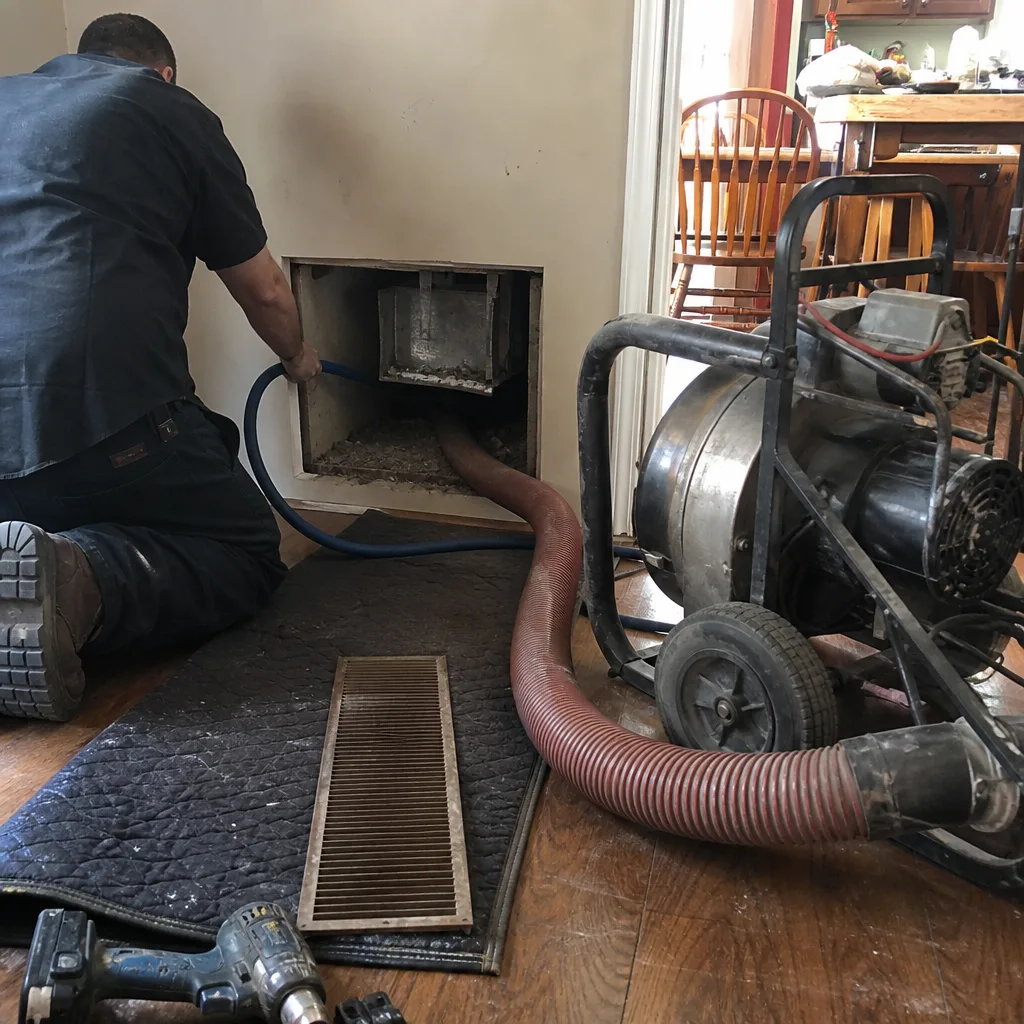
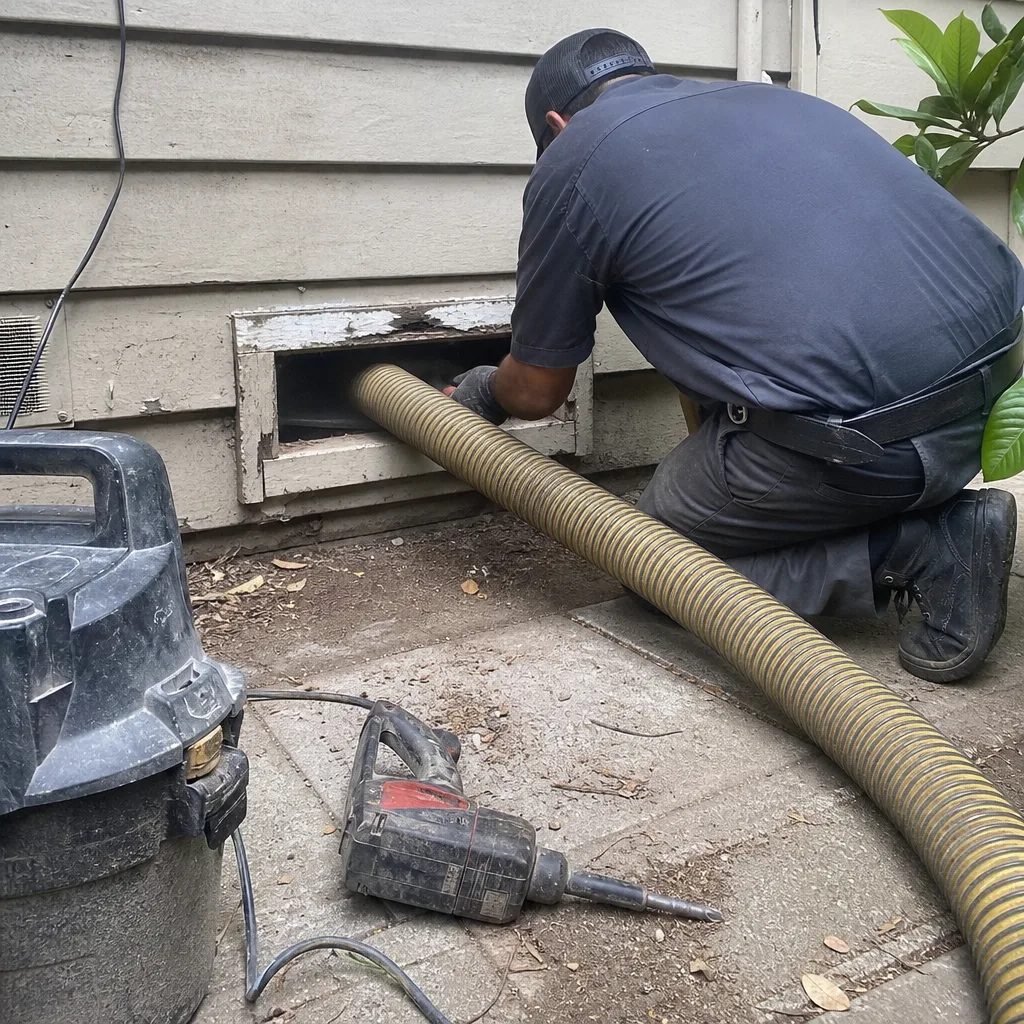
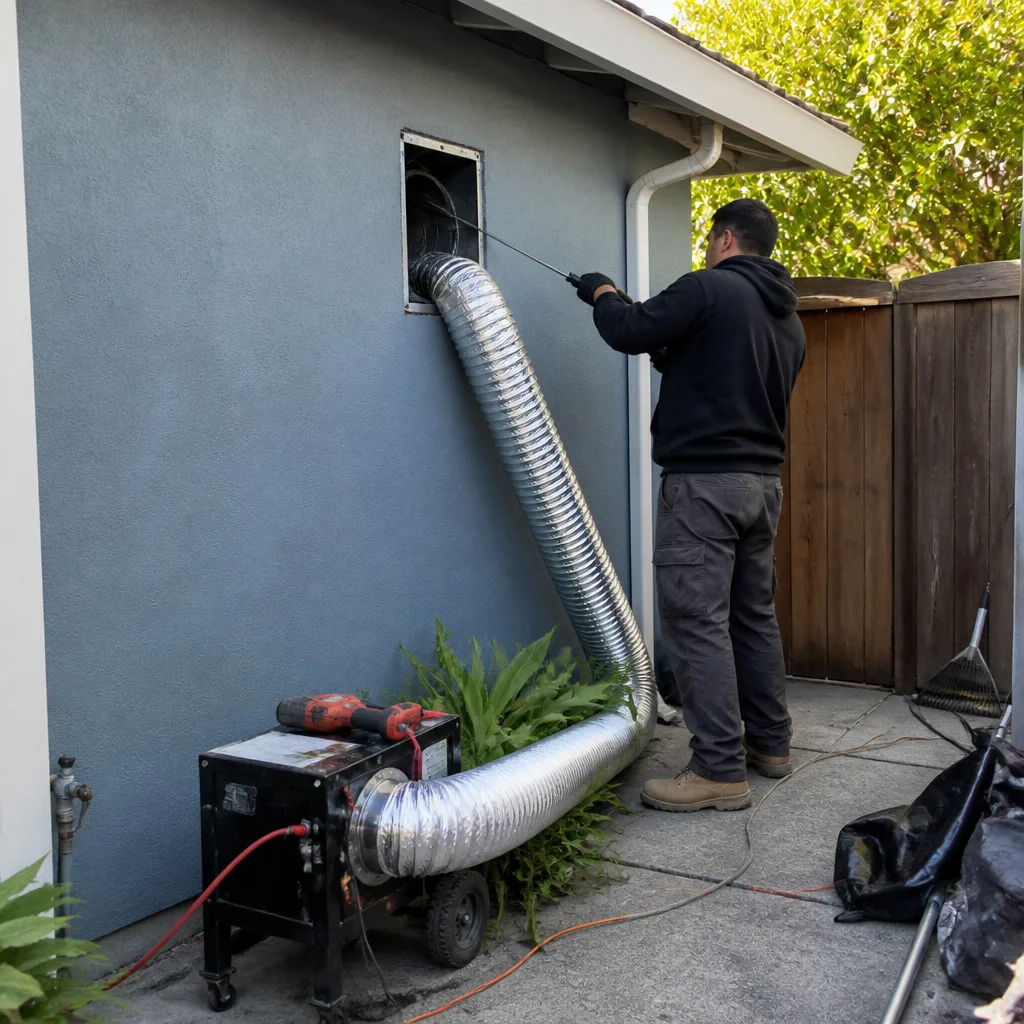
Whole-system duct and dryer vent check with before-and-after photos - you see exactly what came out of your vents
That "$99 whole-house special" is a bait ad - the real number appears once they are in your hallway, or the "clean" is a shop-vac at the register. We photograph the inside of your ducts before and after instead.
DIY vs Professional Air Duct Cleaning: The Oakland Homeowner’s Decision Guide
Here’s something most homeowners don’t realize until they’ve already spent a Saturday afternoon on it: the ductwork in a typical Oakland home contains between 40 and 120 linear feet of interior surface area, and a shop vac attached to a register opening reaches roughly the first 12 inches of it. The rest remains untouched, settled, and waiting to recirculate. This guide walks through what DIY duct cleaning can genuinely accomplish, where it falls short, and how to decide which approach fits your home in Oakland. You’ll learn the physical realities of duct geometry, the negative pressure principle behind professional equipment, and the honest cost-benefit math that most articles skip.
Styles & brands we work with
- Whole-home duct cleaning
- Dryer vent cleaning
- Camera inspection
- Sanitizing & deodorizing
Quick Answer
DIY duct cleaning in Oakland works for surface-level maintenance: cleaning register covers, vacuuming visible dust from vent openings, replacing furnace filters, and clearing short dryer vent runs. It cannot clean the interior of branch lines, trunk lines, or return ducts, which is where most accumulated dust, allergens, and post-wildfire particulate actually live. For full-system cleaning, Air Duct Cleaning services using negative air pressure and rotary brush agitation are the only method that removes contamination rather than redistributing it. The decision comes down to scope: if your concern is visible dust at the register, DIY helps. If your concern is what’s circulating through the entire system, hire a professional.
Table of Contents
- What DIY Duct Cleaning Can Physically Reach (and What It Can’t)
- The Negative Pressure Principle: Why Professional Cleaning Works Differently
- Oakland-Specific Factors That Change the DIY Calculus
- When DIY Maintenance Makes Sense
- The Honest Cost-Benefit Comparison
- Why Equipment Matters More Than Technique
- Common Mistakes to Avoid
- When to Call a Professional
- Frequently Asked Questions
- The Bottom Line
What DIY Duct Cleaning Can Physically Reach (and What It Can’t)
Understanding the geometry of a residential duct system is the first step in making an honest decision about DIY cleaning. Most Oakland homes built before 1980 have sheet metal ducts with rectangular trunk lines running through the crawl space or basement, with 6-inch or 8-inch round branch lines extending to each register. Homes built after 1990 often use flexible insulated duct for branch lines. Neither configuration is accessible through a register opening with consumer equipment.
Here’s what a standard DIY approach actually reaches:
- The register boot: The 8-12 inch metal box connecting the duct to the floor or wall register. A shop vac with a crevice tool can remove loose dust from this area.
- The visible portion of the register cover: Surface dust and pet hair on the grille itself.
- The first few inches of branch line: At most, 18-24 inches if you have a flexible vacuum hose and the register is positioned favorably.
- The return air grille: The larger grille where air enters the system. This accumulates significant dust and is worth cleaning regularly.
What DIY cannot reach: the remaining 90-95% of branch line length, every trunk line, the plenum, the blower compartment, the evaporator coil, and the interior of the return duct system. In a typical 1,500-square-foot Oakland bungalow with 8-10 registers, that’s between 35 and 110 feet of duct surface that a shop vac simply cannot access.
The limitation isn’t effort. It’s physics. Vacuum suction drops off dramatically with distance. A 5-horsepower shop vac produces meaningful airflow at the hose end, but by the time that airflow extends 10 feet down a 6-inch duct, it’s moving almost no air. Consumer brush kits sold online extend reach slightly, but they dislodge debris without the extraction power to capture it, which means settled contaminants get knocked loose and pushed further into the system or blown into living spaces when the system runs.
The Negative Pressure Principle: Why Professional Cleaning Works Differently
Professional air duct cleaning differs from DIY in one fundamental way: containment. The entire professional approach is built around the principle that anything dislodged during cleaning must be captured immediately, before it can enter the living space or resettle elsewhere in the system.
This is what we mean when we say we contain what we dislodge. The process works like this:
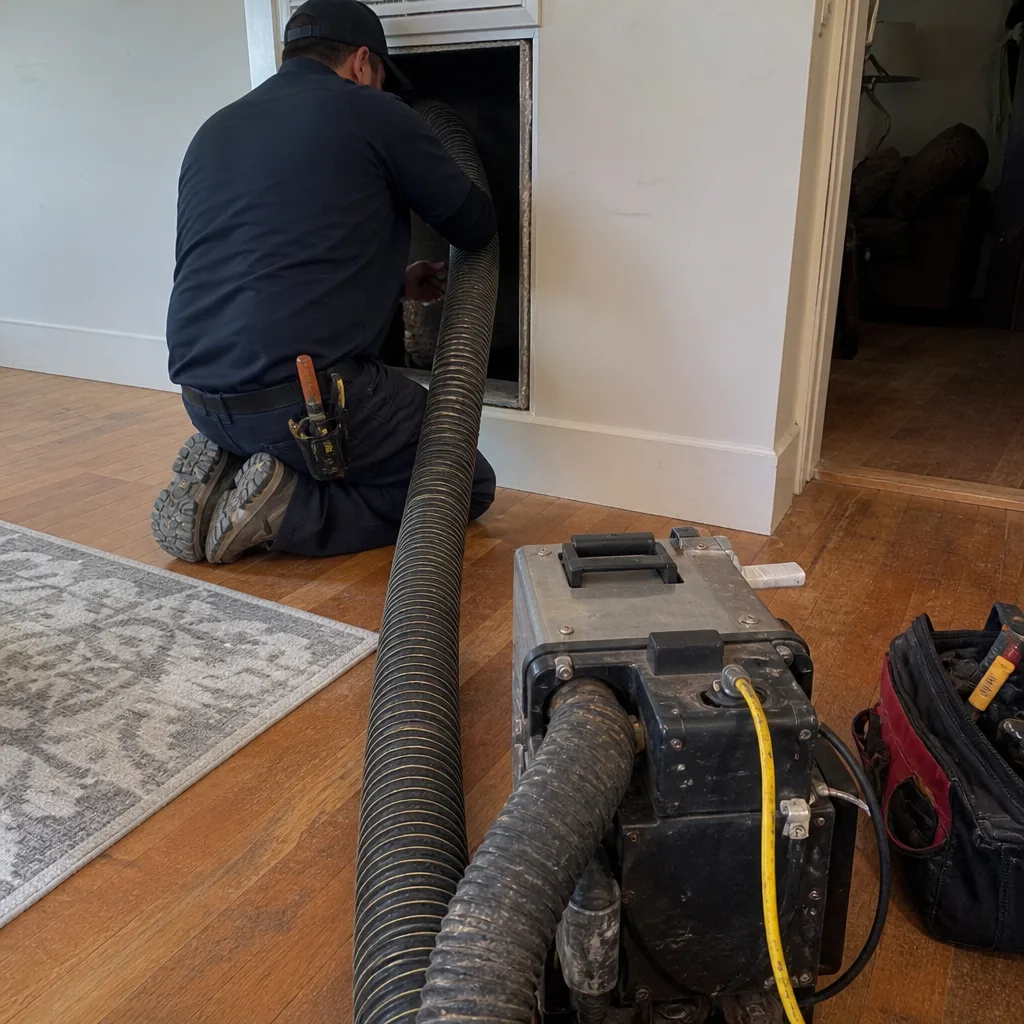
- Negative air pressure is established: A high-powered vacuum unit connects to the trunk line, creating continuous suction that pulls air backward through the entire duct system. The home’s system is sealed at registers, so the only air movement is toward the collection unit.
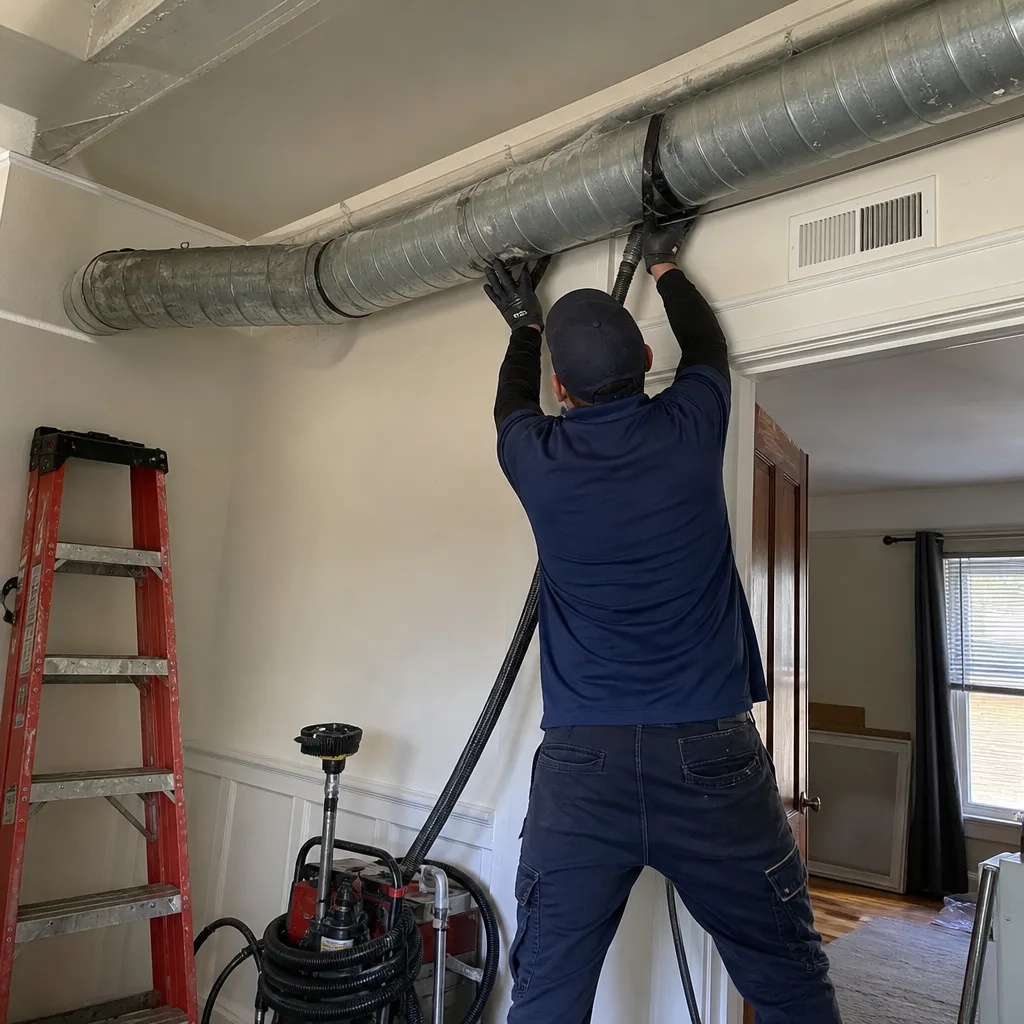
- Mechanical agitation loosens debris: A rotary brush system (like the Rotobrush units professional services use) travels through each branch line, scrubbing the interior walls. The brush dislodges dust, debris, and biofilm that has adhered to duct surfaces over years of use.
- Dislodged material is immediately extracted: Because the system is under negative pressure, everything the brush knocks loose gets pulled toward the collection unit rather than settling back into the duct or blowing into rooms.
- HEPA filtration captures fine particulates: Professional equipment like Abatement Technologies negative air machines filter exhaust air through HEPA filtration before it’s released, capturing particles as small as 0.3 microns.
Why does this distinction matter? Because DIY methods that dislodge without containing actually make the problem worse. Imagine scraping dried mud off a wall with a fan blowing across the room. The mud comes off the wall, but it ends up in the air, on the furniture, and in your lungs. The same principle applies to duct cleaning. A brush kit that scrapes dust loose inside a duct without extraction capability simply converts settled contamination into airborne contamination.
Oakland-Specific Factors That Change the DIY Calculus
Oakland’s specific climate and geography create duct contamination patterns that differ from other Bay Area cities, and these differences matter when evaluating DIY versus professional cleaning.
Wildfire smoke infiltration. Oakland homes sit directly in the path of seasonal wildfire smoke from Napa, Sonoma, and the East Bay hills. Smoke particulate is extremely fine, typically 0.4 to 0.7 microns, which means it penetrates standard furnace filters and settles deep in duct systems. Homes in the Oakland Hills, Montclair, and Rockridge accumulate this fine particulate in duct interiors where surface vacuuming cannot reach. After a significant smoke event, professional cleaning with HEPA-level extraction is the only way to remove this material from the system.
The marine layer and humidity. Oakland’s fog-driven humidity, particularly in neighborhoods west of Highway 13 like Temescal, Piedmont Avenue, and Grand Lake, creates conditions where dust inside ducts can absorb moisture and adhere to duct walls. This makes DIY brushing even less effective; dry dust vacuums easily, but moisture-caked dust requires mechanical scrubbing force that consumer tools don’t generate.
Older housing stock. A significant percentage of Oakland homes were built between 1920 and 1960, and many still have original or partially original ductwork. These systems often have accumulated decades of debris, including construction material from renovations, old insulation fragments, and in some cases, rodent activity. Ducts that old almost always have issues beyond surface dust: separated seams, crushed sections, and insulation degradation.
Rodent and pest activity. Oakland’s older homes with crawl spaces are prone to rodent intrusion in the duct system, particularly in neighborhoods near Lake Merritt, Dimond District, and anywhere with mature tree canopy. Rodent droppings, nesting material, and urine residue in ducts create contamination that DIY methods cannot address. Professional remediation involves full extraction and, often, air duct repair in Oakland to seal entry points and replace compromised sections.
When DIY Maintenance Makes Sense
We’re not here to tell you that every duct concern requires professional service. There are legitimate DIY maintenance tasks that every Oakland homeowner should be doing regularly, and these tasks genuinely improve system performance and air quality. Here’s where DIY makes sense:
- Monthly register cleaning: Remove register covers, wash them with soap and water, and vacuum the visible boot area with a shop vac. This removes surface dust and pet hair that accumulates on grilles and blocks airflow. Takes 15-30 minutes for a whole house.
- Filter replacement: Replace furnace filters every 60-90 days. If you have pets or live near a busy Oakland corridor like MacArthur Boulevard or International Boulevard, check monthly. Consider upgrading to a higher-MERV filter, but verify your system can handle the increased static pressure. A Honeywell MERV 11 or MERV 13 filter strikes a good balance for most systems.
- Return air grille cleaning: The return grille accounts for a large percentage of visible dust accumulation. Vacuum it weekly as part of normal house cleaning.
- Dryer vent exterior clearing: If your dryer vent run is short (under 10 feet, straight to an exterior wall), you can clear visible lint from the exterior vent hood with a basic dryer vent brush. This is a fire-risk reduction measure, and dryer vent cleaning in Oakland should be treated as a fire-safety service, not a filler task.
- Visual inspection: Remove registers periodically and inspect what you can see. Look for moisture stains, visible mold growth, or unusual debris accumulation. Early detection of problems makes professional intervention simpler and less expensive.
These tasks are worth doing. They keep surface-level contamination controlled and help you monitor system condition. But they are maintenance, not cleaning. They don’t substitute for full-system extraction when the system needs it.
The Honest Cost-Benefit Comparison
Let’s look at the actual numbers for DIY versus professional air duct cleaning in the Oakland market, because the decision should be based on realistic math, not marketing claims. For more guides & resources on maintaining your home’s air quality, explore our blog.
What DIY actually costs:
- Shop vac with hose and crevice tools: $60-$150 if you don’t already own one
- Basic duct brush kit: $30-$80
- Replacement filters (upgraded MERV 11): $15-$25 each, 4-6 per year
- Total estimated first-year DIY investment: $150-$300
What professional cleaning costs in Oakland:
- Standard single-family home (up to 10 registers): $350-$600, depending on system size, access difficulty, and contamination level
- Larger homes or systems with significant contamination: $600-$1,200
- Additional cost if repair is needed: quoted separately after inspection
The cost difference appears significant on paper. But here’s what the professional service delivers that DIY cannot:
- Full interior cleaning of every branch line, trunk line, and return duct
- HEPA-level containment during the cleaning process, preventing redistribution of contaminants into living spaces
- Rotary brush scrubbing that removes adhered debris, not just loose dust
- Identification of structural problems: separated seams, crushed duct sections, improper connections
- Documentation and, where provided, before-and-after photos showing the actual interior condition
The question isn’t whether $400 is more than $150. It’s whether $150 spent on DIY accomplishes the thing you actually need. If your home in Oakland experienced wildfire smoke infiltration last season, or you’ve never had ducts cleaned in a 40-year-old house, or you can see visible dust blowing from registers when the system starts, the $150 DIY approach won’t solve the problem. You’ll spend the money and still need professional service.
At Hallmark Air Duct Cleaning home, our approach is built around the right tool for the specific duct type and contamination level, not a one-size-fits-all pass through the system.
Why Equipment Matters More Than Technique
Technique matters in duct cleaning, but only when paired with capable equipment. The reason professional services exist is that residential duct systems require specialized tools to clean properly, and those tools are not available at hardware stores.
Rotary brush systems (Rotobrush): These systems use a motorized rotating brush head attached to a flexible cable that travels through branch lines. The brush physically scrubs the duct interior, dislodging adhered debris that vacuum suction alone cannot remove. The rotation speed and brush stiffness are calibrated to clean without damaging duct surfaces, including flexible insulated duct.
Industrial extraction systems (Nikro): These are high-powered vacuum units that connect to the trunk line and generate the negative pressure required for containment. They move enough air volume to create meaningful suction through the entire duct system, not just at the connection point.
Negative air machines with HEPA filtration (Abatement Technologies): These units filter exhaust air before release, capturing the fine particulates that standard vacuums blow back into the environment. This is the containment piece that separates professional cleaning from DIY agitation.
Air quality product integration: Once ducts are clean, maintaining the improvement requires the right filtration. Familiarity with Honeywell and Aprilaire product lines means a professional can evaluate whether your current filter setup is adequate or whether a whole-home air cleaner would meaningfully improve results.
Most Oakland homes that have never had professional cleaning benefit from the full package: rotary brush agitation, containment extraction, HEPA filtration, and a filter recommendation matched to the home’s specific conditions. This is what air duct cleaning in Oakland means when it’s done as a specialty service rather than an HVAC upsell.
Common Mistakes to Avoid
- Using a leaf blower to “clean” ducts. This is the worst DIY approach. A leaf blower pressurizes the duct system positively, blowing decades of accumulated dust out of every register and into the living space. It converts settled contamination into airborne contamination and coats the entire house in the material you were trying to remove.
- Disconnecting ducts while the system is running. Removing register covers or disconnecting duct sections with the furnace fan running pulls unfiltered air through gaps, drawing crawl space air or attic air into the system. Always turn the system off completely before any duct access.
- Using chemical cleaners or foggers in ducts. Consumer duct cleaner sprays and foggers marketed for home use can leave residue that attracts dust, and some contain chemicals that off-gas into the conditioned air. Ducts are mechanical systems, not surfaces that need chemical treatment. Mechanical removal is the only appropriate cleaning method.
- Assuming visible register dust means the system is dirty. Register-level dust is normal and manageable with routine maintenance. The concerning contamination is deeper in the system where you can’t see it. Conversely, a clean-looking register doesn’t mean the trunk line is clean.
- Attempting to clean the blower compartment or evaporator coil. These components sit inside the air handler cabinet and require disassembly to access. DIY attempts can damage fins, bend the blower wheel, or create electrical hazards. This is professional territory.
- Ignoring dryer vents because they’re “not HVAC.” Dryer vents accumulate lint with every load, and lint is combustible material sitting inside a duct that carries hot air. In Oakland homes with long vertical vent runs or inaccessible exterior terminations, professional cleaning is the only way to clear the full run. A dryer vent isn’t a minor chore; it’s a fire-risk checklist item.
- Cleaning ducts without addressing the source of contamination. If the ducts got dirty because of a missing filter, a filter rack that doesn’t seat properly, or animal intrusion, cleaning alone won’t prevent recurrence. The contamination source needs identification and correction, which often requires air duct repair in Oakland to seal gaps and restore proper system integrity.
When to Call a Professional
Some situations in Oakland homes require professional equipment and expertise, full stop. Post-wildfire smoke season in the East Bay leaves fine particulate throughout duct systems that DIY methods cannot reach. Visible mold growth around registers or a persistent musty smell during system operation indicates moisture inside the ductwork, which requires containment cleaning and likely repair of the moisture source. Rodent activity heard or seen near ducts means contamination that requires professional extraction and sealing. If your home has never had ducts cleaned and the system is 20 plus years old, the accumulated load exceeds what any consumer method can address. Hallmark Air Duct Cleaning offers free estimates in Oakland. Call (833) 467-6681 to schedule an assessment.
Frequently Asked Questions
Professional air duct cleaning in Oakland typically costs between $350 and $600 for a standard single-family home with up to 10 registers, and $600 to $1,200 for larger homes or systems with significant contamination. The price depends on system size, access difficulty, and contamination level, not on per-vent pricing. Call (833) 467-6681 for an exact quote based on a free assessment of your specific system.
Cheaper duct cleaning quotes typically come from companies using a single portable vacuum at each register, which creates no negative pressure and captures no meaningful debris from the branch lines or trunk. They’re selling a visual improvement at the register, not system cleaning. The price difference reflects equipment capability and what’s actually being cleaned, not profit margin.
Ask for before-and-after photos of the duct interior taken during the cleaning process. A professional service using rotary brush agitation and containment extraction will document the interior condition. If a company cannot provide visual proof of the duct interior before and after, the cleaning likely didn’t reach the interior surfaces.
For most Oakland homes, professional air duct cleaning is needed every 3 to 5 years, with more frequent service if you have pets, live in a wildfire smoke exposure zone, or have recently completed renovations. See our Seasonal Air Duct Cleaning Care for Oakland: Year-Round Homeowner’s Guide for a tailored maintenance schedule. Homes with occupants who have significant allergies or respiratory conditions often benefit from 2 to 3 year intervals. The honest answer depends on your specific conditions, not a generic schedule.
If your dryer vent run is short (under 10 feet) and terminates at an accessible exterior wall, you can clear the exterior vent hood and the first few feet of the run with a basic dryer vent brush. Longer runs, vertical runs, or vents terminating at a roof require professional equipment to clear the full length, which is a fire-risk reduction measure, not a convenience service.
Duct contamination is generally not visible at the register; it’s inside the branch lines and trunk where air moves through the system. A system can carry significant dust, particulate, and debris load while registers look clean. The question is whether the system has ever been professionally cleaned and whether recent events like wildfire smoke or renovations have introduced new contamination. Call (833) 467-6681 for an assessment if the system is older than 5 years and has never been professionally cleaned.
The Bottom Line
DIY duct maintenance has a real place in Oakland homes: register cleaning, filter replacement, return grille vacuuming, and short dryer vent clearing. These tasks keep surface-level dust controlled and help you monitor system condition. But they are maintenance, not cleaning. The interior of a residential duct system requires professional equipment with negative pressure containment to clean meaningfully, especially in Oakland where wildfire smoke particulate, marine-layer humidity, and aging housing stock create contamination patterns that consumer methods cannot address. The decision framework is scope-based: if the concern is what you can see, DIY helps. If the concern is what’s circulating through the entire system, hire a professional. For most Oakland homeowners, the right answer is both: regular DIY maintenance, with professional cleaning every 3 to 5 years to address what DIY cannot reach.
Written by the team at Hallmark Air Duct Cleaning, serving Oakland since 2011.
See the difference
 Before
 After
 Before
 After
 Before
 After