
Last updated November 2, 2026
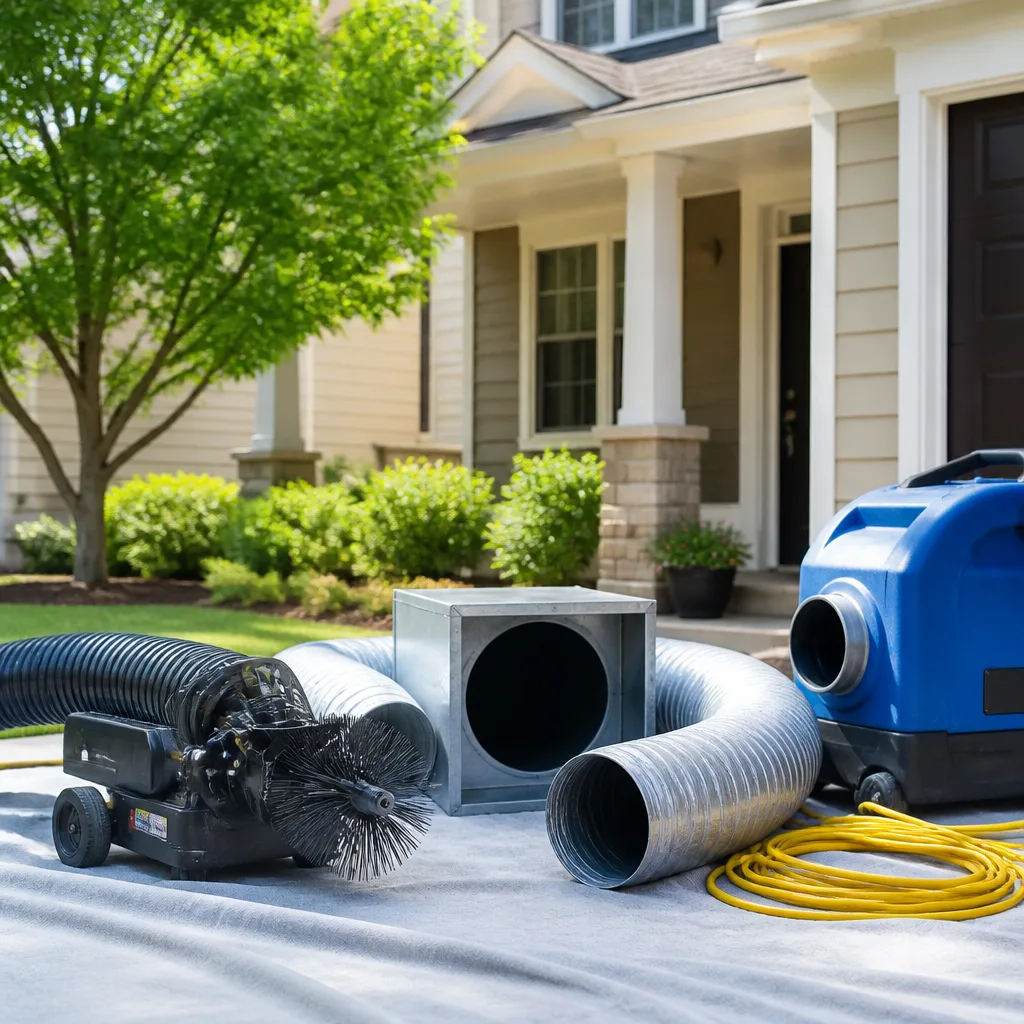 Whole-home duct cleaning
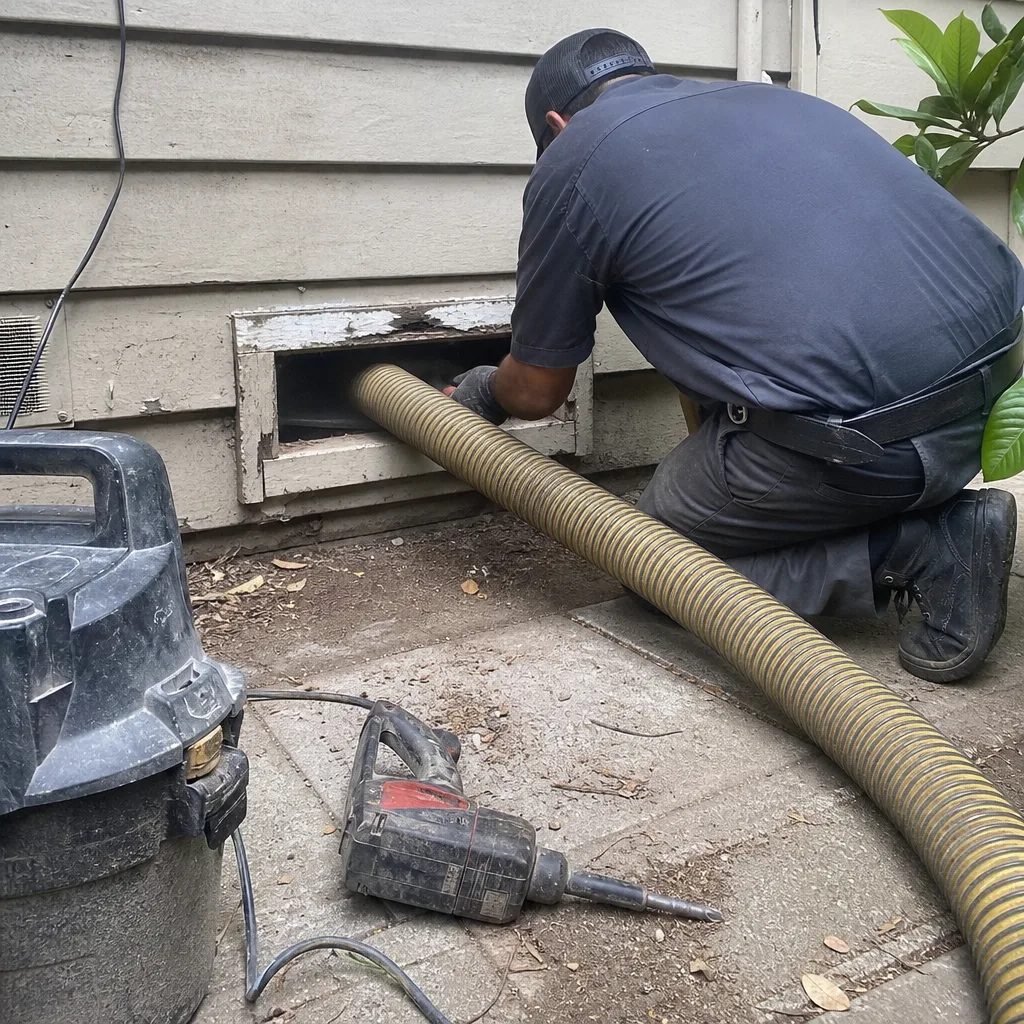
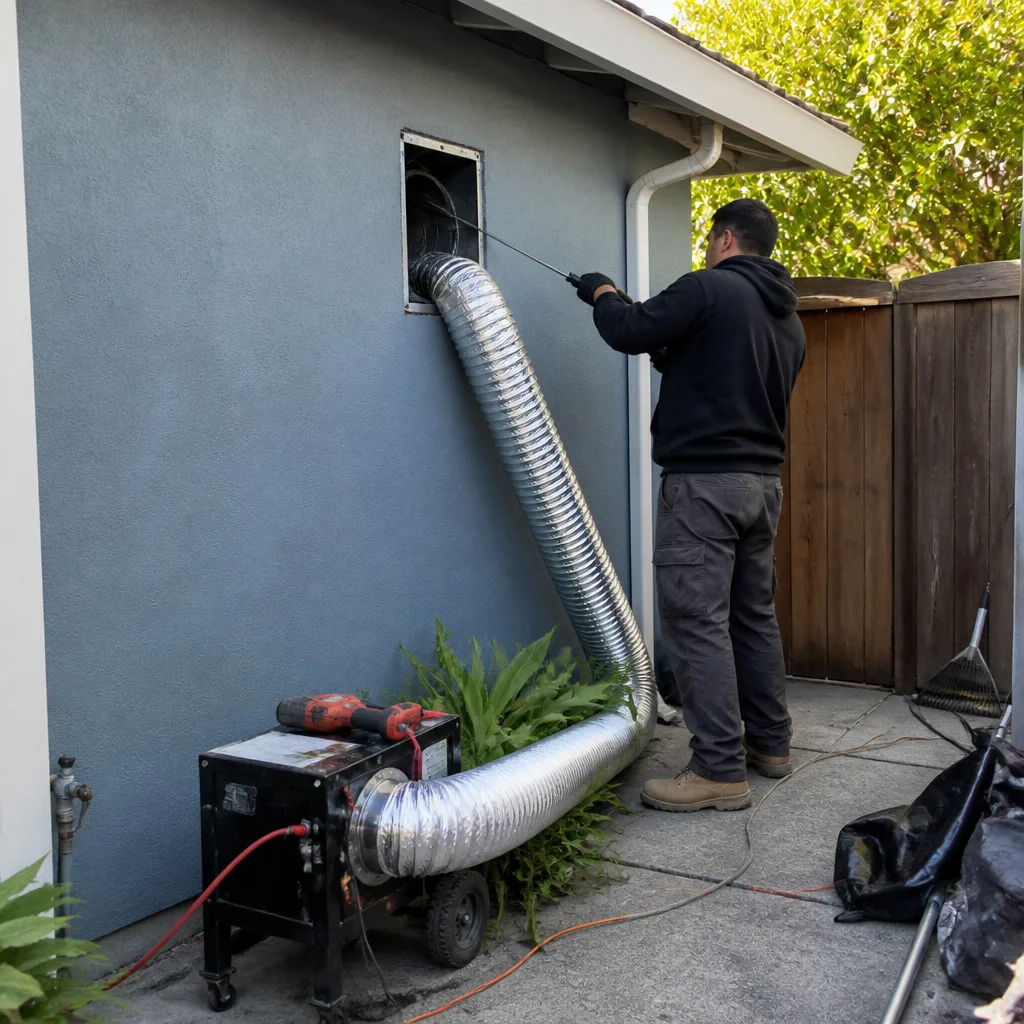
 Dryer vent cleaning
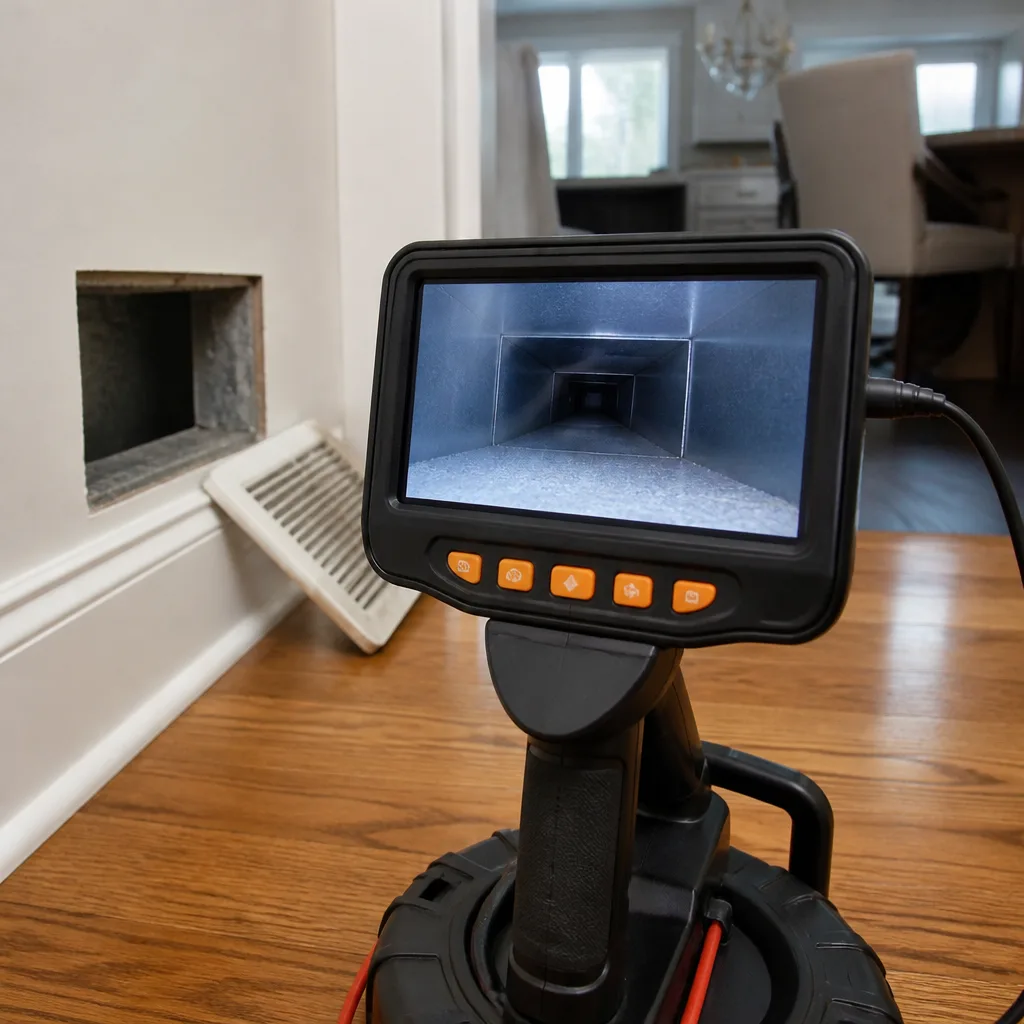 Camera inspection
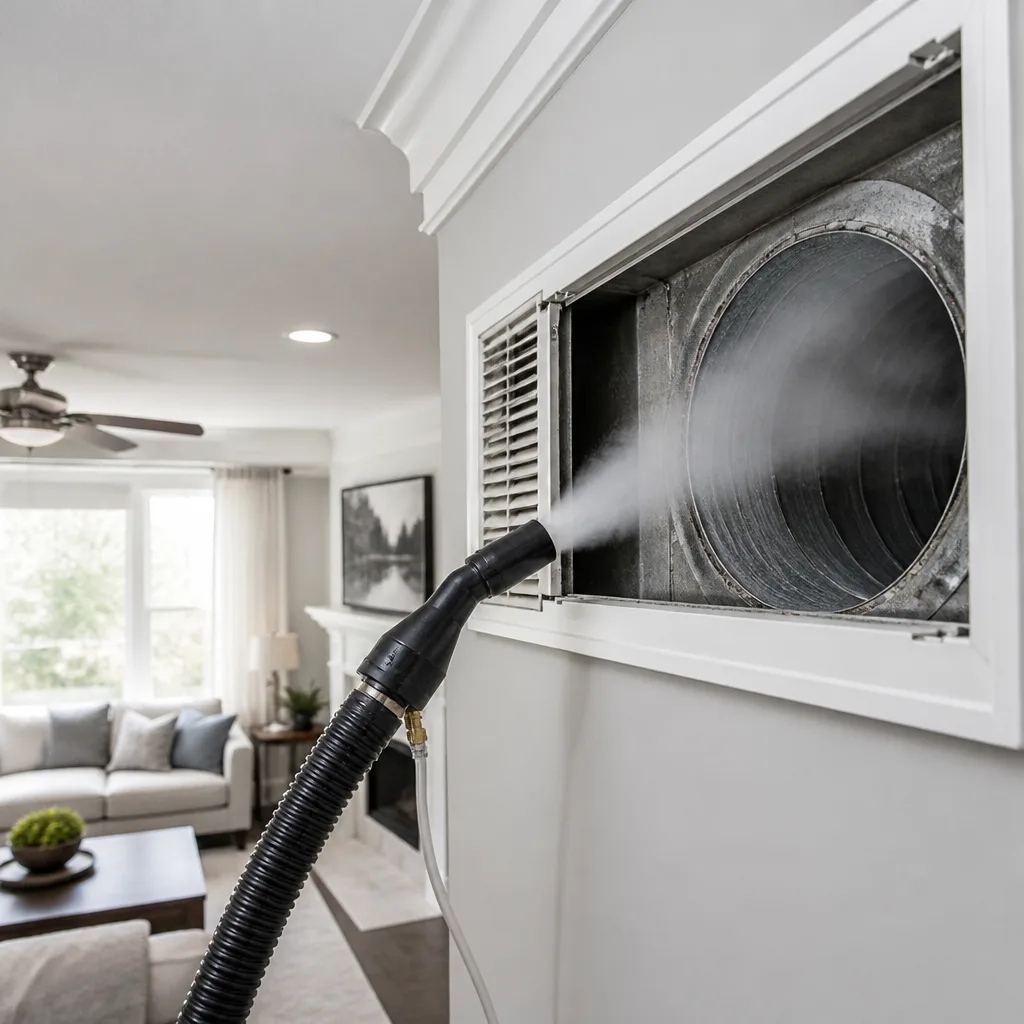 Sanitizing & deodorizing
Whole-system duct and dryer vent check with before-and-after photos - you see exactly what came out of your vents
That "$99 whole-house special" is a bait ad - the real number appears once they are in your hallway, or the "clean" is a shop-vac at the register. We photograph the inside of your ducts before and after instead.
Air Duct Cleaning Warning Signs: An Oakland Homeowner’s Reference Guide
Most Oakland homeowners don’t think about their air ducts until something forces them to. A smell that lingers after the furnace kicks on. A fine gray dust that reappears on the windowsill two days after wiping it down. A bedroom that never quite warms up in January. None of these feel like emergencies, and most people rationalize them away as normal quirks of an older house. But in Oakland, where Craftsman bungalows from the 1920s sit alongside mid-century ranchers with original galvanized ductwork, these small signals often point to something real happening inside the system that delivers air to every room. This guide covers what to watch for, when it matters, and when it doesn’t.
Styles & brands we work with
- Whole-home duct cleaning
- Dryer vent cleaning
- Camera inspection
- Sanitizing & deodorizing
Quick Answer
The most reliable warning signs that your Oakland home’s air ducts need attention are a musty or burning-dust odor when the HVAC first starts, visible debris or dust streaks at supply registers, rooms that stay uncomfortable no matter how you adjust the thermostat, and a steady increase in energy bills without a change in usage. If you’ve lived through a wildfire smoke event, bought an older home with no duct service history, or completed a renovation that produced drywall dust, an inspection is worth scheduling even without obvious symptoms. The key distinction is this: symptoms point to what’s happening, but only a visual inspection of the ducts themselves reveals whether you need cleaning, repair, or both.
Table of Contents
- Sensory Warning Signs: What Your Nose and Eyes Are Telling You
- Performance Warning Signs: When the System Struggles
- Oakland-Specific Triggers That Should Prompt a Duct Inspection
- What Older Oakland Homes Should Watch For
- Cleaning vs. Repair: Knowing the Difference Before You Schedule
- What a Professional Inspection Actually Reveals
- Common Mistakes to Avoid
- When to Call a Professional
- Frequently Asked Questions
- The Bottom Line
Sensory Warning Signs: What Your Nose and Eyes Are Telling You
The human nose is remarkably good at detecting changes in indoor air, and the first sign of duct trouble usually arrives as a smell. The two most common are sometimes confused, but they point to different problems. A dusty or burning-dust odor when the furnace first kicks on in fall is typically the smell of accumulated dust being heated and blown through the registers. It usually fades after a few minutes of operation. In our experience cleaning ducts across Oakland, this is what most homeowners report first, and it often indicates years of unfiltered or under-filtered air moving through the system.
A musty or mildew-like odor is different. This smell tends to linger rather than fade, and it may be stronger in certain rooms or when the AC runs. The constant temperature swings between Oakland’s fog-cooled nights and warm inland afternoons create condensation inside duct runs that run through unconditioned spaces like crawlspaces and attics. When dust and organic debris settle in those ducts and moisture is present, microbial growth can develop on the duct lining. What you’re smelling is the system aerosolizing that material and distributing it to every room at once.
Visual signs at the registers tell their own story. Dust streaks radiating outward from a supply vent indicate air bypassing the filter and carrying particulates through the ducts. Dark gray or black film accumulating on the register itself isn’t necessarily mold; it’s usually fine particulate that has built up over months or years. But what you see at the register is only a fraction of what’s upstream. The duct lining itself can hold a layer of debris that never makes it all the way to the vent, which is why visual confirmation of the ducts themselves, not just the register face, matters.
Specific sensory signs worth investigating
- Startup odor that fades: heated dust in the ducts, usually from accumulated debris.
- Musty odor that lingers: possible moisture-related biological growth in the duct lining.
- Dust streaks at register: air bypassing the filter and picking up particulates inside the duct.
- Visible debris inside the register throat: a direct view of what’s accumulated upstream.
- Uneven dust accumulation in the home: rooms served by the same duct run showing more dust than others.
- Stale or stuffy air even with windows open: the HVAC system is recirculating air through a contaminated duct system.
Performance Warning Signs: When the System Struggles
Duct problems don’t just affect air quality; they affect how the whole system performs. The most common performance symptom Oakland homeowners report is uneven room temperatures: one bedroom that never warms up in winter, another that stays stuffy in summer. This can have multiple causes, and ducts are one of them. A disconnected or leaking duct run loses conditioned air into the crawlspace or attic before it reaches the room it’s meant to serve. That room never gets enough airflow, and the furnace or AC runs longer trying to compensate.
Rising energy bills without a change in usage are another signal. When duct leaks force the system to run longer cycles, the utility cost goes up. PG&E rates in the Bay Area make this especially noticeable. A 15 to 20 percent increase in heating or cooling costs year over year, with no corresponding change in usage patterns, is worth investigating. The cause might be the equipment itself, but it can also be the distribution system: leaky ducts, crushed flex runs, or a return that’s pulling air from the crawlspace instead of the living space.
Short-cycling, where the furnace or AC turns on and off in rapid intervals, is more often an equipment issue than a duct issue, but it’s worth mentioning because a restricted duct system can contribute. If the filter is clogged, return registers are blocked, or ducts are partially collapsed, the system senses inadequate airflow and shuts down to protect itself. Distinguishing duct-related performance problems from equipment problems requires checking airflow at each register and inspecting the visible duct runs. A room that’s consistently uncomfortable while the rest of the house feels fine points to the ducts, not the equipment.
Oakland-Specific Triggers That Should Prompt a Duct Inspection
Oakland has three conditions that make duct inspection more relevant for our homeowners than for many other parts of the country: wildfire smoke, an older housing stock, and renovation-heavy neighborhoods. If you’ve lived through a wildfire smoke event, your ducts may have pulled in fine particulate during those days when the sky turned orange. Even with the HVAC running and a filter in place, standard furnace filters capture a limited range of particle sizes. Fine smoke particulate can settle in the duct lining, especially in the low-airflow sections near the end of runs. The next time the system runs hard, that particulate re-enters the air.
Purchasing a home with no duct service history is a second trigger. Oakland’s real estate market moves quickly, and many buyers close on homes where the seller has no records of duct cleaning, duct repair, or even filter replacement. A home built in 1940 with original ductwork may have sixty or eighty years of accumulated material in the system. The previous owner may have painted, renovated, had pets, or simply never addressed the ducts. Without a service history, the only way to know what’s in there is to look.
Completing a renovation that generated dust is a third trigger. Oakland’s older homes are constantly being updated, and drywall dust, plaster dust, and construction debris are fine enough to remain suspended in the air for days. If the HVAC system was running during the work, that dust was drawn into the return and distributed through the ducts. A post-renovation duct inspection is standard practice on commercial projects but often overlooked on residential ones. The cost of inspecting is trivial compared to the cost of breathing construction dust for the next several years.
What Older Oakland Homes Should Watch For
Oakland’s housing stock is older than most California cities. Craftsman bungalows in neighborhoods like Rockridge, Temescal, and Fruitvale often date from the 1910s through the 1930s. Mid-century ranchers spread across the Oakland hills and flatlands through the 1950s and 1960s. These homes have specific duct characteristics that newer construction doesn’t. Understanding what your house was built with helps you know what to watch for.
Original duct materials in pre-1970 homes are typically galvanized sheet metal. Galvanized ducts corrode over decades, especially in Oakland’s fog-influenced climate where humidity levels fluctuate. Corrosion creates rough surfaces inside the duct where dust and debris accumulate more readily. It also weakens the metal, leading to holes and separation at the seams. A 1950s duct system that has never been inspected may have multiple split seams leaking conditioned air into the attic or crawlspace.
Inaccessible crawlspace runs are another characteristic of older Oakland homes. Many bungalows have ducts running through crawlspaces that are tight, with low clearance. These runs are rarely inspected because they’re hard to access. Damp soil under the house creates humidity that affects the ducts. Rodent intrusion is also more common in older crawlspaces; chew holes in flexible duct connectors and nesting material inside rigid ducts are findings we encounter regularly in Oakland’s older neighborhoods. The crawlspace is where duct problems hide.
Cleaning vs. Repair: Knowing the Difference Before You Schedule
Not every duct problem is solved by cleaning. Some warning signs indicate a structural issue or contamination that requires a different approach. Understanding the difference before you schedule service will help you ask the right questions and get the right result. Here’s how to distinguish the three categories: cleaning, repair, and assessment-before-cleaning.
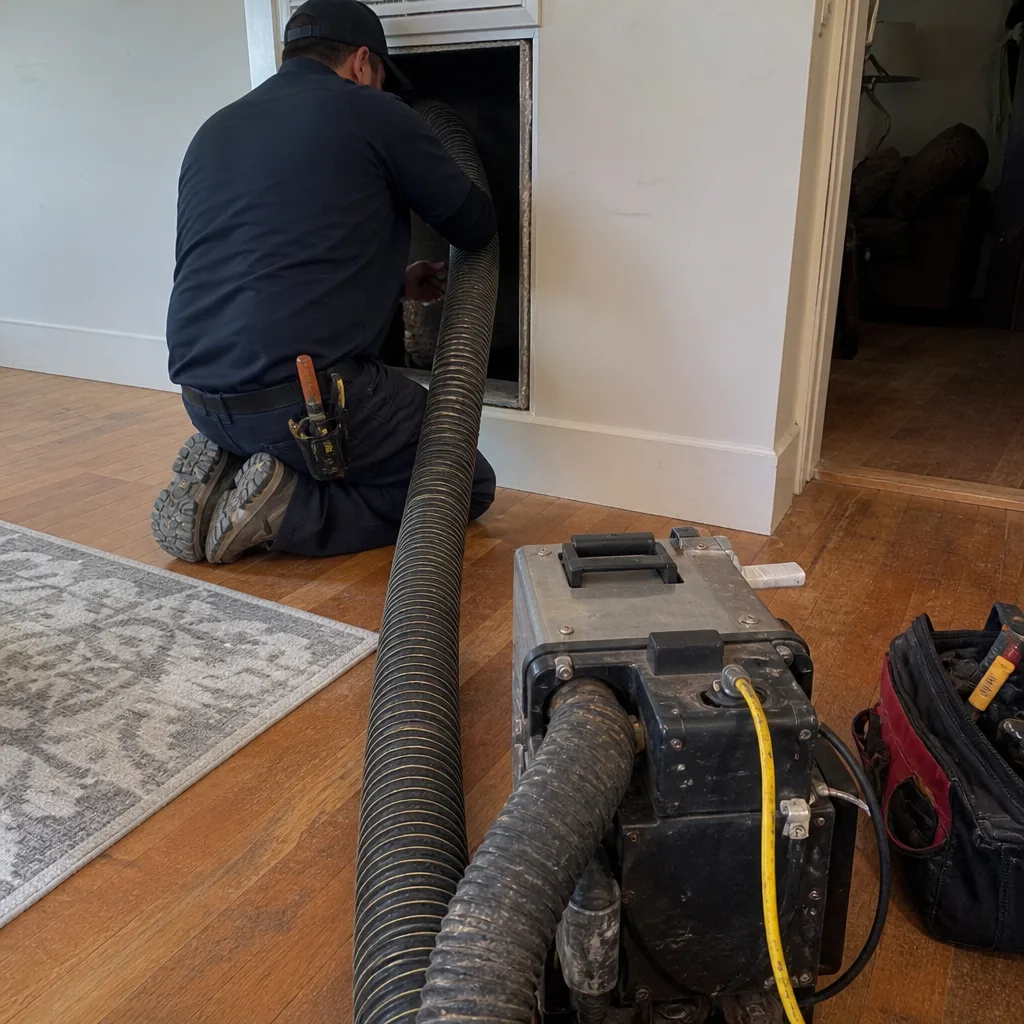
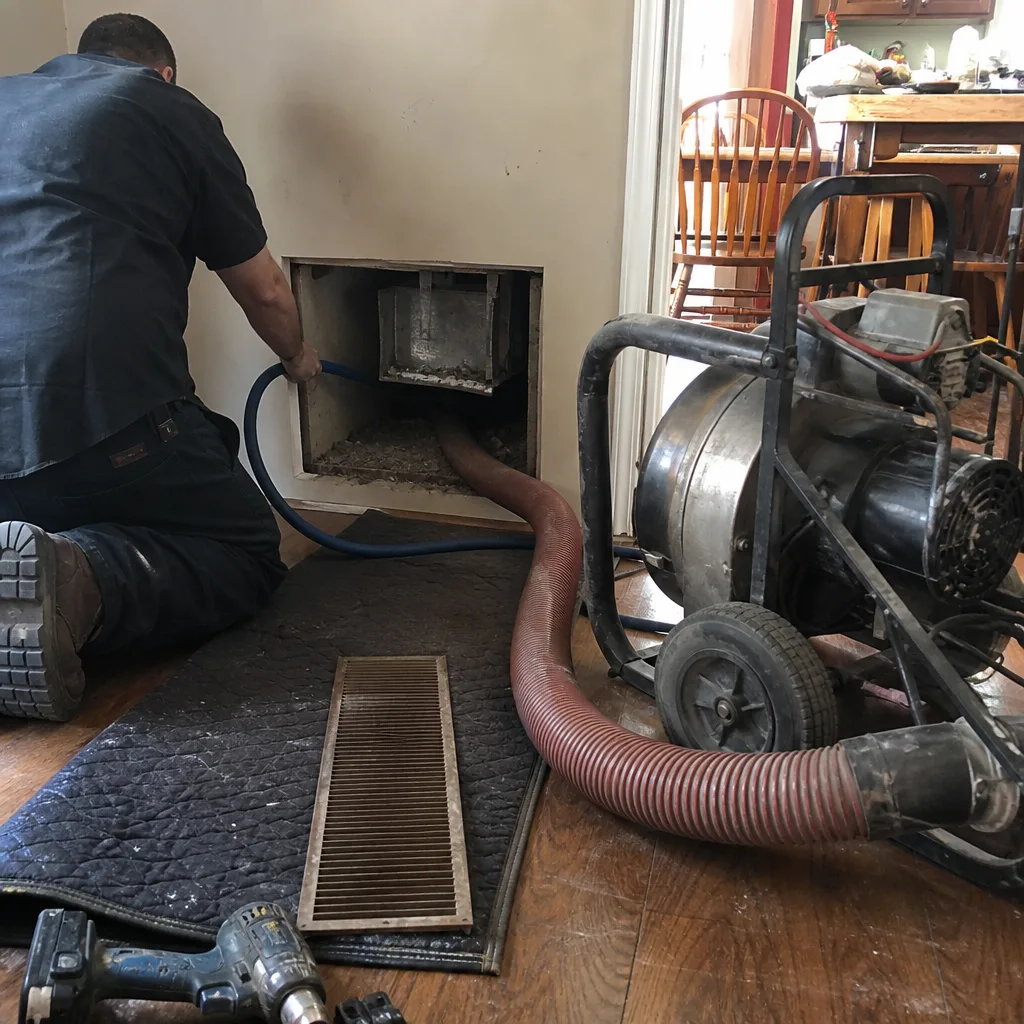
Signs that point to cleaning: accumulated dust and debris in the ducts, visible particulate at the registers, a dusty startup smell, and general stagnation in a system that is otherwise intact. These conditions respond to a thorough mechanical cleaning that dislodges debris from the duct lining and extracts it from the system. The right equipment matters here; a rotary brush system and an industrial extraction system working together will remove material that a simple vacuum cannot.
Signs that point to repair: rooms that never reach the same temperature as the rest of the house, visible gaps or separation at duct joints, crushed flex runs in the attic or crawlspace, and disconnected returns. These are structural problems. Cleaning won’t fix them. A duct that’s separated at a joint will continue leaking air no matter how clean it is. Air duct repair is a separate service, and the best approach is to address structural issues before cleaning so the cleaned system stays clean.
Signs that require assessment before any cleaning: visible mold growth on the duct lining, rodent droppings or nesting material, a persistent musty smell that gets stronger over time, and sections of ductwork that are saturated or deteriorated. These situations require a visual inspection first. Cleaning a duct that has active biological growth without addressing the moisture source will not solve the problem. A full-service company will inspect, identify the root cause, and recommend the correct sequence of work.
What a Professional Inspection Actually Reveals
The single most useful thing you can do if you’ve noticed any of the signs in this guide is to get eyes on the inside of your ducts. A professional inspection isn’t a sales pitch; it’s a diagnostic step. What you see changes what you decide. Here’s what a thorough inspection of ducts in an Oakland home typically includes, and what the findings tell you.
- Register and grille inspection: the visible surfaces are checked for dust buildup, staining, and airflow restriction. This tells us what’s been reaching the living space.
- Return air inspection: the return side of the system is examined for filter condition, bypass, and particle loading. The return is where most debris enters the system.
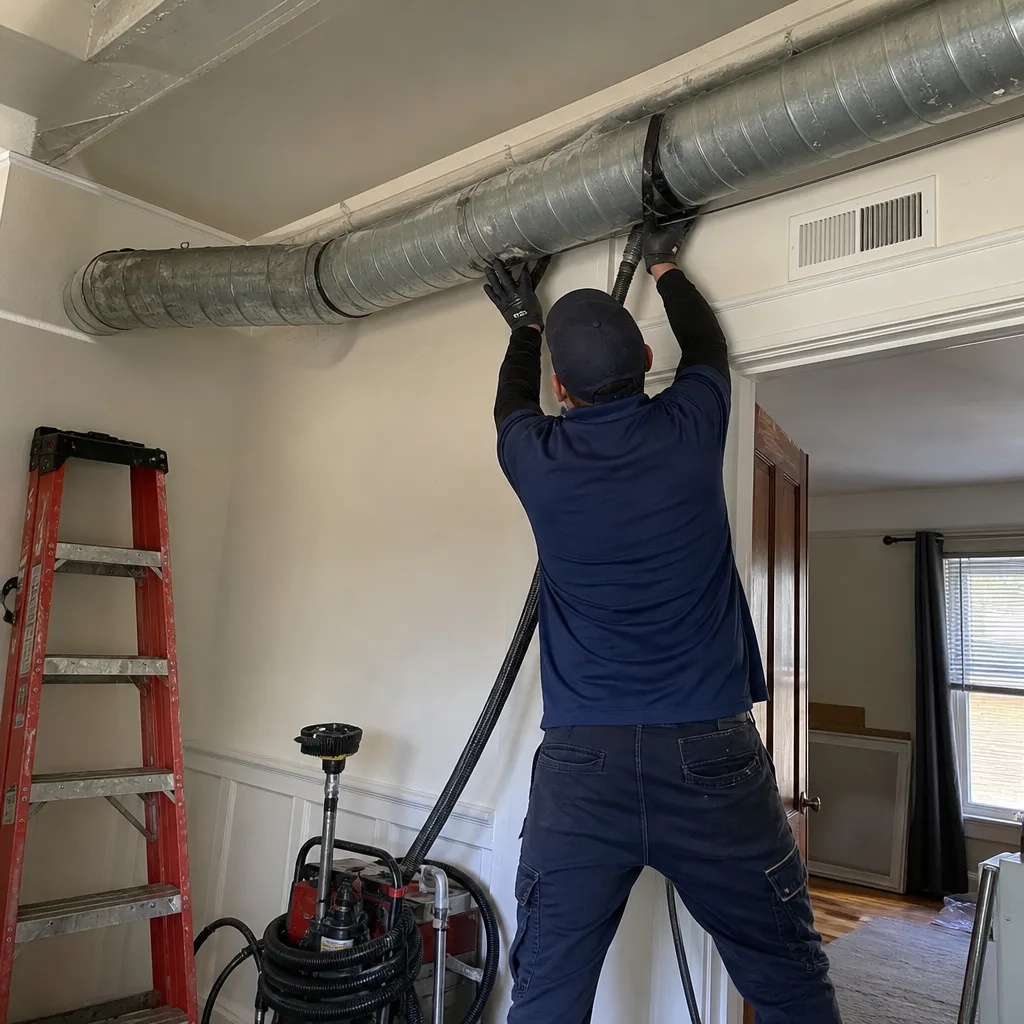
- Supply duct inspection: accessible sections of the supply ducts are visually checked with a camera where possible. This reveals accumulated debris, corrosion, separation, and signs of moisture.
- Crawlspace and attic runs: the hidden sections are checked for disconnection, crushed flex, rodent damage, and condensation. In an Oakland bungalow or rancher, this is often where the most significant findings are.
- Plenum and coil inspection: the central distribution box and the evaporator coil are checked for dust loading and biological growth. A dirty coil reduces efficiency and can harbor mold.
The inspection findings determine the recommendation. Some systems are straightforwardly dirty and need a thorough cleaning. Others have significant air leaks that should be repaired first. Still others show moisture problems in the crawlspace that need to be addressed before anything else. A company that does its own Air Duct Repair in Oakland work will be direct with you about which situation you’re in, because they’re equipped to handle all of them.
Why the Equipment Matters in Oakland’s Older Duct Systems
Duct cleaning isn’t a one-tool job, and the equipment a contractor brings to your Oakland home directly affects what gets removed. Most generalist HVAC companies that offer duct cleaning as a side service use a single vacuum system connected to the main trunk line. That approach leaves material in the branch runs, because the suction from a main-line vacuum doesn’t reach the corners where debris settles. A professional-grade approach matches the tool to the situation.
Our work in Oakland uses two complementary extraction systems. The Rotobrush rotary-brush system mechanically agitates debris from the duct walls while the brush rotates, simultaneously vacuuming the loosened material into a collection system. This works well for standard residential ducts with moderate dust loading. For heavier contamination or complex duct layouts, a Nikro industrial extraction system provides stronger airflow and is suited to systems with longer runs or higher debris volume. The point isn’t the brand names; it’s the principle that one tool doesn’t fit every duct.
Containment matters equally. When debris is dislodged from a duct, it has to go somewhere. If the only exit is through the registers into the living space, the cleaning process becomes a redistribution process. Abatement Technologies negative-air and HEPA-filtration equipment creates containment: the work area is held under negative pressure so that dislodged particulate is drawn into the filtration system, not into the rooms where people live. For an Oakland homeowner who’s paying to have contaminants removed, this is the difference between a meaningful cleaning and moving dust around. We contain what we dislodge.
Common Mistakes to Avoid
- Assuming the smell is just “old house” and moving on. Oakland homes are old, but a musty smell when the HVAC runs is not a historical feature. It’s a sign that something is happening in the duct lining.
- Treating every duct problem as a cleaning problem. A separated duct joint or a crushed flex run won’t be fixed by cleaning. The structural issue has to be addressed first.
- Waiting until the ducts are visibly dirty at the registers to take action. By the time debris is visible at the register face, the buildup upstream is already substantial.
- Relying on a standard furnace filter to protect the ducts. A basic fiberglass filter captures larger particles but lets fine dust through. The ducts still accumulate material over time.
- Skipping the inspection because the ducts are hard to access. The crawlspace and attic runs are exactly where the problems are. Inaccessible doesn’t mean problem-free; it means unexamined.
- Treating duct cleaning as a one-time event after decades of neglect. A system that hasn’t been cleaned in thirty years may need more than one pass, and structural issues may need to be addressed alongside the cleaning.
When to Call a Professional
If you’ve noticed a musty odor that doesn’t fade, visible debris at the registers, rooms that stay uncomfortable, or a steady climb in your PG&E bill without a change in usage, it’s time to get a professional inspection. The situations that warrant an immediate call: you purchased an older Oakland home with no duct service history, you lived through a wildfire smoke event and haven’t had the ducts checked, or you completed a renovation that produced construction dust while the HVAC ran. In each case, the cost of the Air Duct Cleaning services inspection is small compared to the cost of ignoring the problem.
Hallmark Air Duct Cleaning offers free estimates in Oakland. We’re an Air Duct Cleaning in Oakland specialist, not a side service tacked onto a general HVAC company, and we’ll tell you straight whether your ducts need cleaning, repair, or nothing at all. Call (833) 467-6681 to schedule an inspection.
Frequently Asked Questions
The first signs are usually a dusty odor when the HVAC starts, visible dust or debris at the supply registers, and dust streaks on walls or ceilings near the vents. These indicate accumulated material inside the ducts that’s being blown into the living space. If you notice any of these in your Oakland home, an inspection will confirm whether cleaning is warranted.
Mold in ducts typically produces a persistent musty or earthy smell that doesn’t fade when the system runs, unlike a dusty smell that dissipates after a few minutes. Visual confirmation requires a camera inspection of the duct lining. If mold is suspected, assessment comes before cleaning, because the moisture source must be addressed or the growth will return. Call (833) 467-6681 for an evaluation if you suspect mold.
You can clean the register covers and the visible throat of each vent, but that’s a surface-level fix. The duct runs themselves, especially the sections in crawlspaces and attics, are not accessible without professional equipment. A residential vacuum can’t reach more than a foot or two into a duct run. Professional extraction systems are designed to agitate and remove debris from the full length of the duct.
Most single-family homes in Oakland take between three and six hours to clean thoroughly, depending on the size of the system, the number of registers, and the level of contamination. Older homes with multiple runs and inaccessible crawlspace sections may take longer. A proper cleaning is methodical work, not a quick pass with a vacuum.
Duct cleaning removes the accumulated dust, pollen, pet dander, and other particulates that circulate through the system every time it runs. For allergy sufferers in Oakland, this can reduce the particle load in the indoor air. However, cleaning addresses what’s in the ducts; ongoing allergy management also requires good filtration and regular filter changes. We work with Honeywell and Aprilaire filtration products to help homeowners build a more complete air quality strategy.
For most Oakland homes, duct cleaning every three to five years is a reasonable interval. Factors that increase frequency: pets, smokers in the household, recent renovation work, wildfire smoke exposure, and older homes with original ductwork. A home that hasn’t been cleaned in ten or more years should be inspected before establishing a cleaning schedule. Call (833) 467-6681 for guidance specific to your home.
The Bottom Line
The signs that your Oakland home’s air ducts need attention are rarely dramatic. They show up as smells that fade, dust that returns, rooms that stay uncomfortable, and bills that creep upward. Each one on its own is easy to dismiss. Taken together, they paint a clear picture of a system that’s carrying more than just air. The only way to know what’s actually in your ducts is to look. If you’ve noticed any of the signs in this guide, or if you own an older Oakland home with no duct service history, an inspection is the sensible next step. Clean ducts, sealed ducts, safer home.
Get a free estimate today: call (833) 467-6681 or visit our Hallmark Air Duct Cleaning home page to learn more about our services. For dryer vent safety, see our Dryer Vent Cleaning in Oakland page.
Written by the team at Hallmark Air Duct Cleaning, serving Oakland since 2011.
See the difference
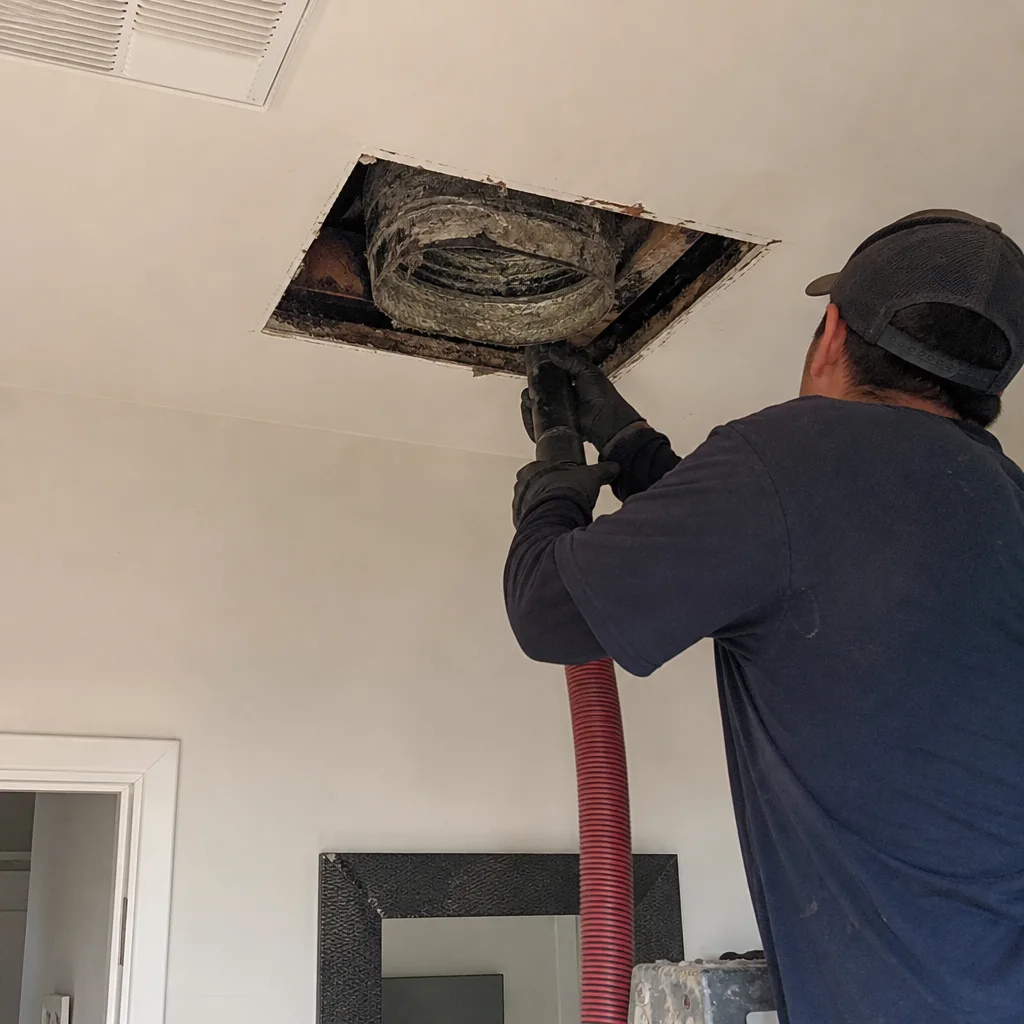 Before
 After
 Before
 After
 Before
 After